
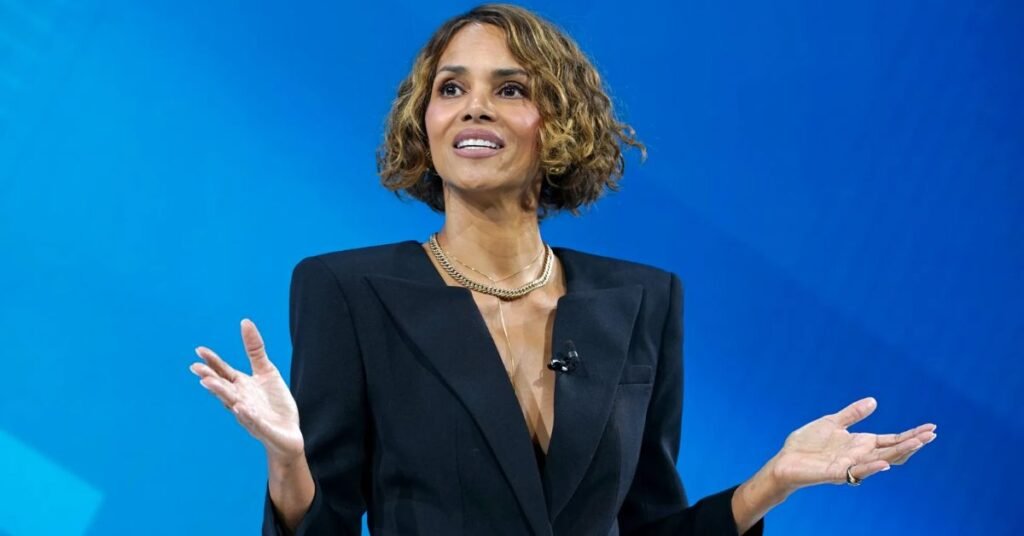
Imagine being at a point in life where your body is going through major changes, but no one — not even doctors — seems to take your symptoms seriously. You feel dismissed, overlooked, and disrespected, when what you really need is empathy, care, and understanding. That’s the real-life story the acclaimed actress Halle Berry has recently shared — and the reason she’s using her fame not just for films, but for raising awareness about a topic many shy away from: menopause.
In late 2025, Berry gave a powerful speech at the DealBook Summit where she criticized Gavin Newsom — Governor of California — for vetoing a bill meant to improve access and care for menopausal and perimenopausal women. Her remarks struck a chord: she said the repeated vetoes “devalue” women in midlife, and called out a broader societal silence around menopause and aging.
Because of this activism, many now view Halle Berry not just as an award-winning actor, but as a bold voice for women’s health — someone unafraid to speak up when it counts.
Who Is Halle Berry — Beyond the Spotlight
You probably know Halle Berry from iconic roles in films over the decades. But her life and career aren’t just about glitz and glamour. Over the years she’s engaged deeply in activism: environmental advocacy (like opposing a proposed natural-gas facility off the coast of Malibu), children’s privacy laws, and women’s rights more broadly. Wikipedia+1
In recent years, Berry has turned her attention to a deeply personal — yet widely underestimated — issue: menopause and women’s health in midlife. She co-founded Respin Health, a platform dedicated to educating and supporting women navigating perimenopause and menopause.
Her mission: remove the shame and silence around menopause, demand better care, and push for systemic change — not just for herself, but for millions of women who face similar challenges every day.
What Happened: Newsom, The Bill — And Berry’s Stand
The Bill That Could Have Helped
- The legislation at the center of the debate is the Menopause Care Equity Act (AB 432), a bipartisan measure designed to expand health-insurance coverage for menopause and perimenopause treatments and to require healthcare providers to receive menopause-related training.
- According to an independent assessment by health-policy analysts, the financial impact on insurance premiums would likely have been “negligible.”
- Beyond coverage, the bill aimed to standardize how menopause is treated medically — a key step for improving awareness, diagnosis, and care quality.
The Veto — And Why It Matters
Despite its aims and broad legislative support, Governor Newsom vetoed the bill — not once, but twice (2024 and 2025). He argued that the legislation’s mandates were “too far-reaching” and could drive up healthcare costs.
Berry did not hold back. She stood up at the DealBook Summit and said what many women think but rarely voice publicly: that the veto sends a message that women’s midlife health — and by extension, women themselves — are being devalued. She challenged the governor’s potential future presidential campaign, saying he shouldn’t be “our next president.”
She also argued that if a health condition affecting men disrupted their sleep, focus, and daily functioning, the reaction would be far more serious — and urgent.

Why This Matters — For Women, Families, and Societies
- Health & dignity: Menopause is a natural life stage — not a disease. Yet too often, symptoms are minimized or misdiagnosed, leaving women to struggle in silence. Berry’s advocacy helps destigmatize this transition.
- Economic impact: According to analysts, failing to support menopausal care isn’t just unfair — it’s costly. Untreated symptoms can lead to lost productivity, increased absenteeism, and preventable healthcare crises.
- Social awareness & education: Requiring medical professionals to be trained in menopause care would lead to earlier diagnosis, better support, and more informed treatment — improving quality of life for many.
- Cultural shift: By spotlighting menopause, Berry encourages a shift: from shame and secrecy to openness, understanding, and empowerment.
This isn’t just “women’s business.” It affects families, workplaces, communities — everyone.
How Berry’s Action Can Be a Model for Everyone
If you’re approaching midlife, or know someone who is — here are some practical takeaways, inspired by what Berry is fighting for:
- Speak up about your symptoms. Don’t accept misdiagnoses or silence. If you feel something is off during perimenopause or menopause, ask your doctor, demand clarity, request evidence-based treatment.
- Seek information. Look for reliable resources — health professionals, support networks, or trusted platforms like Respin Health, aimed at menopause awareness.
- Advocate for better care. Explore whether your health plan or insurance offers menopause-related support. If not, consider pushing for broader coverage or switching providers.
- Normalize conversations. Talk openly with friends, family, colleagues about menopause. The more we discuss it, the less stigma surrounds it.
- Take care of your overall health. Menopause is only one aspect — prioritize diet, exercise, sleep, mental health. A holistic approach helps.
Common Mistakes or Misconceptions to Avoid
- Assuming menopause is “just aging.” It’s not a sign of failure or decline — it’s a natural transition. Treat it with respect, not shame.
- Ignoring symptoms. Many dismiss hot flashes, mood swings, sleep issues, or physical changes as “just stress” or “getting older.” That prevents timely care and support.
- Accepting sweeping judgments. Comments like “women over 50 are past their prime” reflect societal bias — but your value isn’t defined by age.
- Not advocating medically. If a single doctor dismisses your concerns, seek a second opinion. Menopause care often requires experience and sensitivity.
Real-World Use Cases: When Menopause Affects Lives
- A working mother in her late 40s struggling with unexplained fatigue — too often dismissed as “stress.” With proper menopause care and support, she finds energy and balance again.
- A professional nearing 50, whose performance and focus start to dip because of hormonal changes — but with awareness and treatment, she manages symptoms and continues excel.
- A family caregiver who thought her mood swings and irritability were personal flaws — only to realize these were menopause-related, and gain peace and better relationships after seeking treatment.
These aren’t rare stories. They’re everyday realities — and they deserve attention.
Final Thought — Why Halle Berry’s Voice Matters
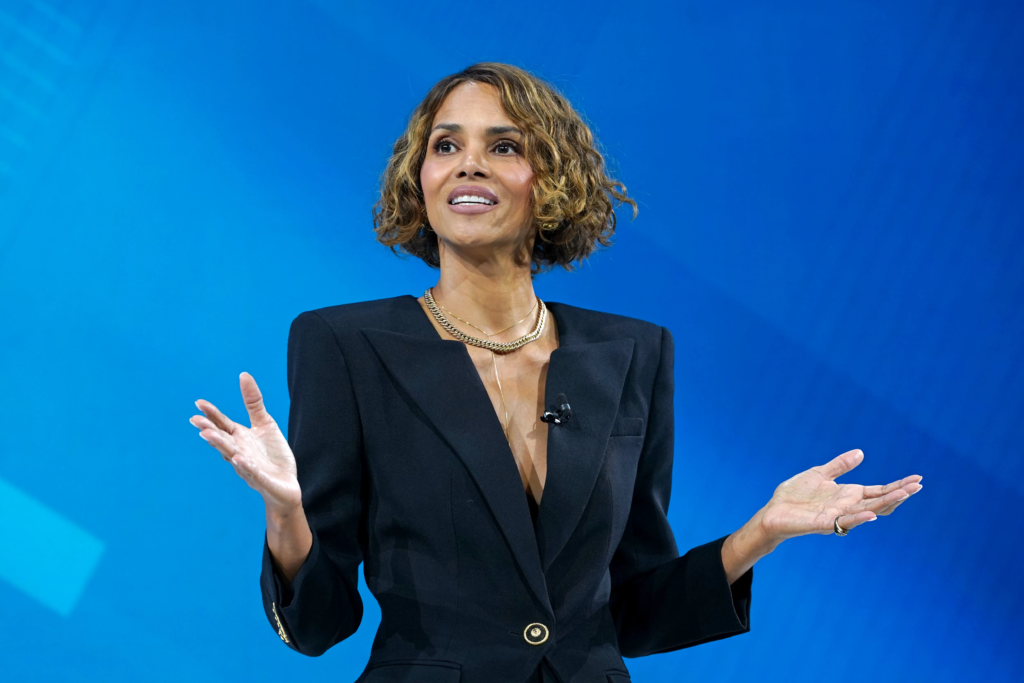
Halle Berry is not just using her star power — she’s channeling it for something deeply human: respect, dignity, and better health for women in midlife. Her outspokenness reminds us that aging is not an erasure — it’s an evolution. By demanding better care, honest conversations, and systemic change, she challenges societal norms and pushes for a world where women’s health is not sidelined — but centered.
We all deserve that.
If you’re going through perimenopause or know someone who is, take this as a gentle nudge: open up the conversation. Your health, your dignity, your life matters — and so does being informed.
FAQs
Q: What exactly is the Menopause Care Equity Act that Halle Berry supports?
A: It’s a bill (AB 432) proposed in California that would expand insurance coverage for menopause-related treatments and require doctors to receive menopause-specific training — ensuring better care and awareness.
Q: Why did the bill get vetoed despite broad support?
A: The governor argued that the bill’s insurance mandates were too expansive and could lead to higher healthcare costs.
Q: Does menopause care actually cost a lot for insurers?
A: According to a policy review, the cost increase would likely have been negligible — suggesting that financial concerns might have been overstated.
Q: How can regular people support menopause awareness and better care?
A: By speaking openly about menopause, demanding better care, supporting organizations focused on women’s health, and pushing healthcare providers or insurers for coverage.
A: Not necessarily. But it shows that when someone with influence uses their voice for societal change — especially on issues often ignored — it can spark important conversations.

Hannah Price is a digital journalist who covers breaking news, global events, and trending stories with accuracy and speed. She has previously contributed to several online magazines and has built a reputation for verifying facts before publishing. Hannah believes in responsible reporting and aims to present stories in a way that readers can trust.