
A few weeks ago, I watched my friend struggle to pick a restaurant. “Too many choices,” he sighed, scrolling endlessly through reviews and menus. Then he paused — “Why can’t something just tell me what I want?”
Spoiler: Something soon will.
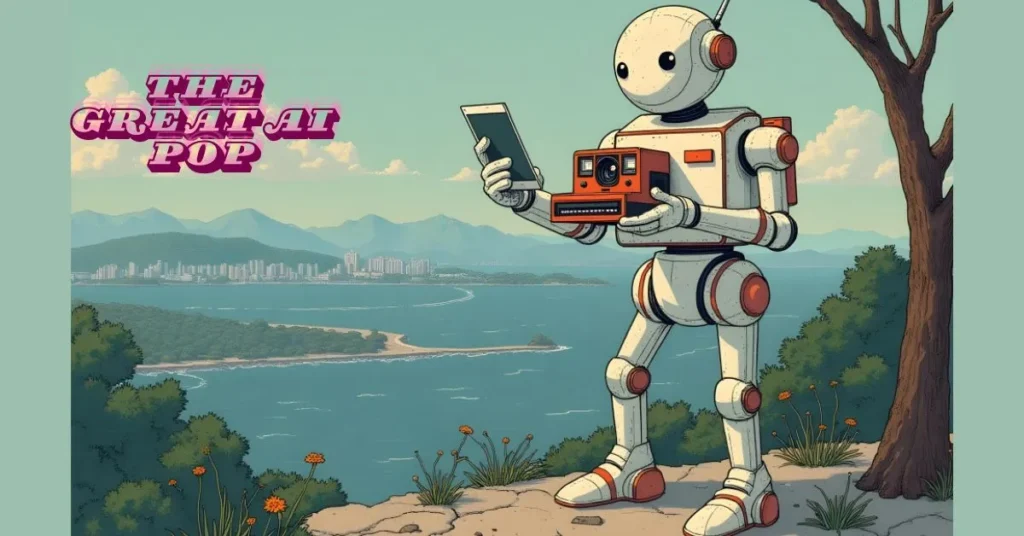
That moment, small as it was, perfectly summed up where we’re heading — toward The Great AI Pop.
What Is The Great AI Pop?

Imagine a bubble, but instead of bursting, it expands. Artificial intelligence is no longer a novelty — it’s weaving into daily tools, businesses, workflows, even hobbies. The Great AI Pop isn’t a crash — it’s an explosion of adoption, accessibility, and innovation.
Like the smartphone boom or the early web era, AI is moving from “interesting tech” to the normal way things get done.
Why It Matters (Even If You’re Not a Techie)
You don’t need to code or understand machine learning math to feel this wave. If you’ve ever:
Ordered something online and got eerily accurate suggestions
Used ChatGPT or a writing assistant
Asked your phone a question instead of Googling it
Edited a photo with one click
—you’re already in the pop.
Where AI Is Booming Right Now
Here are areas expanding the fastest:
| Industry | What’s Happening | Real-World Example |
|---|---|---|
| Content & Marketing | AI writes, designs, edits | Blog drafts in seconds |
| Education | Customized learning paths | AI tutors improving grades |
| Healthcare | Faster diagnosis & records | Early disease detection |
| Small Business | Automates admin tasks | Scheduling, invoices, webchat |
| Creativity | Music, art, storytelling generation | Your next song could be AI-assisted |
AI isn’t replacing humans — it’s boosting them. The biggest winners will be people who learn to use it, not fight it.
How to Ride the Wave (Not Get Swept by It)
If you want to thrive in The Great AI Pop, here’s a simple roadmap:
1. Start Small
Pick just ONE use case.
Examples:
- Write content faster
- Automate emails
- Generate art for branding
- Analyze data quickly
2. Learn Through Play
Type prompts. Try new tools. Break things.
The more you experiment, the faster you learn.
3. Build AI Into Your Routine
Not as a replacement — as a partner.
For writing, planning, brainstorming, or research, AI can handle 20–60% of the heavy lifting.
4. Create Systems, Not Single Outputs
A one-time AI task saves minutes.
An AI-powered workflow saves hours every week.
5. Stay Curious, Not Overwhelmed
You don’t have to master everything.
You just need to know how to ask better questions.
Recommended AI Tools to Get Started
ChatGPT / Claude AI — writing + reasoning
Midjourney / DALL·E — image & creative design
Notion AI — productivity & daily planning
Airtable + AI extensions — automation & data
Descript — video editing & podcast cleanup
Pick one. Give yourself an hour. You’ll feel the pop instantly.
Common Mistakes to Avoid
❌ Expecting AI to do everything perfectly
❌ Relying on one tool instead of building a workflow
❌ Skipping fact-checking or personal input
❌ Thinking AI replaces creativity — it enhances it
AI is a calculator for thought — powerful, but only as good as the human guiding it.
So — What’s the Takeaway?
We’re living in the moment people will talk about decades from now.
The Great AI Pop isn’t coming — it’s here.
You don’t need to be an expert. Just start moving with the wave.
Small steps today can put you ahead of millions tomorrow.
FAQs
Will AI take my job?
Not if you learn to use it. AI replaces tasks, not people. Humans who work with AI become more valuable, not less.
How much time do I need to learn?
Start with 15–30 minutes a day. Consistency beats intensity.
Is AI only for tech-savvy people?
No. The best AI tools are designed for everyday humans, not engineers.
What’s the first step I should take today?
Pick one tool and one task — and try it. Nothing replaces action.

Adrian Cole is a technology researcher and AI content specialist with more than seven years of experience studying automation, machine learning models, and digital innovation. He has worked with multiple tech startups as a consultant, helping them adopt smarter tools and build data-driven systems. Adrian writes simple, clear, and practical explanations of complex tech topics so readers can easily understand the future of AI.