
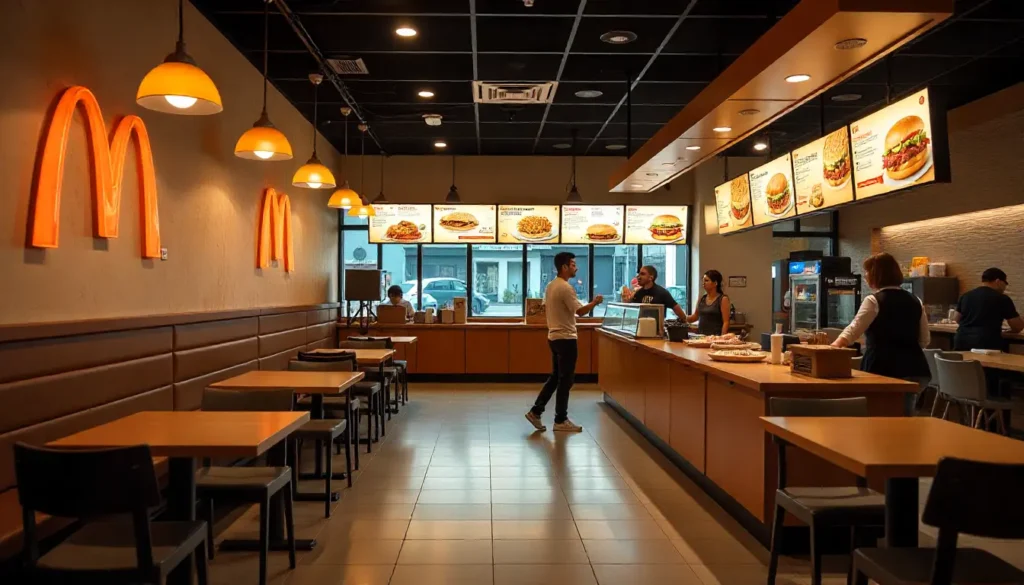
Walk into a modern McDonald’s today and it feels very different from the McDonald’s many of us grew up with. Touchscreen kiosks replace long counters. Orders arrive faster, often customized down to the last topping. Mobile apps remember your preferences. Kitchens hum with data-driven efficiency. None of this happened by accident.
McDonalds innovation is the quiet engine behind the Golden Arches’ staying power. In a world where food trends change overnight, delivery apps disrupt habits, and consumers demand speed, transparency, and personalization, McDonald’s has had to evolve continuously—or risk becoming irrelevant.
What makes this topic especially interesting is that McDonald’s isn’t a Silicon Valley startup. It’s a decades-old global giant operating at enormous scale. Innovating under those conditions is far harder than building something new from scratch. Yet McDonald’s has repeatedly proven that innovation doesn’t always mean radical reinvention. Often, it means improving systems, using technology wisely, and deeply understanding customers.
In this in-depth guide, you’ll learn what McDonalds innovation really looks like behind the scenes, why it works, how it benefits customers and franchisees, and what lessons businesses of any size can take from it. Whether you’re a marketer, entrepreneur, operations leader, or simply curious about how global brands survive, this story offers powerful insights.
Understanding McDonalds Innovation at Its Core
When people hear the word “innovation,” they often imagine futuristic robots or experimental menu items. McDonalds innovation is far more practical and grounded. At its core, it’s about solving everyday problems at massive scale while keeping the experience familiar and affordable.
Think of McDonald’s as a finely tuned system rather than just a restaurant chain. Every innovation is measured against three questions: Will this improve speed? Will this improve consistency? Will this improve customer satisfaction? If the answer isn’t clear, the idea doesn’t move forward.
A helpful analogy is an airport. Airports don’t reinvent air travel every year, but they constantly improve check-in systems, security flows, signage, and logistics. McDonald’s operates the same way. The burger stays recognizable, but everything around it evolves.
Innovation at McDonald’s spans multiple areas simultaneously. There’s menu innovation, like plant-based options and localized offerings. There’s digital innovation through apps, kiosks, and loyalty programs. There’s operational innovation inside kitchens and supply chains. And there’s business-model innovation, including partnerships and delivery platforms.
What makes this approach effective is restraint. McDonald’s rarely chases trends blindly. Instead, it pilots ideas in select markets, gathers real-world data, and scales only what works. That disciplined experimentation is a defining feature of McDonalds innovation and one reason the brand avoids costly missteps.
A Brief History of Innovation at McDonald’s
McDonalds innovation didn’t start in the digital era. It began with process efficiency long before technology became fashionable. In the early days, the Speedee Service System transformed restaurant kitchens into assembly lines, dramatically reducing wait times and costs. This systemized approach laid the foundation for everything that followed.
Later, innovations like drive-thru windows changed consumer behavior entirely. What started as a convenience feature became a core revenue channel. The company learned early that innovation often comes from observing how people actually live, not how companies wish they behaved.
The introduction of breakfast menus was another pivotal moment. Serving breakfast wasn’t standard in fast food at the time, but McDonald’s recognized a gap in the market. That decision didn’t just add sales—it reshaped daily routines for millions of customers.
As the brand expanded globally, innovation became more localized. McDonald’s learned that standardization had limits. Regional menu adaptations, supply-chain adjustments, and cultural sensitivity became essential. Innovation shifted from a single global playbook to a flexible framework that allowed regional creativity within global standards.
By the time digital technology arrived, McDonald’s already had decades of innovation muscle memory. The company wasn’t learning how to innovate; it was learning how to apply new tools to an already disciplined system.
Digital Transformation and McDonalds Innovation
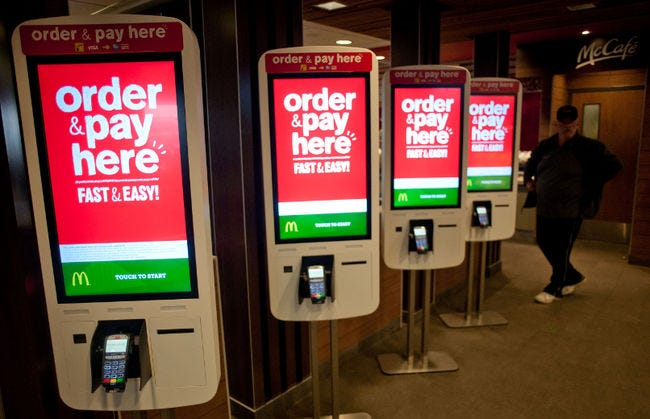

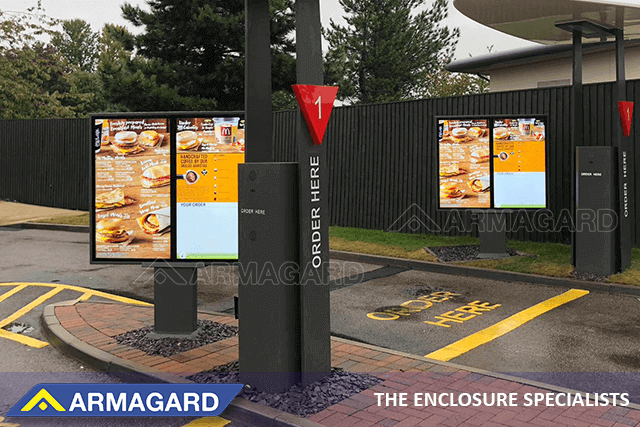
Digital transformation is where modern McDonalds innovation becomes most visible to customers. Self-order kiosks, mobile apps, and digital menu boards didn’t just modernize restaurants—they fundamentally changed how people interact with the brand.
Kiosks reduced pressure on frontline staff while giving customers more control. People order more confidently when they can browse without feeling rushed. Average order values increased as upsells became visual and intuitive. That’s innovation delivering measurable business impact.
The mobile app added another layer. It wasn’t just about convenience; it was about data. Through the app, McDonald’s learned what customers ordered, when they ordered, and how often they returned. This data powered personalized deals, smarter promotions, and better demand forecasting.
Drive-thru digital boards adjusted menus based on time of day, weather, and traffic patterns. A cold evening might highlight comfort foods, while a hot afternoon pushes beverages. These subtle changes improve relevance without customers consciously noticing.
Delivery partnerships with platforms like Uber Eats and DoorDash extended McDonald’s reach beyond physical locations. Instead of resisting disruption, the brand leaned into it, adapting packaging, menus, and operations for off-premise consumption.
The key lesson here is integration. McDonalds innovation works because digital tools aren’t isolated add-ons. They’re woven into operations, marketing, and customer experience as a single ecosystem.
Menu Innovation Without Losing Identity
Menu innovation is one of the riskiest areas for any legacy food brand. Change too much, and loyal customers feel alienated. Change too little, and the brand feels stale. McDonalds innovation in this area strikes a careful balance.
Limited-time offers create excitement without permanent risk. Items like regional burgers or seasonal desserts generate buzz, test new flavors, and provide valuable insights. Successful items can later become permanent fixtures.
Health-conscious options emerged gradually rather than abruptly. Salads, grilled items, and portion transparency allowed customers to make informed choices without repositioning the brand entirely. The introduction of plant-based options like the McPlant showed responsiveness to changing values while maintaining familiar flavors and formats.
Localization plays a crucial role. In different countries, menus reflect local tastes while preserving core brand elements. This approach respects cultural preferences without fragmenting the global brand.
What’s important is that menu innovation at McDonald’s is driven by data, not hype. Customer feedback, sales performance, and operational feasibility all determine whether an item survives. Innovation isn’t about novelty—it’s about sustainability at scale.
Benefits and Real-World Use Cases of McDonalds Innovation
McDonalds innovation delivers tangible benefits across multiple stakeholders. For customers, it means faster service, more choice, and better value. For franchisees, it means higher efficiency and improved margins. For employees, it often means clearer workflows and reduced stress during peak hours.
Consider a busy urban drive-thru during lunch rush. Digital ordering predicts demand, kitchen screens optimize prep sequences, and staff focus on execution rather than manual order-taking. The result is shorter wait times and fewer errors.
For families, mobile ordering simplifies group meals. Customizations are remembered, favorite items are suggested, and deals are tailored. The experience feels personal despite the scale.
Franchise owners benefit from predictive analytics that reduce waste and improve staffing decisions. Innovation turns uncertainty into manageable variables.
These use cases demonstrate that McDonalds innovation isn’t abstract strategy—it’s everyday problem-solving applied consistently across thousands of locations.
Step-by-Step: How McDonald’s Implements Innovation at Scale
Innovation at McDonald’s follows a structured process that minimizes risk. First comes observation. The company studies customer behavior, market trends, and operational pain points. Ideas emerge from real needs, not boardroom brainstorming alone.
Next comes controlled testing. Pilot programs run in select markets or locations. Data collection is rigorous, focusing on performance, customer satisfaction, and operational impact.
Then comes iteration. Feedback leads to adjustments, refinements, or even cancellations. Failed experiments aren’t hidden; they’re treated as learning opportunities.
Only after clear success does scaling occur. Training materials, supply chains, and systems are aligned before global rollout. This disciplined approach ensures consistency and protects the brand.
Businesses watching from the outside often underestimate this process. McDonalds innovation works not because ideas are flashy, but because execution is meticulous.
Tools, Technology, and Strategic Partnerships
Technology is the backbone of modern McDonalds innovation. Cloud-based systems manage orders, inventory, and analytics. AI supports demand forecasting and menu optimization. Automation improves kitchen efficiency without eliminating human roles.
Strategic partnerships amplify these capabilities. Delivery platforms extend reach. Payment providers streamline transactions. Technology firms support data infrastructure.
Free tools like basic mobile ordering offer entry-level convenience, while premium features like personalized deals deliver deeper engagement. The balance between accessibility and sophistication keeps the ecosystem inclusive.
For other businesses, the takeaway is clear: innovation thrives when tools are chosen for integration, not novelty.
Common Mistakes and How McDonald’s Avoids Them
Many companies fail at innovation by moving too fast or too slow. McDonald’s avoids these extremes through discipline. It doesn’t rush untested ideas into global rollout, nor does it ignore changing customer expectations.
Another common mistake is overcomplicating experiences. McDonald’s innovations simplify, even when technology behind them is complex. Customers don’t see algorithms; they see faster service.
Finally, innovation fatigue can alienate loyal customers. McDonald’s preserves core menu items and brand identity while introducing change gradually. Familiarity and novelty coexist.
Conclusion: Why McDonalds Innovation Still Matters
McDonalds innovation proves that longevity and adaptability can coexist. The brand’s success isn’t rooted in constant reinvention but in thoughtful evolution. By focusing on real customer needs, disciplined execution, and scalable systems, McDonald’s remains relevant across generations.
For businesses of any size, the lesson is powerful. Innovation doesn’t require abandoning what works. It requires improving it, step by step, with purpose. If you’re exploring your own innovation journey, McDonald’s offers a masterclass in balancing tradition and transformation.
FAQs
What is McDonalds innovation?
McDonalds innovation refers to the company’s continuous improvement in technology, operations, menu development, and customer experience to stay competitive and relevant.
How does McDonald’s use technology to innovate?
McDonald’s uses mobile apps, self-order kiosks, digital menu boards, AI-driven analytics, and cloud systems to improve speed, personalization, and efficiency.
Why is McDonald’s innovation successful?
Its success comes from disciplined testing, data-driven decisions, and a focus on scalable, customer-centered improvements rather than hype-driven trends.
How does innovation benefit franchise owners?
Innovation improves efficiency, reduces waste, increases average order value, and provides better data for staffing and inventory decisions.
Does McDonald’s innovate differently in different countries?
Yes, the company localizes menus and operations while maintaining global standards, allowing regional flexibility within a unified brand framework.

Adrian Cole is a technology researcher and AI content specialist with more than seven years of experience studying automation, machine learning models, and digital innovation. He has worked with multiple tech startups as a consultant, helping them adopt smarter tools and build data-driven systems. Adrian writes simple, clear, and practical explanations of complex tech topics so readers can easily understand the future of AI.