
If you’ve ever sat in a leadership meeting and heard someone say, “We need to strengthen our DEI strategy,” you might have nodded along — even if you weren’t entirely sure what that truly meant in practice.
So let’s answer the core question clearly and confidently: what does DEI stand for in business?
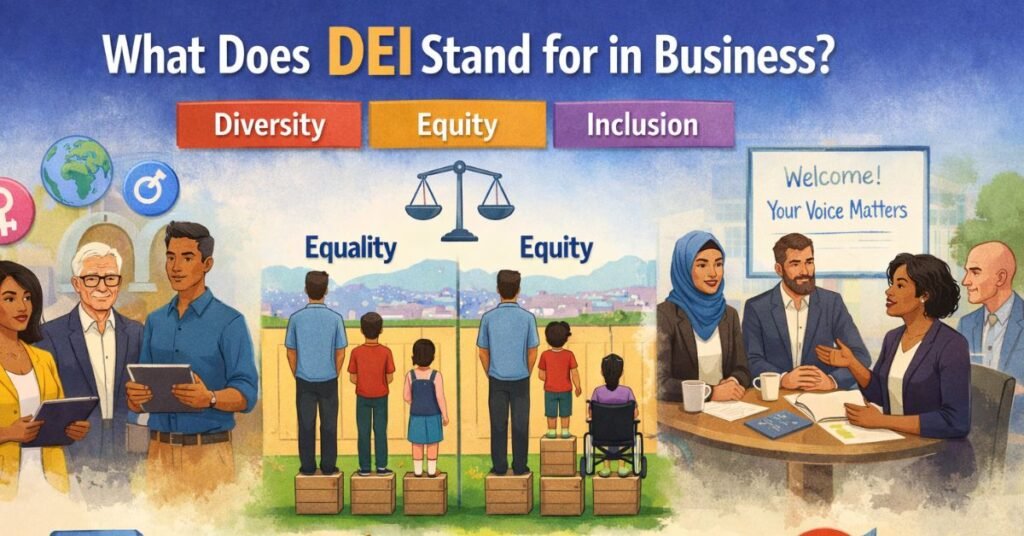
DEI stands for Diversity, Equity, and Inclusion. In a business context, it refers to the policies, practices, and cultural commitments that ensure organizations bring in diverse talent, treat people fairly, and create environments where everyone feels valued and empowered to contribute.
But here’s the truth most companies discover the hard way: DEI isn’t a slogan, a one-time training, or a page on your website. It’s a structural and cultural commitment that affects hiring, promotions, leadership, compensation, innovation, brand reputation, and long-term profitability.
In this guide, we’ll go far beyond the acronym. You’ll learn:
- What each part of DEI truly means (with real-world examples)
- Why DEI matters in modern business
- The measurable benefits of strong DEI programs
- A step-by-step implementation guide
- Tools, frameworks, and expert recommendations
- Common mistakes companies make (and how to fix them)
- Practical FAQs for leaders, HR professionals, and business owners
Whether you’re a startup founder, HR leader, executive, or consultant, this article will give you clarity, confidence, and actionable direction.
Let’s begin.
Understanding What DEI Stands for in Business
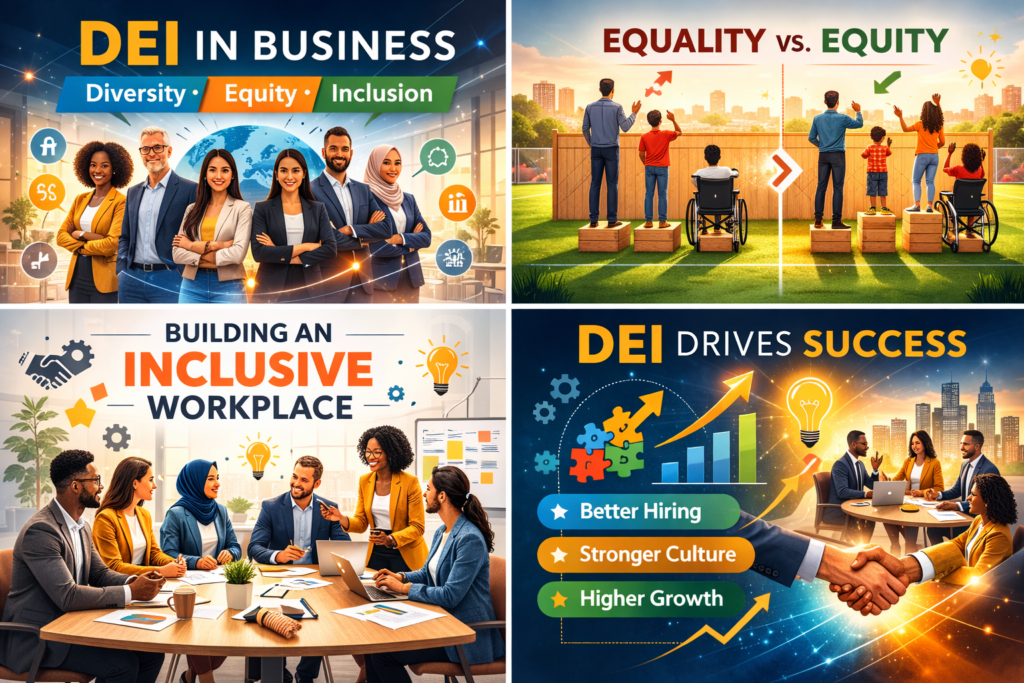
Before diving into strategy and execution, we need to clearly define the three components of DEI in business: Diversity, Equity, and Inclusion. These words are often used together, but they represent distinct — and equally critical — concepts.
Think of DEI like building a high-performance team:
- Diversity is who is invited to the table.
- Equity is whether everyone has the resources they need.
- Inclusion is whether people are truly heard and valued.
Let’s break this down.
What Is Diversity in Business?

Diversity refers to the presence of differences within a workplace. These differences may include:
- Race and ethnicity
- Gender identity and expression
- Age
- Disability status
- Sexual orientation
- Religion
- Socioeconomic background
- Education
- Cultural background
- Veteran status
- Cognitive styles and personality types
In business, diversity isn’t just demographic. It also includes diversity of thought, experience, and perspective.
Imagine a product development team made up entirely of people from similar educational, cultural, and professional backgrounds. Their ideas may be strong — but they will likely miss blind spots. Now imagine a team with varied life experiences, industries, and cultural viewpoints. The depth of innovation expands.
Diversity is the mix.
But diversity alone is not enough.
What Is Equity in Business?
Equity is often confused with equality. They are not the same.
Equality means giving everyone the same resources.
Equity means giving people what they need to succeed.
Picture three employees:
- One has had access to elite education and networks.
- One is highly talented but comes from a disadvantaged background.
- One has a disability that requires accommodation.
Treating them “equally” doesn’t guarantee fair outcomes. Equity recognizes structural barriers and adjusts support accordingly.
In business, equity shows up in:
- Fair compensation structures
- Transparent promotion processes
- Accessible workplaces
- Bias-aware hiring practices
- Development opportunities for underrepresented employees
Equity is the bridge between intention and fairness.
What Is Inclusion in Business?
Inclusion is the cultural component. It’s about creating an environment where people feel respected, heard, and valued.
You can have a diverse team. You can even implement equitable policies. But if employees feel ignored, tokenized, or unsafe to speak up, inclusion is missing.
Inclusion shows up as:
- Psychological safety
- Open dialogue
- Representation in leadership
- Feedback systems that actually work
- Respectful communication
In short:
Diversity is being invited to the party.
Inclusion is being asked to dance.
Equity is ensuring the dance floor is accessible to everyone.
Together, these three elements create sustainable, ethical, and high-performing organizations.
Why DEI Matters in Modern Business
There was a time when companies treated DEI as a compliance checkbox. Today, it’s a strategic advantage — and in many industries, a competitive necessity.
Here’s why.
1. Innovation and Creativity
Research consistently shows that diverse teams outperform homogeneous ones in problem-solving. When multiple perspectives collide constructively, creativity expands.
In fast-moving industries — technology, healthcare, finance, marketing — innovation determines survival. Diverse teams challenge assumptions and reduce blind spots.
2. Better Decision-Making
Inclusive environments encourage dissenting opinions. That reduces groupthink — one of the biggest hidden risks in leadership teams.
When employees feel safe voicing concerns, companies avoid costly mistakes.
3. Stronger Employer Brand
Top talent — especially younger professionals — actively evaluate companies based on their DEI commitment.
Candidates look at:
- Leadership diversity
- Equal pay practices
- Inclusion policies
- Employee resource groups
- Corporate social responsibility
If your company lacks credibility here, you lose top-tier applicants.
4. Financial Performance
Organizations with strong diversity and inclusion frameworks often report higher revenue growth and improved profitability. Diverse leadership correlates with better business outcomes.
Why? Because inclusive companies:
- Understand diverse markets
- Attract better talent
- Retain employees longer
- Build stronger customer trust
5. Risk Management
Poor DEI practices can lead to:
- Discrimination lawsuits
- Public relations crises
- Talent exodus
- Investor distrust
Proactive DEI reduces legal and reputational risk.
In short, DEI isn’t “nice to have.” It’s foundational to sustainable growth.
Benefits and Real-World Use Cases of DEI in Business
Let’s move from theory to application. What does DEI actually look like in practice?
Use Case 1: Hiring and Recruitment
A company realizes its engineering team lacks gender diversity. Instead of lowering standards, it:
- Expands recruiting channels
- Partners with diverse professional organizations
- Removes biased language from job descriptions
- Uses structured interview scoring
Result? Broader talent pipeline and stronger hires.
Use Case 2: Leadership Development
An organization identifies that underrepresented employees rarely move into senior roles. It:
- Launches mentorship programs
- Introduces transparent promotion criteria
- Offers sponsorship initiatives
- Conducts pay equity audits
Result? Increased internal mobility and stronger retention.
Use Case 3: Product Development
A global brand launches a product without consulting diverse consumers — and faces backlash.
After implementing inclusive research panels and culturally aware marketing reviews, product adoption improves significantly.
Use Case 4: Remote Work Equity
Remote policies initially benefit certain roles more than others. The company reassesses:
- Equipment stipends
- Flexible hours for caregivers
- Accessibility accommodations
This improves morale and productivity across departments.
The pattern is clear: DEI directly influences performance, engagement, and brand credibility.
Step-by-Step Guide to Implementing DEI in Your Organization
If you’re wondering how to turn intention into execution, here’s a practical roadmap.
Step 1: Conduct a DEI Assessment
Start with data.
- Workforce demographics
- Pay equity analysis
- Promotion rates
- Employee engagement surveys
- Exit interview themes
Without measurement, DEI becomes guesswork.
Step 2: Secure Leadership Buy-In
DEI must be championed from the top. That means:
- Executive sponsorship
- Public commitment
- Budget allocation
- Clear accountability
If leadership treats DEI as optional, employees will too.
Step 3: Set Clear, Measurable Goals
Examples:
- Increase representation in leadership by X%
- Reduce pay gaps within two years
- Improve inclusion survey scores
Goals create direction and accountability.
Step 4: Implement Structural Changes
This may include:
- Bias training
- Standardized hiring processes
- Pay transparency
- Inclusive leadership training
- Employee resource groups
Focus on systemic improvements — not performative gestures.
Step 5: Foster Inclusive Culture
Encourage:
- Open feedback channels
- Psychological safety
- Cross-cultural education
- Ongoing dialogue
Culture is built daily.
Step 6: Measure and Adjust
DEI is not static. Regularly review metrics and adapt strategies.
Continuous improvement builds credibility.
Tools, Comparisons, and Recommendations
Building a strong DEI strategy requires structure and measurement. Here are categories of tools and solutions commonly used.
DEI Assessment Tools
Free options:
- Internal surveys (Google Forms, Microsoft Forms)
- Anonymous feedback tools
Paid platforms:
- Culture analytics software
- Pay equity analysis platforms
- Inclusion climate surveys
Pros of paid tools:
- Deeper analytics
- Benchmarking
- Compliance tracking
Cons:
- Cost
- Implementation complexity
Learning and Training Platforms
Free:
- Internal workshops
- Public DEI resources
- Webinars
Paid:
- Structured DEI learning platforms
- Microlearning systems
- Leadership coaching programs
Recommendation: Blend internal context with external expertise.
Data and HR Software
Modern HRIS systems often include:
- Diversity reporting
- Pay equity dashboards
- Promotion tracking
- Compensation benchmarking
Invest in systems that provide actionable insights, not just reports.
Common Mistakes in DEI Implementation (and How to Fix Them)
Even well-intentioned companies stumble. Here are frequent pitfalls.
Mistake 1: Treating DEI as a PR Strategy
Fix: Embed DEI into core operations — not just marketing materials.
Mistake 2: One-Time Training
Fix: Make DEI an ongoing practice, not a single workshop.
Mistake 3: Ignoring Data
Fix: Track metrics quarterly and adjust strategies accordingly.
Mistake 4: Overburdening Underrepresented Employees
Fix: Compensate DEI contributions and distribute responsibility.
Mistake 5: Lack of Accountability
Fix: Tie DEI goals to leadership performance evaluations.
Avoiding these mistakes builds trust and authenticity.
Conclusion: The Real Meaning of DEI in Business
So, what does DEI stand for in business?
It stands for Diversity, Equity, and Inclusion — but more importantly, it represents a commitment to fairness, representation, and belonging.
Done correctly, DEI:
- Fuels innovation
- Strengthens leadership
- Improves retention
- Protects brand reputation
- Drives long-term growth
It’s not about political trends or corporate buzzwords. It’s about building workplaces where talent thrives and businesses outperform.
If you’re serious about sustainable success, DEI isn’t optional — it’s strategic.
Start with honest assessment. Commit to measurable goals. And remember: culture is built daily, not declared annually.
FAQs
What does DEI stand for in business?
DEI stands for Diversity, Equity, and Inclusion — a framework focused on creating fair, representative, and inclusive workplaces.
Is DEI legally required?
In some jurisdictions, elements of DEI align with anti-discrimination laws, but comprehensive DEI programs are typically voluntary strategic initiatives.
What is the difference between equality and equity?
Equality gives everyone the same resources. Equity provides resources based on individual needs to ensure fair outcomes.
Does DEI improve business performance?
Yes. Diverse and inclusive organizations often show stronger innovation, employee engagement, and financial results.
Who is responsible for DEI in a company?
Leadership sets direction, HR supports structure, and every employee contributes to inclusive culture.

Michael Grant is a business writer with professional experience in small-business consulting and online entrepreneurship. Over the past decade, he has helped brands improve their digital strategy, customer engagement, and revenue planning. Michael simplifies business concepts and gives readers practical insights they can use immediately.