
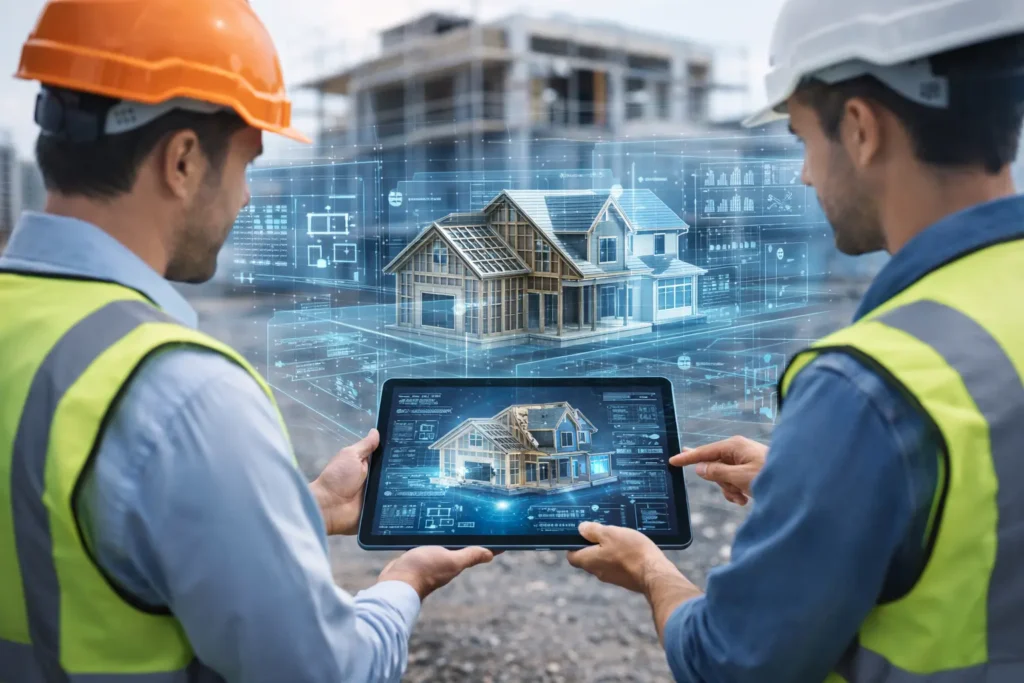
Modern construction demands more than blueprints and brute force. Today’s most successful home builders and commercial developers rely on Coordinated Virtual Construction Engineering — a data-driven, collaborative approach that eliminates costly surprises before a single nail is driven. Our team combines deep structural expertise, MEP systems mastery, and advanced Building Information Modeling (BIM) technology to help you lower construction costs, reduce build times, and deliver a finished product that exceeds every expectation.
Whether you’re constructing a single-family custom home, a large multi-family development, or a mixed-use commercial project, our virtual design and construction services give your team a decisive competitive advantage — from initial takeoff through final walkthrough.
What Is Virtual Design and Construction (VDC) for Home Builders?
Virtual Design and Construction — commonly known as VDC — is an integrated approach to building project planning that replaces siloed, two-dimensional design workflows with a unified, data-rich digital environment. Rather than coordinating structural, mechanical, electrical, and plumbing systems separately and hoping they align in the field, VDC brings every discipline together into a single coordinated model from the very start.
Think of VDC as creating a complete digital twin of your building before construction begins. Every beam, duct, pipe, panel, and wall panel is modeled, analyzed, and coordinated in a virtual space where problems are identified and resolved at the design stage — not on the job site where changes cost ten times more.
The Core Technology: 3D Through 6D Modeling
VDC leverages multi-dimensional BIM modeling, where each ‘D’ adds a new layer of intelligence to the virtual construction model:
- 3D Modeling (Spatial): The geometric foundation. Every system — structural, MEP, and component — is built in three-dimensional space and checked for physical conflicts.
- 4D Modeling (Time/Scheduling): Construction sequencing is layered onto the 3D model. Project managers can visualize the build timeline, identify scheduling conflicts, and optimize construction sequences before breaking ground.
- 5D Modeling (Cost Estimation): Material quantities and cost data are embedded directly in the model. This enables accurate, real-time materials estimation that reflects actual design changes — eliminating the guesswork from construction budgeting.
- 6D Modeling (Lifecycle/Facility Management): Long-term operational data is integrated into the model, giving owners a complete record for future renovation, maintenance, and facility management.
This layered approach transforms the building model from a static drawing into a living, dynamic project management tool — one that connects design decisions directly to schedule and budget outcomes.
VDC vs. Traditional Design: A Clear Advantage
Traditional design processes rely on separate teams producing separate drawings that are reconciled manually, often late in the project lifecycle. Conflicts between structural framing and HVAC routing, for example, may not be discovered until framing is already complete. In a VDC environment, that same conflict is detected and resolved during the design phase — saving days of rework and thousands of dollars in material and labor costs.
Integrated project delivery (IPD) through VDC also creates a shared accountability framework: every trade partner is working from the same coordinated model, reducing miscommunication and eliminating the costly ‘finger-pointing’ that often accompanies field conflicts on traditional projects.
Our Comprehensive Construction Engineering Services
We offer a full suite of virtual construction engineering services designed to support every phase of your residential and commercial building projects. Our multidisciplinary team operates as a true extension of your in-house design and construction staff — bringing technical depth, regulatory knowledge, and real-world construction experience to every engagement.
Structural Engineering for Residential & Commercial Projects
Our structural engineering services provide the backbone of every coordinated design. We perform rigorous structural analysis on all load-bearing elements, ensuring that framing systems, foundations, and load paths are engineered to meet or exceed applicable building codes and project-specific performance requirements.
We specialize in structural design for:
- Single-family custom homes
- Production home builder programs (tract and semi-custom)
- Multi-family residential developments (townhomes, condominiums, apartments)
- Mixed-use commercial construction
- Modular and panelized building systems
Every structural design is produced as permit-ready construction documents, complete with engineering stamps, calculations, and code compliance documentation tailored to state and local requirements. Our engineers stay current with the latest International Building Code (IBC) and residential code (IRC) updates, ensuring your projects clear plan review with minimal back-and-forth.
MEP Engineering: Seamless Systems Integration
Mechanical, Electrical, and Plumbing (MEP) systems represent some of the greatest sources of field conflict and cost overrun in modern construction — and some of the greatest opportunities for savings when engineered correctly. Our MEP engineering team designs and coordinates all building systems in concert with the structural model, using Revit-based BIM workflows to produce clash-free, installation-ready designs.
Our MEP services include:
- HVAC system design and duct routing coordination
- Electrical system layout, panel sizing, and circuit design
- Plumbing system design, fixture scheduling, and drainage routing
- MEP-structural clash detection and resolution
- Energy code compliance analysis (ASHRAE, IECC)
- Coordination with truss, panel, and I-joist designs
By integrating MEP design into the coordinated virtual model from the beginning of the project, we eliminate the most common sources of expensive field changes — intersecting duct runs, undersized chases, and structural penetrations that weren’t accounted for in framing.
Component Design & Engineering
Engineered structural components — roof trusses, floor trusses, wall panels, and I-joists — are the precision-manufactured building blocks of modern construction. When designed and coordinated correctly, they dramatically accelerate framing timelines, reduce material waste, and deliver superior structural performance compared to conventional stick framing.
Our component design and engineering services include:
- Roof truss design and layout (residential and commercial spans)
- Floor truss engineering for open-web and parallel chord systems
- Structural wall panel design and engineering
- Engineered I-joist floor system layouts and specifications
- Component integration with MEP and structural designs
- Compatibility verification with architectural plans and specifications
All component designs are produced in coordination with the full virtual model, ensuring that mechanical chases, electrical runs, and plumbing drops are accounted for in every truss and panel layout. The result is a component package that installs cleanly — without field modifications that add time and cost.
The Value-Driven Difference: Key Benefits of Coordinated VDC
The construction industry has long accepted a certain level of rework, change orders, and budget creep as ‘just the way things are.’ Coordinated virtual construction engineering fundamentally challenges that assumption. Here is how our approach directly impacts your bottom line, your schedule, and your reputation.
Lower Construction Costs & Maximize Efficiency
Every unresolved design conflict discovered in the field costs more to fix than it would have during the design phase — sometimes by a factor of ten or more. Our coordinated VDC process systematically eliminates the most expensive sources of field changes:
- Clash detection resolves MEP-structural conflicts before installation begins
- Materials estimation derived directly from the BIM model reduces over-ordering and waste
- Component optimization minimizes field cutting and scrap lumber
- Permit-ready documentation reduces plan review cycles and approval delays
- Workflow optimization eliminates duplicate efforts across design disciplines
Builders who transition from traditional design coordination to VDC-based workflows typically report material cost savings of 5-12% on their first projects, with further optimization as the process is refined over time.
Reduce Build Times & Streamline Approvals
Time is money in construction. Delays cost carrying charges, erode project margins, and damage relationships with buyers and lenders. Our VDC approach accelerates your project timeline at every stage:
- Pre-coordinated designs eliminate the RFI-driven ‘design by field change’ cycle that plagues traditionally engineered projects
- 4D scheduling analysis reveals sequencing conflicts before they become schedule impacts
- Permit-ready construction documents with complete calculations expedite building department approvals
- Prefabricated component packages (trusses, panels, I-joists) arrive on-site ready to install, accelerating framing timelines dramatically
- Ongoing construction phase support keeps projects moving when unexpected conditions arise
Our clients regularly report completing framing phases ahead of schedule — often by one to two weeks on a typical single-family project. On larger multi-family and commercial projects, the schedule savings compound significantly.
Improve Building Quality & Structural Integrity
Quality is not an accident — it is the result of precise engineering, rigorous coordination, and thorough documentation. Our coordinated VDC process creates quality at the design stage, before the opportunity for field-improvised solutions that compromise structural integrity or systems performance.
- Structural analysis ensures all load paths, connections, and lateral force resistance systems meet or exceed code requirements
- MEP coordination ensures systems are installed as designed, with no improvised routing that could affect performance
- Component engineering provides consistent, repeatable structural performance across all framing elements
- Code compliance documentation — including state and local code variations — is built into every project deliverable
The result is a building that performs as engineered: structurally sound, systems-integrated, and built to the exact specifications documented in your construction documents.
Minimize Frustration with Collaborative Design
One of the most underappreciated costs in construction is the human cost of uncoordinated design: the frustrated framing crew waiting for RFI responses, the superintendent managing three simultaneous change orders, the builder fielding calls from an angry buyer about a delayed closing.
Our collaborative design process is built around clear communication, early alignment, and proactive problem-solving. We engage all project stakeholders — architects, engineers, trade contractors, and builders — in a shared virtual environment where questions get answered at the design stage rather than through field change orders. The goal is simple: fewer surprises, fewer conflicts, and a construction process that runs the way it should.
Our Process: From Blueprint to Built
Our VDC process is designed to integrate seamlessly with your existing project workflow while adding the coordination and intelligence that modern construction demands. Here is how we work:
Step 1: Collaborative Kickoff & Model Setup
Every project begins with a collaborative kickoff meeting to align on project goals, schedule constraints, technical requirements, and coordination expectations. We review existing architectural plans, specifications, and any site-specific conditions that will affect the structural or systems design.
From this foundation, we establish the project BIM model environment — setting up shared coordinate systems, file naming conventions, and model exchange protocols that ensure all disciplines are working from a single source of truth from day one.
Step 2: Integrated 3D Modeling & Clash Detection
With the project framework established, our structural, MEP, and component design teams build their respective models concurrently in Revit, using a federated BIM environment that allows real-time coordination across disciplines.
As models develop, we run systematic clash detection analyses — identifying conflicts between structural elements, mechanical systems, electrical runs, plumbing components, and engineered components. Each identified clash is documented, reviewed, and resolved through a collaborative process that engages the responsible disciplines without creating downstream coordination problems.
The result of this phase is a fully coordinated 3D model that represents the building as it will actually be built — with every system properly routed, every structural element correctly sized, and every component precisely located.
Step 3: Data-Rich 4D, 5D, and 6D Analysis
With the 3D coordination model complete, we enrich the model with scheduling (4D), cost (5D), and lifecycle (6D) data layers:
- 4D Scheduling Analysis: Construction sequences are linked to model elements, allowing visualization of the build timeline and identification of sequencing conflicts or acceleration opportunities.
- 5D Cost Integration: Material quantities derived directly from the coordinated model are used to populate accurate cost estimates, providing a true cost-to-build figure that reflects the actual designed scope — not historical averages or rules-of-thumb.
- 6D Lifecycle Data: Where applicable, facility management data is embedded in model elements to support long-term building operations and future renovation planning.
Step 4: Permit-Ready Documentation & Code Compliance
All construction documents produced by our team are engineered to meet the specific code requirements of your project jurisdiction. We research and apply applicable state and local code modifications to base code standards, ensuring that your permit submission is accurate, complete, and organized for efficient plan review.
Deliverables include stamped and signed structural drawings, MEP system drawings, component design drawings, engineering calculations, energy compliance reports, and any additional documentation required by the applicable building department. Our goal is first-submission approval — and our track record with building officials across the country supports that goal.
Step 5: Ongoing Construction Phase Support
Our engagement does not end at permit approval. During the construction phase, our team is available to answer RFIs, review field conditions, produce supplemental sketches or design modifications, and address unforeseen conditions that require engineering input.
This ongoing support relationship keeps your projects moving. When an unexpected bearing condition is discovered during excavation, or when a field dimension conflicts with a component design, you have a dedicated engineering partner ready to respond — not a firm that considers their work done at plan approval.
Nationwide Expertise: Serving Builders Across the U.S.
Our team provides virtual construction engineering services to builders and developers throughout the United States. Our coordinated VDC approach is equally effective whether your project is in a high-seismic zone on the West Coast, a hurricane-exposed coastal market in the Southeast, a cold-climate environment in the Midwest, or a high-growth Sun Belt market in the Southwest.
We maintain current knowledge of regional code variations, local amendment requirements, and jurisdictional plan review practices across our service areas:
- Southeast U.S. — Florida, Georgia, the Carolinas, Virginia, Tennessee, Alabama
- Mid-Atlantic — Maryland, Delaware, Pennsylvania, New Jersey, New York
- Midwest — Ohio, Indiana, Illinois, Michigan, Wisconsin, Minnesota
- Southwest — Texas, Arizona, Nevada, New Mexico, Colorado
- Pacific & Mountain West — California, Oregon, Washington, Utah, Idaho
Our nationwide reach means you get consistent, high-quality engineering and coordination regardless of where you build — with local code expertise that reflects the specific requirements of each market.
Trusted by Industry Leaders: What Our Clients Say
The measure of any engineering firm is not what it promises — it is what it delivers. Here is what builders, developers, and construction professionals say about working with our team:
“The coordinated models they produce have completely changed how our framing crews approach complex projects. We used to budget two weeks for RFI resolution on every multi-family job. Now we start framing with a coordinated set and the field questions practically disappear.” — Regional Multi-Family Builder, Southeast U.S.
“I’ve reviewed engineering packages from dozens of firms over the years. The quality of documentation and the level of coordination in their deliverables is consistently the best I see. Their permit submissions come in right, and they respond quickly when we have review comments.” — Building Official, Mid-Atlantic Region
“They’re the first call we make when a new project comes in. Their VDC process has saved us more money in clash avoidance and materials optimization than we spent on their fees on every single project we’ve worked on together. They pay for themselves many times over.” — Custom Home Builder, Midwest
Featured Case Study: Complex Multi-Family Project
Challenge: A regional developer engaged our team on a 48-unit mixed-use project featuring a complex MEP coordination challenge — three stories of residential above ground-floor retail, with a shared mechanical plant serving both uses. Traditional coordination had failed on the project’s previous engineering firm, resulting in a redesign and a five-week schedule delay.
Our Approach: We rebuilt the project model from scratch in a fully coordinated BIM environment, running daily clash detection during the modeling phase and coordinating directly with the HVAC, plumbing, and electrical subcontractors to ensure their installation methods were reflected in the model.
Results: The project achieved zero field conflicts related to MEP-structural coordination during framing and rough-in. The developer reported recovering three weeks of the five-week delay that had been incurred under the previous engineer — and completed the project under the revised budget target.
faqs
What is the difference between BIM and VDC?
BIM (Building Information Modeling) refers to the technology and process of creating intelligent, data-rich digital models of buildings. VDC (Virtual Design and Construction) is the broader management methodology that uses BIM as its core technology platform. Think of BIM as the tool and VDC as the process framework that deploys that tool across all project disciplines to achieve coordinated, data-driven project delivery.
How can virtual construction engineering save money on my build?
Cost savings from VDC come from multiple sources: clash detection prevents expensive field changes; accurate BIM-derived materials estimation reduces over-ordering; optimized component designs minimize field cutting and waste; and streamlined approval documentation reduces plan review cycles. Most builders report that VDC fees are recovered many times over in avoided change orders and schedule savings on their first coordinated project.
Do you work with architects, or directly with builders?
We work effectively with both. On design-build and builder-led projects, we engage directly with the builder as the primary client. On architect-led projects, we integrate our structural and MEP services into the existing design team workflow. Our VDC process is flexible enough to adapt to whatever project delivery model your team prefers.
What is clash detection and why is it important?
Clash detection is the automated analysis of a federated BIM model to identify spatial conflicts between building systems — for example, a structural beam that occupies the same space as an HVAC duct, or a plumbing drop that conflicts with a floor truss. In traditional design, these conflicts are discovered in the field during installation. In a coordinated VDC model, they are identified and resolved during the design phase, when changes cost a fraction of field modifications.
Do you provide engineering stamps for permit approval?
Yes. All structural engineering deliverables are stamped and signed by licensed Professional Engineers. We research and apply the applicable state and local code requirements for each project jurisdiction and produce permit-ready construction documents designed for first-submission approval.
What software do you use?
Our primary BIM authoring platform is Autodesk Revit, which provides the industry-standard environment for coordinated structural, MEP, and architectural modeling. We also utilize AutoCAD for detail production and 2D coordination, as well as specialized structural analysis software for engineering calculations. All deliverables are provided in formats compatible with standard industry workflows.
How does 5D modeling help with construction costs?
In a 5D BIM model, material quantities are linked directly to the model geometry. When a structural element changes in size or location, the associated quantity and cost data update automatically. This creates a live cost model that reflects the actual designed scope — replacing the manual quantity takeoffs and historical unit cost assumptions that characterize traditional construction estimating. The result is more accurate budgets, fewer contingency surprises, and better data for value engineering decisions.
What project types do you typically work on?
Our team has extensive experience across the full spectrum of residential and commercial construction, including single-family custom homes, production home programs, townhomes and condominiums, multi-family apartment developments, mixed-use commercial projects, and light commercial structures. If it gets built, we can engineer and coordinate it.
How early in the design process should I involve a VDC engineer?
The earlier, the better. The greatest value of coordinated VDC is realized when structural and MEP engineering are integrated into the design process from the schematic phase — before architectural plans are finalized. Bringing engineering into the process early allows us to influence design decisions that affect constructability, cost, and schedule, rather than simply adapting to an already-finalized design. That said, we can add significant value even when engaged at the construction document phase.
Are your services available nationwide?
Yes. We provide virtual construction engineering services to builders and developers throughout the United States. Our VDC process is location-independent, and our team maintains current knowledge of regional code variations and local amendment requirements across all major U.S. construction markets.
Ready to Build Smarter? Let’s Discuss Your Next Project.
Every construction project is an opportunity — to deliver something exceptional, to protect your margins, and to build your reputation as a builder who gets it right. Coordinated virtual construction engineering gives you the tools, the intelligence, and the expert partnership to realize that opportunity on every project you build.
Our team is ready to discuss your next project — whether it’s a single custom home, a 200-unit multi-family development, or a complex mixed-use commercial build. Tell us about your project, your timeline, and your goals, and we’ll show you exactly how our VDC process can make a measurable difference.

Adrian Cole is a technology researcher and AI content specialist with more than seven years of experience studying automation, machine learning models, and digital innovation. He has worked with multiple tech startups as a consultant, helping them adopt smarter tools and build data-driven systems. Adrian writes simple, clear, and practical explanations of complex tech topics so readers can easily understand the future of AI.