
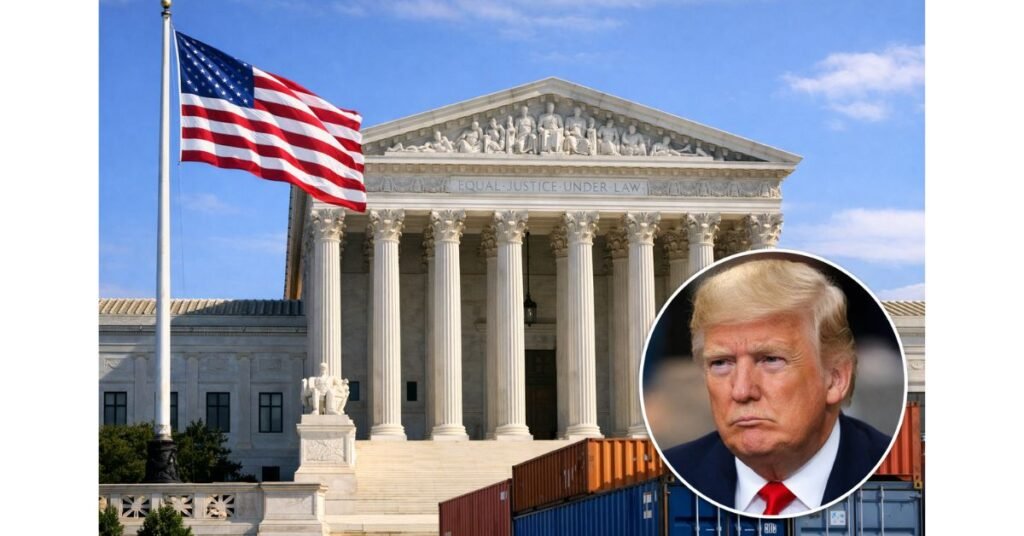
Washington, United States– The U.S. Supreme Court on Friday ruled 6–3 that former President Donald Trump’s sweeping global tariffs imposed under the International Emergency Economic Powers Act (IEEPA) were illegal because the statute did not grant the executive branch the authority to set tariffs, the Court said in its decision issued on February 20. Chief Justice John Roberts wrote for the majority that only Congress has the constitutional power to levy import duties, and the Court sent aspects of the case back to lower courts for further handling.
The justices concluded that IEEPA’s language, which allows the president to “regulate … importation” during declared emergencies, does not extend to imposing tariffs of unlimited scope, amount or duration. The decision affirmed that Trump exceeded his authority in levying broad import taxes on most U.S. trading partners, a policy first implemented in 2025 under claims of national emergency.
Economists and trade experts warn the ruling could trigger demands for refunds of tariffs paid under the invalidated policy, potentially involving tens of billions of dollars, though the Supreme Court did not provide a process for refunding the revenue collected. Trump, who sharply criticized the decision after it was released, has said he will pursue alternative tariff authorities and announced a temporary 10 percent global tariff under the Trade Act of 1974 to replace the duties struck down by the Court.
In dissent, three justices argued that the majority’s interpretation was overly restrictive, cautioning that stripping the executive of such powers could disrupt U.S. responses to global economic threats. The majority opinion leaned on constitutional text and precedent affirming that the power to lay and collect taxes and duties rests with Congress.
The decision comes amid ongoing legal challenges from states and businesses that contested the legality of the tariffs, which had been partly upheld and stayed by lower courts before reaching the Supreme Court. Analysts say the ruling not only reshapes U.S. trade policy but also reinforces judicial limits on unilateral executive action in economic matters.
CLICK HERE FOR MORE BLOG POSTS

Hannah Price is a digital journalist who covers breaking news, global events, and trending stories with accuracy and speed. She has previously contributed to several online magazines and has built a reputation for verifying facts before publishing. Hannah believes in responsible reporting and aims to present stories in a way that readers can trust.