
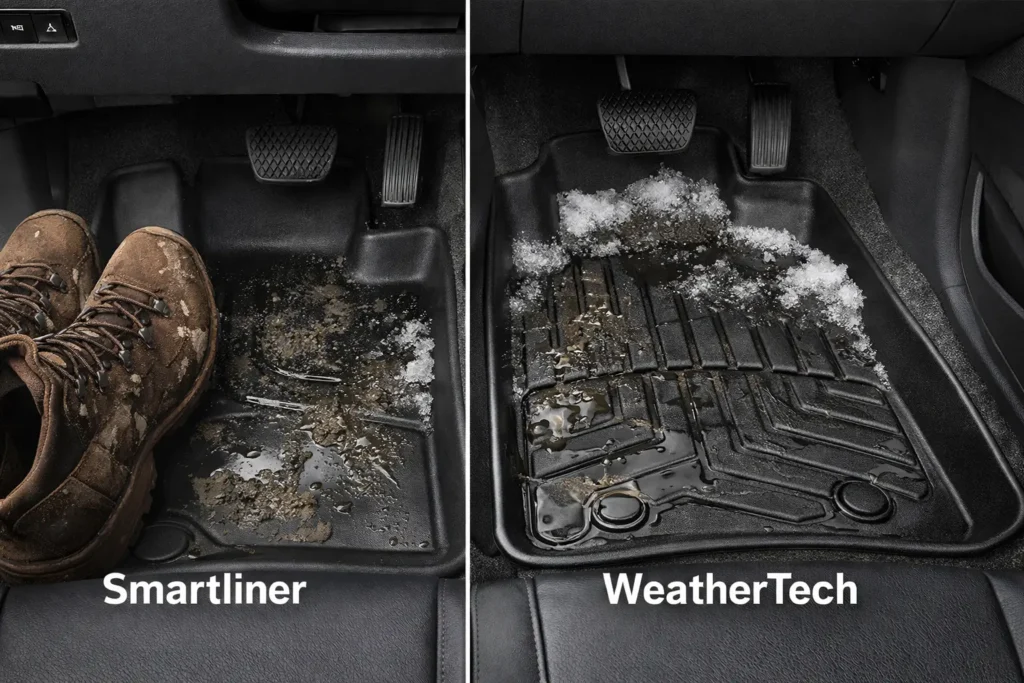
If you’ve ever watched muddy boots, spilled coffee, or melting snow slowly destroy your car’s interior, you already understand why the smartliner vs weathertech debate matters so much. Floor liners aren’t just accessories anymore—they’re protection systems for one of the biggest investments most of us own.
I still remember the first winter I bought a new car and thought, “Factory mats will be fine.” Three months later, the carpet smelled like wet dog, salt stains were permanent, and resale value took a hit. That’s when I learned a hard lesson: not all floor protection is created equal.
Today, Smartliner and WeatherTech dominate the conversation. One promises premium performance with a premium price. The other claims comparable protection without emptying your wallet. But which one actually delivers in real life—not just in marketing photos?
In this guide, we’ll break down everything you need to know: materials, fit, durability, price, real-world use cases, installation, and common buyer mistakes. By the end, you’ll know exactly which brand makes sense for your vehicle, lifestyle, and budget.
Topic Explanation: What Does “Smartliner vs WeatherTech” Really Mean?
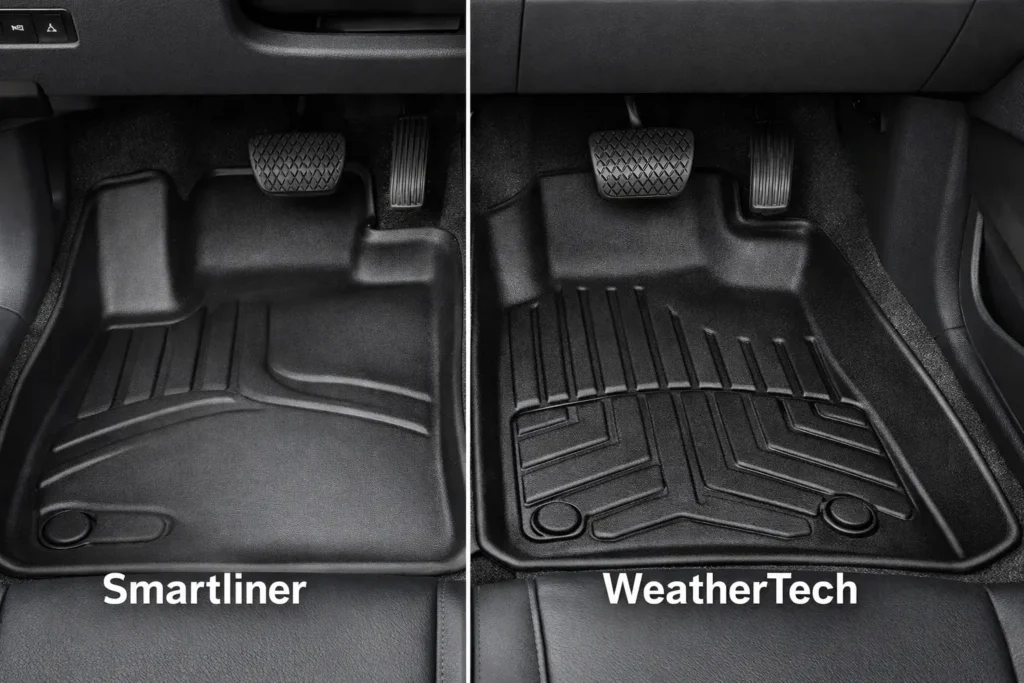
At its core, the smartliner vs weathertech comparison is about choosing between two leading brands of custom-fit all-weather floor liners. These aren’t your floppy rubber mats from the auto parts store. Both brands design vehicle-specific liners that lock into place, cover the carpet edge-to-edge, and trap dirt, water, salt, sand, and debris before it causes damage.
Think of your car’s floor like a phone screen. Factory mats are like a thin plastic film—better than nothing, but limited. Smartliner and WeatherTech are more like tempered glass screen protectors: molded precisely, tougher, and built to absorb abuse.
WeatherTech is the more established name. It’s been around longer, has aggressive marketing, and is often associated with “top-tier” quality. Smartliner entered later, focusing on value-driven buyers who still want full coverage and durability without the premium price tag.
Both brands use laser-measured designs, raised edges, and textured surfaces. Both aim to solve the same problem: keeping your interior clean, dry, and resale-ready. Where they differ is in materials, price philosophy, and subtle design choices that matter more than you might think once you’re living with them every day.
Understanding these differences is crucial because floor liners aren’t something you want to replace every year. They’re a long-term decision, especially if you live in harsh climates or have kids, pets, or an outdoor-heavy lifestyle.
Benefits & Use Cases: Who Each Brand Is Best For
The smartest way to approach the smartliner vs weathertech decision is by looking at real-world use cases instead of brand hype. Different drivers have different priorities, and neither option is universally “better” for everyone.
WeatherTech tends to appeal to drivers who:
- Want a premium feel and finish
- Drive newer or higher-end vehicles
- Live in extreme weather conditions (heavy snow, salt, rain)
- Plan to keep their car long-term and maximize resale value
WeatherTech liners feel stiffer and more rigid, which helps them maintain shape under constant abuse. If you’re a contractor tracking mud daily, or someone who skis every weekend, that rigidity can be reassuring.
Smartliner shines for drivers who:
- Want excellent protection without overspending
- Lease vehicles or change cars frequently
- Have kids, pets, or messy passengers
- Live in moderate climates or mixed conditions
Smartliner mats are more flexible, which makes them easier to install and remove for cleaning. They still provide raised edges and deep channels, but with a softer touch underfoot.
Both brands are fantastic for:
- Parents dealing with spilled snacks and drinks
- Dog owners battling fur, mud, and water bowls
- Ride-share drivers who want easy cleanup
- Outdoor enthusiasts hauling gear, boots, and tools
The key takeaway here is that protection level alone doesn’t decide the winner. Comfort, price sensitivity, and daily usage patterns play just as big a role.
Materials & Build Quality: Where the Differences Really Show
When comparing smartliner vs weathertech, materials are where subtle but important distinctions appear. WeatherTech uses a proprietary thermoplastic elastomer (TPE) blend that feels firm, almost industrial. It resists curling and warping exceptionally well, even in extreme temperatures.
Smartliner also uses TPE, but with a slightly softer formulation. The mats flex more easily, which some drivers prefer because it feels less rigid underfoot. This flexibility can also make removal and reinstallation easier during deep cleaning.
WeatherTech’s channels are typically deeper and more aggressively contoured. This helps funnel liquids away from shoes and trap debris efficiently. Smartliner’s design is still effective, but slightly less pronounced.
In terms of longevity:
- WeatherTech liners often last the entire life of the vehicle
- Smartliner liners also last years, though they may show wear sooner under heavy-duty use
Neither brand smells strongly of rubber, which is a common complaint with cheaper mats. Both are also recyclable and designed to withstand heat without melting or cracking.
If you’re the type who values overbuilt durability and doesn’t mind a firmer surface, WeatherTech feels more “tank-like.” If you prefer something forgiving, flexible, and still tough, Smartliner holds its own surprisingly well.
Step-by-Step Guide: How to Choose Between Smartliner and WeatherTech
Choosing the right floor liner doesn’t need to be overwhelming. Here’s a clear process to make the decision confidently.
First, assess your climate. If you deal with heavy snow, road salt, or constant rain, WeatherTech’s deeper channels and stiffer construction may offer better long-term protection. For milder or mixed climates, Smartliner performs more than adequately.
Second, consider your vehicle type and usage. Trucks, SUVs, and work vehicles see more abuse. Sedans and leased cars may not need the absolute toughest option available.
Third, set your budget. WeatherTech typically costs 20–40% more than Smartliner for a full set. Ask yourself whether that price difference aligns with how long you’ll keep the vehicle and how hard you’ll be on the mats.
Fourth, think about comfort and aesthetics. WeatherTech has a more industrial look. Smartliner tends to blend in more subtly with interiors, especially in family vehicles.
Finally, check vehicle-specific fit availability. Both brands offer excellent coverage, but availability can vary for older or less common models.
Best practices include:
- Ordering directly from the manufacturer for guaranteed fit
- Avoiding universal mats if protection is your goal
- Pairing liners with a cargo mat for full interior coverage
By following this step-by-step approach, the choice becomes less about brand loyalty and more about matching the product to your real needs.
Tools, Comparisons & Recommendations
In a direct smartliner vs weathertech comparison, pricing and value often tip the scale. WeatherTech’s higher price reflects its brand reputation, U.S.-based manufacturing, and ultra-rigid construction. Smartliner positions itself as a value-driven alternative without sacrificing core functionality.
WeatherTech Pros:
- Exceptional durability
- Deep channels and rigid structure
- Strong resale value perception
- Made in the USA
WeatherTech Cons:
- Higher price
- Stiffer feel underfoot
- Can be harder to remove for cleaning
Smartliner Pros:
- Lower cost with similar coverage
- Flexible and comfortable
- Easy installation and removal
- Great for families and pets
Smartliner Cons:
- Slightly less rigid
- Channels not as deep
- Brand recognition is lower
Alternatives worth mentioning include Husky Liners and OEM all-weather mats, but both fall somewhere between these two in terms of price and performance.
If budget isn’t a concern and you want the “best of the best,” WeatherTech is hard to beat. If you want 90% of the protection for significantly less money, Smartliner is one of the best-value automotive accessories you can buy.
Common Mistakes & Fixes
One of the biggest mistakes buyers make in the smartliner vs weathertech debate is assuming all floor liners perform the same. Cheap knockoffs may look similar but lack proper fit and material quality.
Another common error is buying universal mats. They slide, curl, and leave exposed carpet—defeating the entire purpose of floor protection.
Some drivers also underestimate how climate affects performance. A liner that works fine in dry areas may fail in snowy or salty conditions.
To avoid these mistakes:
- Always buy vehicle-specific liners
- Match liner rigidity to climate severity
- Clean liners regularly to prevent odor buildup
- Secure them using factory retention hooks
Finally, don’t forget the cargo area. Many interiors get ruined from the back, not the front.
Conclusion
The smartliner vs weathertech debate doesn’t have a one-size-fits-all answer—and that’s a good thing. Both brands deliver excellent protection, thoughtful design, and long-term value when used in the right context.
WeatherTech is the premium, overbuilt option for drivers who want maximum durability and don’t mind paying for it. Smartliner is the smart, budget-conscious choice that still delivers serious protection for everyday life.
Whichever you choose, upgrading from factory mats is one of the best decisions you can make for your vehicle’s longevity and cleanliness. Your future self—and your resale value—will thank you.
If you’ve used either brand, share your experience. Real-world feedback helps others make smarter decisions.
FAQs
Is Smartliner as good as WeatherTech?
Smartliner offers comparable protection at a lower price, though WeatherTech is slightly more durable and rigid.
Which is better for snow and salt?
WeatherTech generally performs better in extreme winter conditions due to deeper channels.
Do Smartliner mats curl over time?
They can show minor wear with heavy use, but generally maintain shape well.
Are both brands custom-fit?
Yes, both use vehicle-specific laser measurements.
Which is easier to clean?
Smartliner is slightly easier to remove and reinstall due to flexibility.

Adrian Cole is a technology researcher and AI content specialist with more than seven years of experience studying automation, machine learning models, and digital innovation. He has worked with multiple tech startups as a consultant, helping them adopt smarter tools and build data-driven systems. Adrian writes simple, clear, and practical explanations of complex tech topics so readers can easily understand the future of AI.