
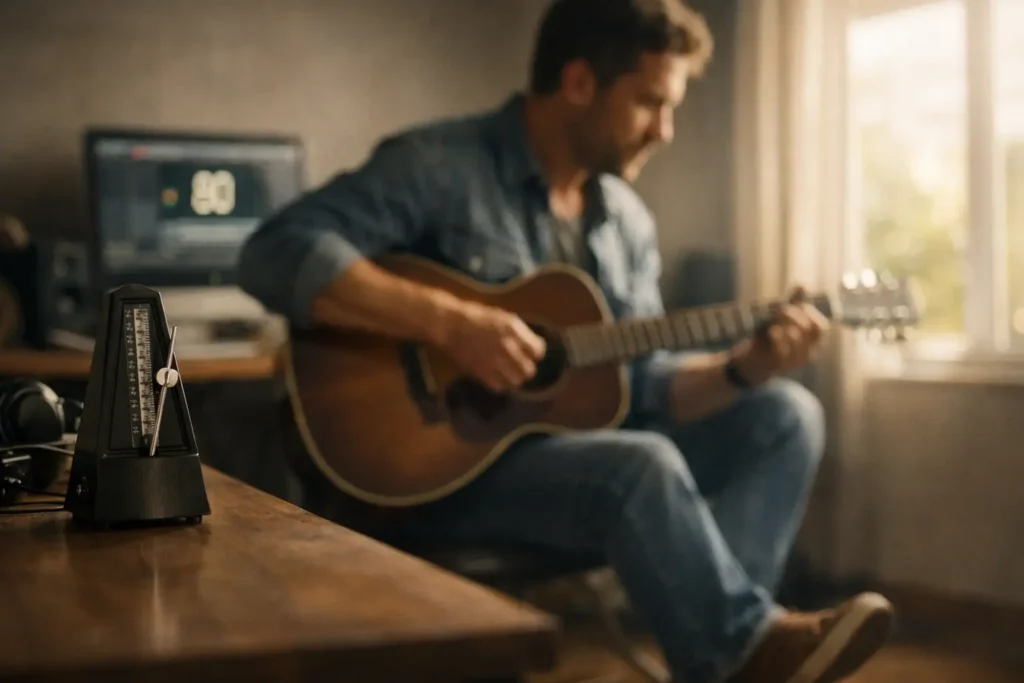
Have you ever listened to a technically perfect musician and still felt… nothing? Or maybe you’ve practiced scales for years, learned complex chords, nailed speed and accuracy—yet something about your playing still feels stiff or lifeless. In almost every case, the missing ingredient isn’t talent or theory. It’s rhythm technique.
Rhythm technique is the invisible force that turns notes into music. It’s what makes people tap their feet, nod their heads, and feel emotionally connected to what they’re hearing. Whether you play guitar, piano, drums, sing, produce beats, or even teach music, your rhythmic control determines how convincing, professional, and enjoyable your performance feels.
In this guide, we’re going deep—without getting overwhelming. You’ll learn what rhythm technique really is, why it matters more than most musicians realize, how professionals develop it, and how you can systematically improve your own sense of time and groove. We’ll cover practical exercises, real-world examples, tools worth using, and common mistakes that quietly sabotage progress.
If rhythm has ever felt mysterious, frustrating, or “something you either have or don’t,” this article will change how you see it—and how you practice it.
What Is Rhythm Technique? A Beginner-Friendly Explanation

At its core, rhythm technique is your ability to control time in music—intentionally, consistently, and expressively. It’s not just about playing “on beat.” It’s about how you place notes within time and how confidently you do it.
Think of rhythm technique like walking. Most people can walk, but not everyone walks with the same posture, balance, or grace. In music, many players can follow a beat, but fewer can shape it. Rhythm technique is the difference between simply keeping time and making time feel good.
It includes several interconnected skills:
- Internal time (your ability to feel a steady pulse without external help)
- Subdivision (understanding how beats divide into smaller units)
- Consistency (placing notes evenly and reliably)
- Control of push and pull (playing slightly ahead or behind the beat on purpose)
- Groove awareness (how your rhythm interacts with others)
A helpful analogy is conversation. Words matter, but timing matters just as much. Interrupt too early, pause too long, or rush your speech, and the message loses impact. Music works the same way. Rhythm technique governs the flow, pacing, and emotional delivery of musical ideas.
Importantly, rhythm technique is learned—not gifted. Some people develop it early through exposure or movement-based activities, but anyone can train it with the right approach. It’s a skill set, not a personality trait.
Why Rhythm Technique Matters More Than You Think
Many musicians obsess over pitch, tone, and speed while quietly underestimating rhythm technique. Yet in real musical situations—bands, studios, jam sessions, live gigs—timing is what gets noticed first.
Strong rhythm technique creates immediate trust. Other musicians feel safe playing with you. Audiences feel grounded listening to you. Even simple parts sound intentional and professional when the rhythm is solid.
Here’s how rhythm technique shows up in real-world scenarios:
- In a band, tight rhythm makes rehearsals smoother and performances more cohesive.
- In recording sessions, strong timing reduces retakes and editing.
- In songwriting, rhythmic confidence makes melodies more memorable.
- In teaching, clear rhythm helps students progress faster.
- In producing, rhythm technique separates amateur beats from polished tracks.
There’s also an emotional side. Rhythm is physical. It connects directly to movement, breathing, and heart rate. When your rhythm technique improves, your music starts to feel alive instead of mechanical.
Perhaps most importantly, rhythm technique multiplies the value of everything else you practice. Great tone with poor timing still sounds amateur. Simple notes with great rhythm often sound brilliant.
Who Should Focus on Rhythm Technique (And When)
Short answer: everyone. But the reasons differ depending on your role and experience level.
Beginners benefit because rhythm technique prevents bad habits from forming early. Learning to count, subdivide, and move with time from day one builds a strong foundation that makes everything else easier later.
Intermediate players often hit a plateau because their technique and theory improve faster than their timing. This is where rhythm technique becomes the bottleneck. Strengthening it unlocks new levels of confidence and musicality.
Advanced musicians use rhythm technique to develop personal style. Micro-timing choices—slightly behind the beat, aggressive pushes, relaxed pockets—become part of their musical identity.
Different roles emphasize rhythm in different ways:
- Drummers and percussionists live in rhythm technique; it’s their primary voice.
- Bassists lock rhythm and harmony together.
- Guitarists and pianists balance rhythm with melody and chords.
- Vocalists rely on rhythm technique for phrasing and groove.
- Producers shape rhythm at a macro level across entire tracks.
If you’ve ever been told you “rush,” “drag,” or “sound stiff,” rhythm technique is the solution—not more scales or faster tempos.
The Core Elements of Strong Rhythm Technique
Before diving into practice methods, it helps to understand what you’re actually training. Rhythm technique isn’t one thing—it’s a system of related abilities.
Internal Pulse
This is your inner metronome. A strong internal pulse lets you maintain steady time without external cues. It’s what allows musicians to play confidently during tempo changes, pauses, or unaccompanied sections.
Subdivision Awareness
Subdivision is how you divide beats into smaller units—eighth notes, triplets, sixteenths. Clear subdivision keeps your timing even and prevents drifting. Most timing issues come from weak subdivision, not a bad sense of beat.
Consistency and Precision
Consistency doesn’t mean robotic playing. It means intentional placement. You should be able to repeat rhythmic ideas accurately before you start bending them creatively.
Micro-Timing Control
This is where groove lives. Playing slightly ahead creates urgency. Playing slightly behind feels relaxed. Advanced rhythm technique means choosing where notes sit, not guessing.
Listening and Interaction
Rhythm exists in context. Great rhythm technique includes listening deeply to others and adjusting in real time.
A Step-by-Step Guide to Building Rhythm Technique
Improving rhythm technique doesn’t require magical talent or endless hours. It requires focused, intelligent practice. Here’s a structured approach that works across instruments and styles.
Step 1: Slow Everything Down
Most timing problems hide at fast tempos. Slow practice exposes them.
- Set a metronome at an uncomfortably slow tempo.
- Play simple patterns you already know.
- Focus on placing each note precisely.
Slow practice strengthens internal pulse and reveals inconsistencies you can’t hear when rushing.
Step 2: Count Out Loud
Counting feels awkward, but it’s powerful. Saying “1 and 2 and” or “1 e & a” connects your mind to the grid of time.
- Count while playing.
- Clap rhythms while counting.
- Speak rhythms before playing them.
This builds conscious control before instinct takes over.
Step 3: Subdivision Drills
Practice feeling subdivisions without playing them.
- Set a metronome to click only on beats 2 and 4.
- Then only on beat 1.
- Eventually, let it click once per bar.
This forces you to supply the missing time internally.
Step 4: Use Movement
Rhythm is physical. Tap your foot, sway, nod, or walk while practicing.
Movement reinforces pulse and makes timing feel natural instead of intellectual.
Step 5: Record Yourself
Recording doesn’t lie. Listen back without judgment.
- Are notes consistently early or late?
- Does the groove feel stable?
- Does time drift during transitions?
Small, honest adjustments here lead to big improvements.
Step 6: Play With Others
Nothing develops rhythm technique like real interaction.
- Jam with musicians who have strong time.
- Play along with recordings.
- Use drum loops instead of static clicks.
Context trains adaptability.
Tools, Comparisons, and Expert Recommendations
The right tools can accelerate rhythm technique—but only if used intentionally.
Metronomes
Free options (apps and online tools) are more than enough for most players. Paid metronomes often add advanced features like odd meters, subdivisions, and silent bars.
Pros:
- Precise and objective
- Excellent for foundational timing
Cons:
- Can encourage rigidity if overused
Drum Machines and Loops
Drum loops feel more musical than clicks and help develop groove awareness.
Pros:
- Encourages feel and pocket
- Great for stylistic practice
Cons:
- Less precise feedback than a metronome
DAWs and Practice Apps
Digital audio workstations and rhythm apps allow visual feedback and detailed analysis.
Pros:
- Powerful for recording and self-review
- Useful for producers and advanced learners
Cons:
- Can become distracting if overcomplicated
Expert recommendation: start simple. A basic metronome and regular recording habit will take you further than complex tools used inconsistently.
Common Rhythm Technique Mistakes (And How to Fix Them)
Even dedicated musicians fall into predictable traps when working on rhythm technique.
Mistake 1: Practicing Too Fast
Speed hides timing issues. Fix: practice slower than comfortable and earn speed gradually.
Mistake 2: Ignoring Subdivision
Many players “feel” the beat but lose the space between beats. Fix: count and clap subdivisions daily.
Mistake 3: Relying Too Much on the Metronome
The metronome should test your time, not replace it. Fix: use silent bars and sparse clicks.
Mistake 4: Not Listening Back
Without feedback, mistakes repeat. Fix: record short practice segments and review them objectively.
Mistake 5: Treating Rhythm as Secondary
Rhythm technique isn’t a warm-up—it’s core practice. Fix: schedule rhythm-focused sessions intentionally.
How Rhythm Technique Evolves Over Time
As your rhythm technique improves, something interesting happens: you stop thinking about it so much.
Early on, rhythm is conscious and effortful. You count, focus, correct. Over time, it becomes embodied. You feel time rather than calculate it. Eventually, rhythm becomes expressive—a tool for storytelling rather than a problem to solve.
Advanced musicians don’t abandon fundamentals. They refine them. They still practice slow, still record themselves, still listen deeply. The difference is awareness and intention.
Rhythm technique is not a destination. It’s a lifelong relationship with time.
Conclusion
If there’s one takeaway from this guide, it’s this: rhythm technique is the foundation that makes all music believable. It’s not flashy, but it’s transformative. When your timing improves, everything else you play sounds better with less effort.
The good news is that rhythm technique is trainable at any stage. With slow practice, conscious subdivision, honest feedback, and real musical interaction, your sense of time will steadily sharpen.
Start small. Practice intentionally. Trust the process. And remember—great rhythm doesn’t just keep time. It makes time feel good.
If you found this helpful, try applying one exercise today, or share your experience and questions. Rhythm is meant to be shared.
FAQs
What is rhythm technique in music?
Rhythm technique is the skill of controlling timing, subdivision, and groove in music with consistency and intention.
Can rhythm technique be learned, or is it natural?
It can absolutely be learned. While some people develop it earlier, rhythm technique improves through structured practice.
How long does it take to improve rhythm technique?
Noticeable improvement can happen in weeks with focused practice, but mastery is a long-term process.
Is a metronome enough to develop rhythm technique?
A metronome is helpful, but combining it with movement, recording, and playing with others is more effective.
Why do I rush or drag when I play?
Rushing and dragging usually come from weak subdivision or internal pulse, not lack of effort.

Adrian Cole is a technology researcher and AI content specialist with more than seven years of experience studying automation, machine learning models, and digital innovation. He has worked with multiple tech startups as a consultant, helping them adopt smarter tools and build data-driven systems. Adrian writes simple, clear, and practical explanations of complex tech topics so readers can easily understand the future of AI.