
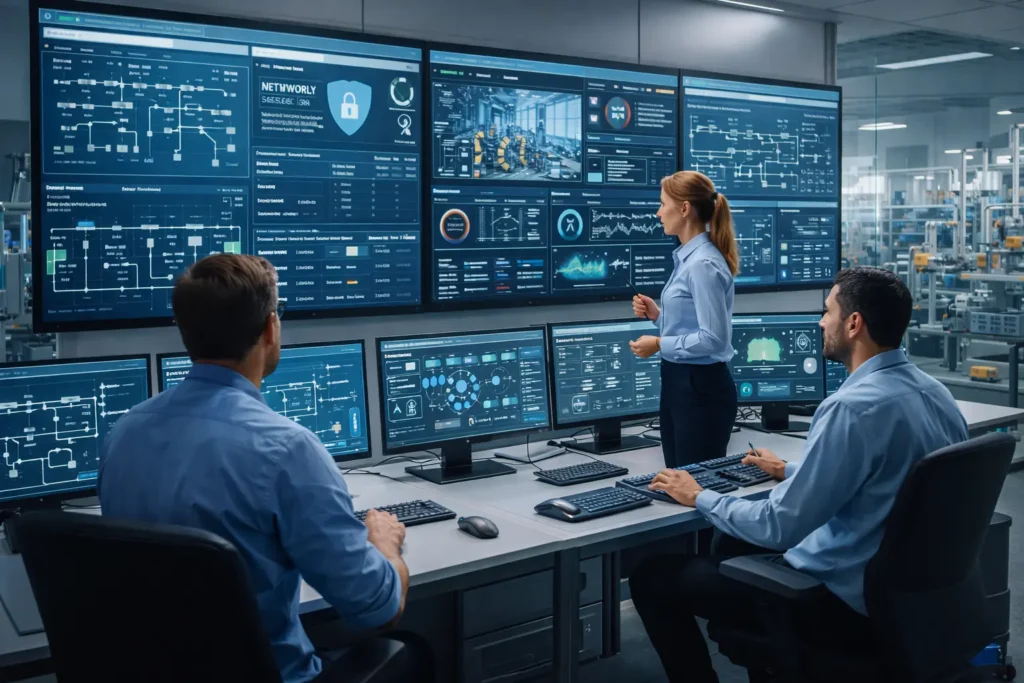
Operational technology (OT) sits at the beating heart of every factory floor, power plant, water treatment facility, and transportation network in the world. It is the hardware and software that reaches into the physical world — turning a valve, controlling a turbine, regulating a pipeline — tasks that digital information systems alone cannot perform. As industries accelerate their digital transformation journeys and the line between the virtual and physical world blurs, the need for a dedicated Operational Technology Division has never been more urgent or more strategically significant.
This guide provides a complete, authoritative overview of what an Operational Technology Division is, how it is structured, what it does, and why it is one of the most critical organizational investments a modern enterprise can make.
Defining Operational Technology (OT) and Its Core Function
Operational technology is defined as the hardware and software that detects or causes change through the direct monitoring and control of physical devices, processes, and events in an enterprise environment. Unlike information technology (IT), which primarily manages data and communications, OT manages the real-world physical processes on which entire economies depend.
The National Institute of Standards and Technology (NIST) defines OT as a broad category encompassing industrial control systems (ICS), building management systems (BMS), and a range of other systems that interact with the physical world. What unites all OT is its defining characteristic: real-time interaction with physical assets, where a failure does not just corrupt data — it can shut down a power grid, contaminate a water supply, or halt an entire manufacturing line.
Key Components: From PLCs and SCADA to IIoT
An Operational Technology environment is composed of a rich ecosystem of specialized hardware and software. The most common components include:
- Programmable Logic Controllers (PLCs): Ruggedized computers that execute control logic for machines and processes. They are the workhorses of factory automation, reading inputs from sensors and issuing commands to actuators.
- Supervisory Control and Data Acquisition (SCADA) Systems: Large-scale systems that monitor and control geographically dispersed assets — from oil pipelines spanning thousands of miles to electrical distribution networks across entire regions.
- Distributed Control Systems (DCS): Process control systems typically used in continuous industrial processes such as oil refining, chemical production, and power generation. DCS architectures distribute control functions across multiple controllers rather than centralizing them.
- Remote Terminal Units (RTUs): Field devices that monitor remote equipment and relay data to central SCADA systems. RTUs are common in utility and energy environments where assets are physically dispersed.
- Building Management Systems (BMS): Systems that control and automate building functions including HVAC, lighting, fire safety, and access control. Modern smart buildings rely heavily on BMS infrastructure.
- Industrial Internet of Things (IIoT): The network of internet-connected sensors, devices, and machines in industrial settings. IIoT represents the convergence of traditional OT with modern connectivity, enabling unprecedented levels of data collection, remote monitoring, and predictive analytics.
| Key OT Communication Protocols OT environments rely on specialized protocols designed for reliability and real-time performance rather than security: Modbus (serial communication for PLCs), DNP3 (used in electric and water utilities), BACnet (building automation), Profibus and Profinet (industrial automation), and EtherNet/IP (manufacturing). Many of these were designed decades ago without cybersecurity as a design consideration. |
The Operational Technology Division: Structure and Mission
An Operational Technology Division (OT Division) is a dedicated organizational unit within an enterprise responsible for governing, operating, securing, and advancing the organization’s OT environment. Unlike a general IT department — which focuses on information systems, data management, and business applications — the OT Division is specifically chartered to manage the technology that interacts with physical processes, industrial equipment, and critical infrastructure.
The OT Division serves as the organizational bridge between the operational plant floor and the strategic executive suite. It ensures that the technology enabling physical operations is not only functional and reliable but also secure, compliant, future-ready, and aligned with the broader business strategy. In many industries, the OT Division also plays a direct role in regulatory compliance, safety assurance, and risk management frameworks that govern critical infrastructure.
Core Responsibilities of an OT Division
The responsibilities of an Operational Technology Division span the full lifecycle of OT assets and processes. While the specific mandate varies by industry and organizational size, the core responsibilities typically include:
- OT Asset Lifecycle Management: Maintaining a comprehensive, up-to-date inventory of all OT hardware, software, firmware versions, and communication links. Managing asset procurement, commissioning, maintenance, and decommissioning.
- Cybersecurity Governance: Developing and enforcing OT-specific security policies, standards, and procedures. Conducting risk assessments, vulnerability management programs, and incident response planning tailored to OT environments.
- Operational Reliability and Continuity: Ensuring that OT systems operate with the high availability demanded by industrial processes. Developing and testing business continuity and disaster recovery plans specific to OT environments.
- IT/OT Convergence Management: Overseeing the strategic and technical integration of OT systems with enterprise IT infrastructure. Establishing governance frameworks, communication protocols, and shared service agreements between IT and OT teams.
- Regulatory Compliance: Ensuring the organization meets all applicable regulatory standards, including NIST SP 800-82, IEC 62443, NERC CIP (for energy), TSA cybersecurity directives (for pipelines and rail), and other sector-specific requirements.
- Vendor and Supply Chain Management: Managing relationships with OT hardware and software vendors, ensuring third-party components meet security and operational standards, and mitigating supply chain risks.
- Strategic Technology Roadmap: Planning the organization’s long-term OT technology evolution, including IIoT adoption, modernization of legacy systems, and integration of advanced analytics and AI capabilities.
Key Roles Within the OT Division
A well-structured Operational Technology Division requires a blend of leadership, technical expertise, and cross-functional capabilities. Below are the typical roles found within a mature OT Division:
| Role | Level | Key Responsibilities |
| OT Director / VP of OT | Senior leadership | Sets strategic direction, manages budget, liaises with executive leadership and board |
| OT Security Manager | Management | Owns the OT security program, coordinates with CISO/CIO, establishes policies |
| Control Systems Engineer | Technical | Designs, configures, and maintains PLCs, SCADA, DCS and related control systems |
| ICS/OT Security Analyst | Technical | Monitors OT networks for threats, conducts vulnerability assessments, responds to incidents |
| OT Network Architect | Technical | Designs secure OT network topology, implements segmentation and DMZ architecture |
| IT/OT Integration Specialist | Technical/Bridge | Manages data flows between IT and OT environments, ensures protocol compatibility |
| Compliance & Risk Analyst | Governance | Ensures adherence to NIST, IEC 62443, NERC CIP, and sector-specific regulations |
| Vendor & Asset Manager | Operations | Tracks OT asset inventory, manages vendor relationships, coordinates patch cycles |
In smaller organizations, individuals may hold multiple roles, and the OT Division may be embedded within an engineering or facilities department. In large enterprises — particularly those in energy, utilities, manufacturing, or critical infrastructure — the OT Division may operate as a standalone function reporting directly to the Chief Technology Officer (CTO), Chief Information Security Officer (CISO), or Chief Operations Officer (COO).
IT vs. OT: Understanding the Critical Differences
One of the most important conceptual foundations for understanding the Operational Technology Division is grasping the fundamental differences between IT and OT. These two technology domains have historically operated in organizational silos — and for good reason. They have different priorities, different risk profiles, different asset lifecycles, and different security requirements.
In IT, the governing security framework is the CIA Triad: Confidentiality, Integrity, and Availability — in that order. A breach of confidentiality (e.g., data theft) is typically the primary concern. In OT, the priorities are essentially inverted. Availability is paramount. An OT system going offline — even briefly and even for a scheduled security patch — can halt production, trigger safety incidents, or disrupt services that communities depend upon.
| Attribute | Information Technology (IT) | Operational Technology (OT) |
| Primary Goal | Confidentiality & Integrity | Availability & Safety |
| Uptime Tolerance | Scheduled downtime acceptable | Near-zero downtime tolerated |
| Patching Cycle | Frequent & automated | Infrequent; requires validation |
| System Lifespan | 3–5 years (refresh cycles) | 15–25+ years (legacy systems) |
| Connectivity | Internet-facing, cloud-ready | Air-gapped or isolated networks |
| Security Focus | Data confidentiality (CIA triad) | Operational continuity (AIC) |
| Common Protocols | TCP/IP, HTTPS, TLS | Modbus, DNP3, BACnet, Profibus |
| Real-Time Requirements | Moderate (seconds/milliseconds) | Critical (microseconds) |
| Primary Risk | Data breach, ransomware | Physical damage, safety failure |
These differences have profound organizational implications. An IT security team applying standard IT security practices to an OT environment can inadvertently cause exactly the kind of operational disruption they are trying to prevent. This is why a dedicated Operational Technology Division, with OT-specific expertise and OT-specific governance frameworks, is essential rather than optional for any organization with significant OT assets.
The Imperative of OT Cybersecurity
OT cybersecurity has evolved from a niche technical concern into a board-level strategic priority. The convergence of OT with IT and the internet — driven by IIoT adoption, remote monitoring requirements, and the demand for real-time operational data — has dramatically expanded the attack surface of OT environments. Meanwhile, nation-state threat actors, ransomware groups, and hacktivists have increasingly targeted industrial control systems and critical infrastructure.
The consequences of a successful cyberattack on OT systems can be catastrophic and far-reaching. Unlike a data breach, an OT attack can cause physical damage to equipment, disrupt essential services for entire populations, endanger worker safety, and in the most extreme cases, cause loss of life. These stakes make OT cybersecurity one of the highest-consequence domains in the entire field of information security.
Common OT Vulnerabilities and Attack Vectors
Understanding the vulnerabilities that OT environments face is the first step toward addressing them. Several key weaknesses persist across industries:
- Legacy Systems with Long Lifespans: OT assets are often designed to last 20–30 years, far outlasting the software security support of their operating systems and firmware. Many industrial environments run on Windows XP, Windows Server 2003, or even older platforms that no longer receive security patches.
- Insufficient Network Segmentation: Many OT networks were designed without segmentation, allowing unrestricted lateral movement. If an attacker gains entry through one device, they may be able to traverse the entire OT network without encountering any barriers.
- Insecure Legacy Protocols: Protocols like Modbus and DNP3 were designed for reliability, not security. They lack built-in authentication, encryption, or integrity verification, meaning any device on the same network can issue commands to a PLC without any authorization.
- Inadequate Access Controls: Default credentials, shared accounts, and the absence of multi-factor authentication (MFA) are common in OT environments. Privileged access is often broadly granted and rarely reviewed.
- Patching Challenges: Even when patches are available, applying them to OT systems requires coordination with operations teams, vendor validation, and often a scheduled maintenance window — creating windows of extended vulnerability that can last months or years.
- Supply Chain Risks: OT hardware and software components often come from global supply chains with multiple third-party vendors, each representing a potential point of compromise. Malicious firmware, counterfeit hardware, and compromised software updates are documented threat vectors.
- Remote Access Expansion: The COVID-19 pandemic accelerated remote access to OT systems, with vendors and operators connecting from outside the traditional perimeter. Improperly secured remote access is now one of the most frequently exploited entry points for OT attacks.
| Notable OT Cyber Incidents The 2010 Stuxnet malware attack — the first publicly known cyberweapon — specifically targeted Siemens PLCs in Iran’s nuclear centrifuge facilities, demonstrating that OT systems could be weaponized to cause physical destruction. In 2021, an attacker gained access to a Florida water treatment plant via remote access software and attempted to raise sodium hydroxide levels to dangerous concentrations. These incidents illustrate why OT cybersecurity is a matter of public safety, not just organizational risk management. |
Best Practices for Securing OT Environments
The OT Division plays a central role in establishing and enforcing security best practices. The following measures represent the foundation of a mature OT security program:
- Network Segmentation and the Purdue Model: Implement a defense-in-depth architecture that separates OT networks from IT networks, typically using a demilitarized zone (DMZ). The Purdue Enterprise Reference Architecture provides a widely adopted hierarchical segmentation framework for industrial environments.
- OT Asset Inventory and Visibility: You cannot protect what you cannot see. Deploying passive network monitoring tools — such as Claroty, Nozomi Networks, or Dragos — provides real-time visibility into OT assets and network traffic without disrupting sensitive control system communications.
- Vulnerability Management Program: Establish a formal process for identifying, prioritizing, and remediating vulnerabilities in OT systems, accounting for the operational constraints on patching. Use passive, non-disruptive scanning methods wherever possible.
- Privileged Access Management (PAM): Enforce least-privilege access principles, eliminate shared accounts and default credentials, implement MFA for all remote access, and use PAM solutions to govern and audit privileged sessions to OT systems.
- Continuous Monitoring and Anomaly Detection: Deploy OT-specific security information and event management (SIEM) capabilities and establish baselines for normal OT network behavior. Anomaly detection engines can identify suspicious deviations — such as a PLC receiving commands from an unexpected source — before they escalate.
- OT Incident Response Planning: Develop and regularly exercise OT-specific incident response playbooks that account for the operational constraints of industrial environments. Coordinate with operations, engineering, safety, and executive teams to establish clear escalation paths and decision authorities.
- Secure Remote Access (SRA): Replace ad-hoc remote access methods (e.g., consumer-grade VPNs, RDP exposed to the internet) with purpose-built secure remote access platforms that provide session recording, time-limited access, and vendor-specific controls.
Strategic Management of the IT/OT Convergence
IT/OT convergence is the defining strategic challenge — and opportunity — of the modern industrial enterprise. As organizations seek to leverage data from their operational environments to drive efficiency, predictive maintenance, and competitive advantage, the traditional air gap between the OT world and the IT world is rapidly dissolving.
Convergence brings transformative benefits: real-time operational analytics, remote monitoring capabilities, AI-driven predictive maintenance, and seamless supply chain integration. It also introduces significant risks. Connecting OT environments to IT networks — and through them, to the internet and cloud platforms — exposes decades-old industrial control systems to a modern threat landscape they were never designed to face.
The Operational Technology Division sits at the center of this transformation, responsible not only for managing the technical integration but also for ensuring that operational reliability, safety, and security are not compromised in pursuit of digital efficiency gains.
Overcoming Integration Challenges
IT/OT convergence encounters practical obstacles that require careful planning and specialized expertise to navigate. The most significant integration challenges include:
- Legacy System Compatibility: Many OT systems communicate using proprietary, vendor-specific protocols that are incompatible with modern IT infrastructure. Protocol gateways, data historians, and specialized middleware may be required to bridge the gap without disrupting operations.
- Vendor Lock-In: OT environments are often heavily tied to specific vendor ecosystems. Replacing or integrating these systems requires careful management of vendor relationships and contracts, and may require phased modernization approaches spanning multiple years.
- Real-Time Data Integration: OT systems generate high volumes of time-series data with microsecond precision requirements. Integrating this data with IT analytics platforms and cloud environments requires purpose-built data architectures, such as OT data historians and edge computing platforms.
- Governance and Ownership Ambiguity: Convergence creates gray zones of responsibility: who owns a device that sits at the boundary of IT and OT? The OT Division must work with IT leadership to establish clear ownership models, shared service agreements, and joint governance frameworks.
- Cybersecurity Risk Introduction: Every integration point is a potential attack vector. Each connection between IT and OT must be rigorously evaluated, controlled, and monitored. The OT Division must enforce the principle that no integration is approved without a corresponding security assessment and control framework.
Building a Collaborative IT/OT Culture
The most significant barriers to successful IT/OT convergence are not technical — they are cultural and organizational. IT and OT teams have historically operated with different mindsets, different vocabularies, different risk tolerances, and sometimes deep mutual mistrust.
The OT Division can act as the catalyst for cultural transformation by establishing joint governance bodies, creating cross-functional teams that embed OT engineers alongside IT security professionals, and developing shared KPIs that align both groups around common operational outcomes. Regular joint training exercises, tabletop simulations, and cross-functional incident response drills build the mutual understanding and trust that effective convergence requires.
Leadership must champion this cultural shift from the top. When executives communicate clearly that IT and OT are complementary rather than competitive, and when performance metrics reward collaboration rather than siloed excellence, the organizational foundation for successful convergence is established.
Industries and Sectors Relying on Operational Technology
Operational technology is not confined to a single industry vertical. Virtually every sector of the modern economy depends on OT to some degree, though the complexity, scale, and criticality of OT environments varies dramatically across sectors:
- Energy and Utilities: Power generation plants, electrical transmission and distribution grids, and renewable energy installations all rely on SCADA, DCS, and EMS (Energy Management Systems). This sector faces some of the most active OT threat activity from nation-state actors.
- Oil, Gas, and Petrochemicals: From upstream drilling and wellhead control to downstream refining and distribution pipelines, oil and gas operations depend on OT for safety, efficiency, and regulatory compliance. The 2021 Colonial Pipeline ransomware attack demonstrated the cascading societal impact of OT-adjacent attacks in this sector.
- Manufacturing and Discrete Industry: Automotive, aerospace, electronics, and consumer goods manufacturers rely on PLCs, robotics, and industrial networks to drive production efficiency. Industry 4.0 and smart manufacturing initiatives are rapidly integrating IIoT and AI into traditional OT environments.
- Water and Wastewater Treatment: Municipal water utilities use SCADA and RTUs to manage pumping stations, treatment processes, and distribution networks. This sector often has limited cybersecurity resources despite being classified as critical infrastructure.
- Transportation: Rail systems, aviation ground infrastructure, maritime port management, and traffic management systems all depend on OT. Real-time control and safety-critical response requirements make OT security in transportation a matter of direct public safety.
- Healthcare and Pharmaceuticals: Modern hospitals depend on building management systems, medical device networks, and laboratory automation systems that share characteristics with industrial OT environments. Pharmaceutical manufacturers rely heavily on DCS and process automation for drug production.
- Nuclear and Defense: Nuclear power generation and defense installations operate some of the most security-sensitive OT environments in the world, subject to stringent regulatory oversight from bodies such as the Nuclear Regulatory Commission (NRC) and subject to dedicated threat intelligence from national security agencies.
The Future of the Operational Technology Division
The role and scope of the Operational Technology Division is evolving rapidly. Several transformative trends are reshaping what it means to manage OT in the 2020s and beyond, and forward-thinking OT Divisions are positioning themselves to lead — rather than follow — this transformation.
Emerging Trends: AI, Cloud OT, and Digital Twins
- Artificial Intelligence and Machine Learning in OT: AI/ML is being integrated into OT environments for predictive maintenance (anticipating equipment failure before it occurs), anomaly detection (identifying cybersecurity threats and operational irregularities), process optimization (continuously tuning industrial processes for maximum efficiency), and computer vision applications for quality control. The OT Division of the future will need AI governance capabilities alongside traditional engineering and security expertise.
- OT in the Cloud: Cloud platforms from AWS, Microsoft Azure, and Google Cloud are increasingly offering OT-specific services — from cloud-based SCADA to IIoT data platforms that ingest and analyze operational data at scale. Cloud OT introduces new architectural patterns, such as edge computing combined with cloud analytics, that the OT Division must evaluate and govern. Security concerns about cloud connectivity to OT environments remain significant and must be managed through rigorous architecture review.
- Digital Twins: A digital twin is a real-time virtual replica of a physical OT asset or process, continuously synchronized with its real-world counterpart through sensor data. Digital twins enable simulation-based testing of changes before deployment, remote monitoring and diagnostics, training environments for operators and security teams, and scenario planning for both operational optimization and incident response.
- Zero Trust Architecture for OT: The Zero Trust security paradigm — “never trust, always verify” — is increasingly being adapted for OT environments. Rather than relying on network perimeters, Zero Trust OT architectures enforce continuous authentication, micro-segmentation, and least-privilege access at the device level, significantly reducing the blast radius of any successful intrusion.
- Evolving Regulatory Landscape: Governments worldwide are strengthening OT-related regulations. In the United States, the TSA’s cybersecurity directives for pipelines and rail, the EPA’s cybersecurity guidance for water utilities, and the growing scope of CISA’s critical infrastructure security requirements are all expanding the compliance burden — and opportunity — for OT Divisions. In the European Union, the NIS2 Directive significantly expands OT security obligations for critical sectors.
- OT Talent Development: The intersection of OT engineering knowledge and cybersecurity expertise represents one of the rarest skill combinations in the global workforce. Forward-thinking OT Divisions are investing heavily in internal training programs, partnerships with universities, and cross-training initiatives that develop IT security professionals with OT knowledge and OT engineers with cybersecurity awareness.
faqs
What is the difference between an Operational Technology Division and an IT department?
While an IT department manages data, communications, and business applications, an Operational Technology Division specifically governs systems that interact with physical processes and industrial equipment — PLCs, SCADA, DCS, and similar control systems. OT Divisions prioritize operational availability and safety above all else, whereas IT departments typically prioritize data confidentiality. In many organizations, these functions are converging but remain organizationally distinct due to their fundamentally different risk profiles and operational requirements.
What are the main components of operational technology?
The main components of OT include Programmable Logic Controllers (PLCs), Supervisory Control and Data Acquisition (SCADA) systems, Distributed Control Systems (DCS), Remote Terminal Units (RTUs), Building Management Systems (BMS), industrial sensors, actuators, and increasingly, Industrial Internet of Things (IIoT) devices. These components communicate through specialized protocols such as Modbus, DNP3, BACnet, Profibus, and EtherNet/IP.
Why is OT security different from IT security?
OT security differs from IT security in several fundamental ways. OT systems often cannot tolerate downtime for patching or updates, run on legacy operating systems without vendor support, use protocols without built-in authentication or encryption, and have physical safety consequences if compromised. OT security tools must be passive and non-disruptive. The OT threat model also differs — attackers targeting OT environments are often nation-states seeking to cause physical damage or disruption rather than criminals seeking financial gain.
What is IT/OT convergence and why does it matter?
IT/OT convergence refers to the integration of information technology systems (data networks, enterprise applications, cloud platforms) with operational technology systems (industrial control systems, SCADA, PLCs). It matters because it enables organizations to leverage real-time operational data for analytics, efficiency improvements, predictive maintenance, and competitive advantage. However, it also introduces significant cybersecurity risks by connecting legacy OT systems — never designed for internet connectivity — to modern networks.
What are the biggest cybersecurity risks for operational technology?
The biggest OT cybersecurity risks include: legacy systems running unpatched, unsupported software; insufficient network segmentation enabling lateral movement; insecure legacy communication protocols (Modbus, DNP3) without authentication; inadequate access controls including default and shared credentials; remote access vulnerabilities; supply chain compromises; and ransomware attacks targeting OT environments to extort payments by threatening operational disruption.
What is SCADA and how does it relate to OT?
SCADA (Supervisory Control and Data Acquisition) is a category of OT system used to monitor and control geographically dispersed industrial processes. SCADA systems collect data from remote field devices (such as RTUs and PLCs), display it to operators through a human-machine interface (HMI), and allow operators to issue control commands. SCADA is a core component of OT environments in energy, water, oil and gas, and transportation sectors.
How does the FBI’s Operational Technology Division (OTD) work?
The FBI’s Operational Technology Division (OTD) is a specialized unit within the FBI that provides technical capabilities, tools, and expertise to support law enforcement and intelligence activities. Unlike enterprise OT Divisions that manage industrial systems, the FBI’s OTD focuses on lawfully authorized electronic surveillance, digital forensics, and the technical support needed by FBI field agents and partners to investigate criminal and national security threats. It represents a distinct use of the term “Operational Technology Division” in an organizational context.
What is a PLC (Programmable Logic Controller)?
A Programmable Logic Controller (PLC) is a ruggedized, specialized computer designed to automate industrial processes and machinery. PLCs read inputs from physical sensors (detecting conditions like temperature, pressure, or position), execute control logic programmed by engineers, and issue outputs to actuators (motors, valves, relays) based on that logic. They are the fundamental building blocks of modern industrial automation and are found in virtually every manufacturing and process control environment worldwide.
How do you secure legacy OT systems?
Securing legacy OT systems requires a defense-in-depth approach: implement network segmentation to isolate legacy systems from the broader network; deploy passive monitoring tools to gain visibility without disrupting operations; enforce strict access controls around legacy systems; implement application whitelisting where supported; document and maintain the systems’ known-good configurations; and develop a long-term modernization roadmap to eventually replace or wrap unsupported systems with modern, more secure alternatives.
What is the role of NIST in OT security?
The National Institute of Standards and Technology (NIST) plays a central role in defining OT security standards and guidance. NIST Special Publication 800-82 (“Guide to OT Security”) provides comprehensive guidance for securing industrial control systems. NIST’s Cybersecurity Framework (CSF) has been widely adopted as an OT security governance tool, and the NIST Risk Management Framework (RMF) provides a structured process for OT risk management. Many sector-specific regulatory frameworks reference or incorporate NIST standards.
What is the difference between OT and IIoT?
Operational technology (OT) is the broader category encompassing all hardware and software that monitors and controls physical processes, including legacy systems that predate internet connectivity. The Industrial Internet of Things (IIoT) is a subset — or evolution — of OT that specifically refers to internet-connected sensors, devices, and machines in industrial settings. IIoT devices are designed for connectivity and data sharing, whereas traditional OT systems were often air-gapped. IIoT is the technological bridge between the traditional OT world and the modern data-driven enterprise.
What KPIs should an Operational Technology Division track?
A mature OT Division typically tracks a combination of operational, security, and governance KPIs, including: OT system availability and uptime percentage; mean time to detect (MTTD) and respond (MTTR) to OT security incidents; percentage of OT assets with current, documented configurations; number of known vulnerabilities by severity and age; patching compliance rate (accounting for operational constraints); percentage of OT remote access sessions through approved, monitored channels; and regulatory compliance audit scores.
Conclusion: The Strategic Value of a Dedicated OT Division
The Operational Technology Division is no longer a luxury reserved for the largest industrial enterprises. As digital transformation erodes the boundaries between the physical and digital worlds, and as threat actors increasingly target industrial infrastructure, any organization with significant OT assets faces a clear choice: invest in a structured, professional OT Division — or accept the operational, financial, safety, and reputational consequences of leaving critical physical systems ungoverned.
A well-structured OT Division brings together the engineering expertise to keep physical processes running reliably, the cybersecurity capabilities to defend against an increasingly hostile threat landscape, the governance frameworks to ensure regulatory compliance, and the strategic vision to navigate the transformation toward smarter, more connected industrial operations.
The organizations that will lead their industries in the coming decade are those that recognize OT not as a back-office operational concern but as a strategic asset — one that requires dedicated leadership, specialized talent, rigorous governance, and continuous investment. Building or strengthening your Operational Technology Division today is not just risk mitigation. It is competitive advantage.
This article is intended for informational purposes. Organizations should consult qualified OT security professionals and legal counsel when developing OT governance frameworks and security programs.

Adrian Cole is a technology researcher and AI content specialist with more than seven years of experience studying automation, machine learning models, and digital innovation. He has worked with multiple tech startups as a consultant, helping them adopt smarter tools and build data-driven systems. Adrian writes simple, clear, and practical explanations of complex tech topics so readers can easily understand the future of AI.