
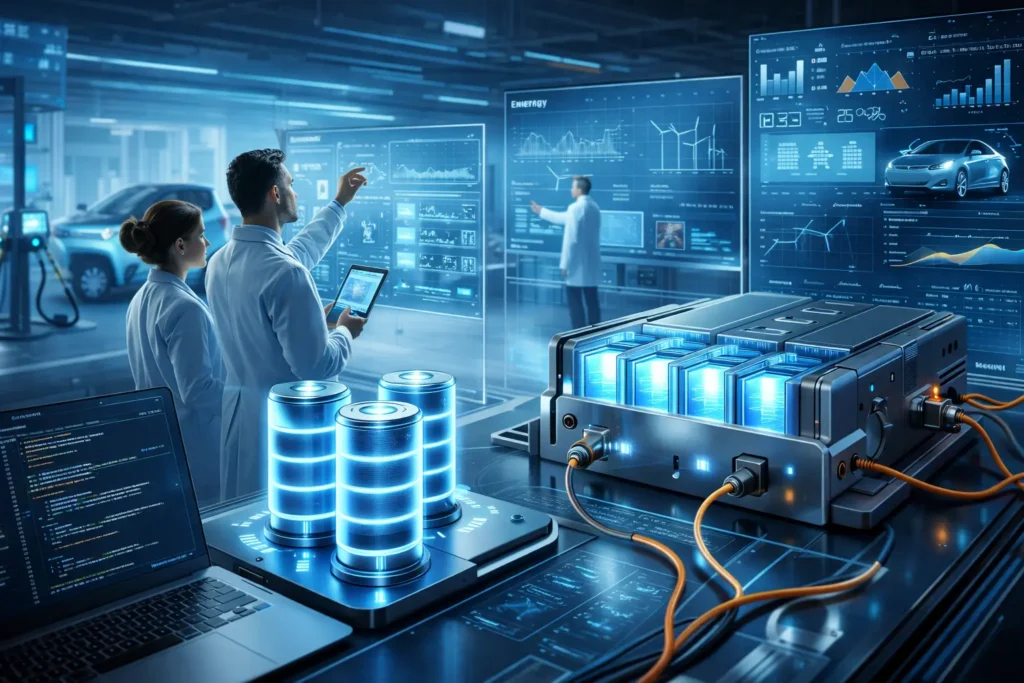
New battery technology is rapidly evolving, reshaping how we power electric vehicles, store renewable energy, and run the devices of modern life. For decades, lithium-ion batteries have been the gold standard — but their limitations in energy density, safety, cost, and sustainability are pushing researchers and manufacturers to search for the next generation of energy storage solutions.
This comprehensive guide explores the most promising battery breakthroughs happening right now, from solid-state electrolytes to sodium-ion chemistry, lithium-sulfur cells to lithium-air concepts. We will examine how these technologies work, where they will be deployed, what obstacles remain, and when consumers and industries can realistically expect to see them at scale. Understanding these developments is essential for anyone interested in the future of electric vehicles, renewable energy, and sustainable power.
Why Do We Need New Battery Technology? The Driving Forces
The Limits of Current Lithium-Ion
Lithium-ion batteries have served the world remarkably well since their commercial introduction in the early 1990s. They power billions of smartphones, laptops, and today’s electric vehicles. However, after decades of incremental improvement, lithium-ion is approaching a fundamental energy density plateau — the physics of its graphite anode and liquid electrolyte chemistry only allow so much improvement.
Several critical limitations are now driving the search for alternatives:
- Energy density ceiling: Standard lithium-ion cells deliver roughly 250–300 Wh/kg. Many next-generation applications demand 500 Wh/kg or more.
- Safety concerns: Liquid organic electrolytes are flammable. Thermal runaway — a chain reaction that can lead to fire or explosion — remains a serious risk in large battery packs.
- Cost and material constraints: Lithium-ion batteries depend heavily on cobalt, a mineral with significant ethical sourcing concerns and concentrated supply chains in politically unstable regions.
- Charging speed limitations: Fast-charging stress accelerates degradation, causing lithium plating and dendrite formation that shorten cycle life.
- Environmental impact: Mining lithium, cobalt, and nickel carries a heavy environmental footprint, and battery recycling infrastructure remains underdeveloped globally.
Key Performance Targets for Next-Generation Batteries
Industry and government research programs have established clear targets that next-generation battery technologies must hit to be commercially viable. The table below summarizes the benchmarks driving development:
| Metric | Current Li-ion (2025) | Next-Gen Target (2030) |
| Energy Density (Wh/kg) | 250–300 | 500–700+ |
| Volumetric Energy Density (Wh/L) | 700–800 | 1,000–1,500+ |
| Cost per kWh | $110–$130 | <$60 |
| Fast Charging (0–80%) | 20–40 minutes | <10 minutes |
| Cycle Life | 1,000–2,000 cycles | 3,000–5,000+ cycles |
| Operating Temperature Range | -20°C to 60°C | -40°C to 80°C |
| Safety | Flammable electrolyte | Non-flammable / inherently safe |
Top New Battery Technologies to Watch
Each major emerging technology is presented below with a consistent framework: what it is, how it works, its key advantages, its main challenges, and its realistic commercialization timeline.
Solid-State Batteries: The Game Changer
What it is: A solid-state battery replaces the conventional liquid or gel electrolyte with a solid material — either a ceramic, polymer, or sulfide-based compound. This single change has cascading effects on safety, energy density, and design flexibility.
How it works: In a conventional lithium-ion cell, lithium ions travel through a liquid electrolyte between the anode and cathode during charge and discharge. In a solid-state design, those ions instead move through a rigid solid electrolyte. This eliminates the need for a separate porous separator and enables the use of a lithium-metal anode — a material with roughly ten times the theoretical capacity of graphite.
Key advantages:
- Higher energy density: Lithium-metal anodes paired with solid electrolytes can achieve 400–500 Wh/kg, nearly doubling current lithium-ion.
- Enhanced safety: Solid electrolytes are non-flammable, eliminating the primary cause of thermal runaway.
- Longer cycle life: Without liquid electrolyte degradation, solid-state cells can potentially last thousands more cycles.
- Wider temperature range: Solid electrolytes perform better in extreme cold and heat than liquid counterparts.
Challenges: Solid electrolytes suffer from lower ionic conductivity than liquids, meaning ions move more slowly — a challenge for fast charging and high power output. Manufacturing solid-state cells at scale is exceptionally difficult; the interface between the solid electrolyte and electrodes must maintain perfect contact under repeated expansion and contraction. Dendrite formation — where lithium metal grows needle-like projections that can short-circuit cells — remains a key technical hurdle.
Timeline: Toyota has committed to commercializing solid-state EV batteries by 2027–2028. QuantumScape (backed by Volkswagen) and Solid Power (backed by BMW and Ford) are targeting pilot production in the same window. Mass-market pricing parity with lithium-ion is expected around 2030.
Sodium-Ion Batteries: The Abundant Alternative
What it is: Sodium-ion batteries replace lithium with sodium — the 11th element on the periodic table, and one of the most abundant materials on Earth. While the fundamental electrochemical principles mirror lithium-ion, sodium’s chemistry opens up very different cost and sourcing possibilities.
How it works: Sodium ions shuttle between a hard carbon anode and a layered oxide or Prussian blue analog cathode through a sodium-based electrolyte. The basic cell assembly process is nearly identical to lithium-ion manufacturing, which is a major advantage for rapid scale-up.
Key advantages:
- Abundant, low-cost materials: Sodium is roughly 1,000 times more abundant than lithium. Cathode materials can be made entirely without cobalt or nickel.
- Manufacturing compatibility: Sodium-ion cells can be produced on existing lithium-ion production lines with minimal retooling.
- Excellent low-temperature performance: Sodium-ion batteries retain capacity better in cold climates than lithium-ion.
- Grid storage suitability: Lower cost-per-kWh makes sodium-ion compelling for stationary energy storage where weight is less critical.
Challenges: Sodium-ion cells currently deliver 120–160 Wh/kg — roughly half the energy density of lithium-ion. This weight and volume penalty makes them unsuitable for premium long-range EVs but well-suited for budget vehicles, grid storage, and applications where cost matters more than weight.
Timeline: CATL, the world’s largest battery manufacturer, launched its first-generation sodium-ion cells commercially in 2023 and has announced significant capacity expansions through 2026. BYD is expected to deploy sodium-ion in entry-level EVs by 2026–2027. Grid storage deployment is already underway in China.
Lithium-Sulfur Batteries: Pushing Energy Limits
What it is: Lithium-sulfur (Li-S) batteries pair a lithium-metal anode with a sulfur cathode. Sulfur is one of the most energy-dense cathode materials theoretically possible and is also an abundant byproduct of petroleum refining.
How it works: During discharge, lithium reacts with sulfur to form lithium polysulfides, releasing electrons. The theoretical specific energy of Li-S chemistry is approximately 2,600 Wh/kg — nearly ten times conventional lithium-ion. Practical cells today achieve 400–600 Wh/kg, still a dramatic improvement.
Key advantages:
- Exceptional energy density: At 400–600 Wh/kg practical, Li-S is the leading candidate for ultra-long-range applications.
- Lightweight: Sulfur is significantly lighter than conventional cathode materials like NMC or LFP, making Li-S ideal for aviation and aerospace.
- Low-cost cathode materials: Sulfur is cheap and globally available, with no reliance on cobalt, nickel, or manganese.
Challenges: The polysulfide shuttle effect is Li-S’s Achilles heel. During cycling, soluble polysulfides migrate from the cathode to the anode, causing rapid capacity fade and limiting cycle life to 200–500 cycles in most current designs. Lithium-metal anode instability also remains a challenge. Solid-state Li-S designs aim to address both issues simultaneously.
Timeline: Lyten and Oxis Energy (now restructured) have demonstrated Li-S cells for aerospace and defense applications. Commercial EV-grade Li-S batteries are expected in limited deployment by 2027–2029, with broader availability closer to 2030 pending cycle life improvements.
Lithium-Air Batteries: The Ultimate Potential
What it is: Lithium-air (Li-O2) batteries represent the theoretical pinnacle of electrochemical energy storage. Instead of a conventional cathode material, the battery breathes oxygen from the surrounding air to react with lithium, storing energy with an extraordinary theoretical density approaching 11,000 Wh/kg.
How it works: During discharge, lithium oxidizes at the anode and reacts with oxygen drawn from the air at a porous carbon cathode, forming lithium peroxide. Recharging reverses this reaction. Because the cathode material (oxygen) is not stored within the battery itself, the energy-to-weight ratio is theoretically unmatched.
Current status and challenges: Lithium-air remains firmly in the research stage. Practical cells demonstrate far lower efficiency than theory suggests, and the formation of unwanted side products clogs the porous cathode over cycles. Researchers at institutions including MIT, Cambridge, and Argonne National Laboratory are making progress, but commercialization is unlikely before the mid-2030s at the earliest.
Other Promising Innovations
Beyond the headline technologies, several other developments are worth tracking:
- Silicon-dominant anodes: Replacing graphite with silicon (which holds ten times more lithium) is already entering production at companies like Sila Nanotechnologies and Group14. The challenge is managing silicon’s 300% volume expansion during charging, but nano-structured silicon composites are solving this incrementally.
- Graphene-enhanced batteries: Graphene additives improve electron conductivity and thermal management. Several companies claim graphene-enhanced cells offer faster charging and longer cycle life, though pure graphene cathodes remain expensive.
- NMC 811 and NCA 90 advanced cathodes: Higher-nickel formulations (NMC 811 uses 80% nickel) deliver more energy with less cobalt, serving as a bridge technology while solid-state matures.
- Zinc-ion and magnesium batteries: Aqueous zinc-ion cells offer inherent safety (water-based electrolyte) for grid storage. Magnesium batteries theoretically double lithium-ion density but face electrolyte compatibility challenges.
- Flow batteries: Vanadium redox flow batteries offer unlimited cycle life and are ideal for large-scale, long-duration grid storage where energy is stored in liquid tanks rather than solid electrode materials.
Deep Dive: How New Battery Chemistries Work
The Anode: From Graphite to Silicon and Lithium Metal
The anode is where lithium ions are stored during charging. Today’s lithium-ion batteries use graphite — a well-understood, stable material that intercalates lithium between its layered carbon sheets. Graphite’s theoretical capacity is 372 mAh/g, a ceiling that the industry has nearly reached after decades of optimization.
Silicon anodes offer a theoretical capacity of 3,579 mAh/g — nearly ten times graphite’s. The obstacle is volume expansion: silicon swells by approximately 300% as it absorbs lithium ions, causing the anode to crack and degrade after relatively few cycles. Solutions under development include nano-structured silicon particles, silicon-carbon composites, and silicon oxides that buffer expansion.
Lithium-metal anodes take a different approach entirely, depositing lithium directly as a metal layer rather than intercalating it into a host material. This enables theoretical capacities of 3,860 mAh/g, but introduces the notorious dendrite problem — lithium metal tends to grow irregular, needle-like structures during charging that can penetrate the separator and short-circuit the cell. Solid-state electrolytes are considered the most promising solution, as a rigid solid barrier is far more resistant to dendrite penetration than a porous polymer separator.
The Cathode: High-Nickel and Beyond
The cathode is the other electrode and typically defines a battery’s voltage and much of its energy density. The dominant chemistries today are NMC (Nickel Manganese Cobalt oxide), NCA (Nickel Cobalt Aluminum oxide), and LFP (Lithium Iron Phosphate).
The industry trend is toward high-nickel formulations — NMC 811 (80% Ni, 10% Mn, 10% Co) and NCA 90 (90% Ni) — which deliver more energy while reducing expensive and ethically problematic cobalt content. However, high-nickel cathodes are thermally less stable and require more sophisticated battery management systems.
LFP has experienced a major renaissance for grid storage and affordable EVs because it contains no cobalt or nickel, offers excellent thermal stability and cycle life (3,000+ cycles), and costs significantly less per kWh — though its lower energy density (around 160 Wh/kg) limits its use in long-range premium vehicles. CATL and BYD have championed LFP aggressively, driving rapid cost reductions.
Beyond these established chemistries, researchers are exploring lithium-rich cathodes and disordered rock salt structures that could push cathode capacity significantly higher, though stability and cycle life challenges remain.
The Electrolyte: From Liquid to Solid
The electrolyte is the medium through which lithium ions travel between the anode and cathode. In conventional lithium-ion cells, this is a liquid solution of lithium salt dissolved in an organic solvent — highly ionically conductive (enabling fast charging) but unfortunately flammable and prone to decomposition at high voltages.
Solid-state electrolytes come in three main families: ceramic (oxide-based, e.g., LLZO — extremely stable but brittle and difficult to manufacture), polymer (flexible and processable but with lower ionic conductivity, particularly at room temperature), and sulfide-based (highest ionic conductivity among solids, approaching that of liquids, but reactive with moisture and air, complicating manufacturing).
Each family presents distinct trade-offs between ionic conductivity, mechanical properties, electrochemical stability, and manufacturability. Many companies are pursuing hybrid approaches — thin solid electrolyte layers combined with polymer binders or gel interfaces — to balance these competing demands.
Applications: Where Will These New Batteries Be Used?
Electrifying Transport: EVs, Aviation, and Marine
Electric vehicles represent the largest near-term market for next-generation batteries. The primary driver is range anxiety — consumers’ concern that EVs will run out of charge before reaching a destination. A solid-state battery pack delivering 500 Wh/kg could enable passenger EVs with 500–700 mile ranges at current vehicle sizes, or equivalent current ranges in a significantly lighter and smaller pack.
Fast charging is the second critical dimension. Next-generation batteries aim to deliver 0–80% charge in under 10 minutes, comparable to a gasoline fill-up. This requires both high-power battery chemistry and substantially upgraded charging infrastructure.
Aviation presents some of the most demanding requirements and, paradoxically, some of the clearest opportunities for next-generation chemistry. Electric vertical takeoff and landing aircraft (eVTOL) for urban air mobility require energy densities that current lithium-ion simply cannot provide. Li-S batteries, at 400–600 Wh/kg, may unlock commercial eVTOL viability. For commercial aviation, lithium-air’s theoretical 11,000 Wh/kg remains the long-term target.
Maritime electrification is progressing rapidly for short-distance ferries and harbor vessels using current lithium-ion technology. Long-range cargo shipping will require either next-generation batteries or hydrogen fuel cells, with sodium-ion potentially serving cost-sensitive coastal and river routes.
Stabilizing the Grid: Renewable Energy Storage
The intermittent nature of solar and wind power creates a fundamental need for large-scale energy storage. Grid-scale battery storage must balance electricity supply and demand across hours, days, and seasons — a challenge current lithium-ion addresses at the daily level but struggles with at longer durations.
Sodium-ion batteries are generating particular excitement for grid storage because their lower cost-per-kWh is more important than energy density in this application. Flow batteries (especially vanadium redox) offer an additional compelling attribute: energy capacity can be increased simply by adding more liquid electrolyte tanks, decoupling power and energy scaling in a way that solid-state cells cannot match.
The levelized cost of energy storage (LCOE) for grid applications is expected to fall below $50/kWh by 2030 as sodium-ion and LFP technologies mature, accelerating the buildout of renewable energy infrastructure globally. Load leveling, peak shaving, and renewable energy time-shifting will all benefit from these improvements.
Powering Our World: Consumer Electronics and Beyond
Consumer electronics — smartphones, laptops, wearables, and wireless earbuds — drove the first wave of lithium-ion adoption. Next-generation batteries will extend battery life dramatically for these devices. Silicon-dominant anodes and high-nickel cathodes are already entering premium smartphones, delivering 20–30% more energy in the same form factor.
Medical devices represent a high-value application where safety and reliability are paramount. Implantable devices like pacemakers require batteries that last a decade or more without replacement. Solid-state batteries’ inherent safety and stable chemistry make them attractive for next-generation implantables. Hearing aids, continuous glucose monitors, and neural interfaces all stand to benefit.
Military and defense applications demand extreme performance across temperature ranges, vibration resistance, and energy density. Lithium-sulfur batteries have attracted substantial defense research funding for their lightweight energy density advantage in portable equipment and unmanned aerial vehicles.
Key Challenges to Commercialization
Manufacturing and Scalability
Demonstrating a new battery chemistry in a laboratory cell is a fundamentally different challenge from manufacturing it at gigafactory scale. Solid-state batteries, for example, require depositing extremely thin, uniform solid electrolyte layers — a process that must be performed with precision across millions of cells per day to be economically viable. Current deposition techniques are too slow and expensive for mass production.
The industry is investing heavily in new manufacturing processes. Dry electrode processing (pioneered by Maxwell Technologies, acquired by Tesla) eliminates the energy-intensive wet coating steps in electrode manufacturing. Roll-to-roll processing, laser sintering, and atomic layer deposition are being adapted for solid-state cell production. Gigafactories for next-generation chemistries are being announced across the US, Europe, and Asia, with significant government subsidies accelerating the buildout.
Safety and Thermal Management
While solid-state batteries eliminate flammable liquid electrolytes — a major safety improvement — they introduce new challenges. Ceramic solid electrolytes can crack under mechanical stress, creating internal short circuits. The interface between the solid electrolyte and the lithium-metal anode must remain intimate and defect-free through thousands of charge-discharge cycles.
Battery management systems (BMS) will grow substantially more sophisticated for next-generation chemistries. Real-time monitoring of cell voltage, temperature, impedance, and state-of-health will be critical to maximizing cycle life and preventing failures. AI-driven predictive analytics are increasingly being integrated into BMS platforms to detect early signs of degradation.
Sustainability and the Supply Chain
The shift away from cobalt and toward more abundant materials is a significant sustainability win for next-generation batteries. However, lithium itself is not without supply chain concerns. Global lithium demand is projected to increase 40-fold by 2040, and current production is concentrated in a small number of countries — primarily Australia, Chile, and China.
Battery recycling infrastructure is advancing but remains insufficient. Only a small fraction of spent lithium-ion batteries are currently recycled through hydrometallurgical or direct recycling processes. For next-generation batteries to be truly sustainable, closed-loop recycling must become standard practice. The EU’s Battery Regulation (effective 2024–2027) is setting mandatory recycled content thresholds that are driving investment in recycling capacity. Sodium-ion’s use of abundant, widely distributed materials largely sidesteps the critical mineral challenge — one reason it is attracting strong interest from energy policymakers.
Technology Comparison: At a Glance
The table below provides a side-by-side comparison of the four primary emerging battery technologies across key metrics:
| Technology | Energy Density | Cost Outlook | Safety | Cycle Life | Readiness |
| Solid-State | 400–500 Wh/kg | High now / <$80/kWh by 2030 | Excellent (non-flammable) | 3,000–5,000+ cycles | 2027–2029 EVs |
| Sodium-Ion | 120–160 Wh/kg | Low: <$60/kWh today | Good (stable chemistry) | 3,000–4,000 cycles | Available now (grid/budget EV) |
| Lithium-Sulfur | 400–600 Wh/kg | Medium (low-cost sulfur) | Moderate (Li-metal anode) | 200–500 cycles (improving) | 2027–2030 (niche) |
| Lithium-Air | ~1,000 Wh/kg (lab) | Unknown | Research stage | <100 cycles (lab) | 2035+ at earliest |
faqs
What is the newest battery technology?
As of 2026, solid-state batteries are the most advanced next-generation technology approaching commercial deployment, with Toyota, QuantumScape, and Solid Power targeting EV applications by 2027–2028. Sodium-ion batteries from CATL and BYD are already in commercial production for grid storage and entry-level EVs.
When will solid-state batteries be available?
Limited commercial solid-state battery products are expected in premium EVs by 2027–2028. Mass-market availability at cost-competitive prices is projected around 2030, contingent on manufacturing scale-up success.
Are sodium-ion batteries better than lithium-ion?
Sodium-ion batteries are better in some dimensions — particularly cost, low-temperature performance, and supply chain sustainability — but offer lower energy density than lithium-ion. They are best suited for grid storage, low-speed EVs, and applications where cost is more important than weight.
What company is leading in new battery technology?
Different companies lead in different technologies. CATL (China) leads in sodium-ion production and advanced LFP. Toyota leads in solid-state patent portfolios. QuantumScape leads in solid-state EV cell development in the West. BYD leads in overall battery volume. Samsung SDI, LG Energy Solution, and Panasonic are all significant investors in next-generation chemistries.
How long will new EV batteries last?
Next-generation solid-state batteries are targeting 3,000–5,000 charge cycles with minimal capacity fade, compared to 1,000–2,000 cycles for today’s lithium-ion packs. For a typical EV driver, this could translate to battery lifespans exceeding 20 years.
Are new batteries safer?
Solid-state batteries are significantly safer than current lithium-ion because their non-flammable solid electrolytes eliminate the primary cause of thermal runaway. Sodium-ion batteries are also inherently safer due to more stable chemistry. Both technologies are expected to dramatically reduce the risk of battery-related fires.
What is the future of battery technology?
The future of battery technology is a portfolio of solutions rather than a single winner. Solid-state batteries will likely dominate premium EVs and high-performance applications. Sodium-ion will serve grid storage and cost-sensitive transportation. Lithium-sulfur will carve out niches in aviation and defense. Further out, lithium-air and structural batteries could enable applications we cannot yet imagine.
How much will new batteries cost?
Battery pack costs have fallen from over $1,000/kWh in 2010 to approximately $110–$130/kWh in 2025. Next-generation batteries are expected to push costs below $60/kWh by 2030, driven by sodium-ion for grid storage and solid-state scale-up for EVs. At these prices, EVs reach total cost of ownership parity with combustion vehicles even without subsidies.
Can new batteries be recycled?
Yes, and battery recycling is advancing rapidly. Hydrometallurgical processes can recover 90–95% of lithium, cobalt, nickel, and manganese from spent cells. Direct recycling methods that preserve cathode material structure are emerging as even more efficient alternatives. Regulatory requirements in Europe and the US are mandating minimum recycled content in new batteries, driving major investment in recycling infrastructure through 2030.
What is the highest energy density battery?
Among commercially available or near-commercial batteries, lithium-sulfur holds the practical record at 400–600 Wh/kg. In the laboratory, lithium-air cells have demonstrated over 1,000 Wh/kg. Conventional lithium-ion delivers 250–300 Wh/kg, and sodium-ion currently achieves 120–160 Wh/kg.
Conclusion: The Road Ahead for Energy Storage
The future of new battery technology is not a single breakthrough but a portfolio of solutions, each suited to different applications, cost points, and performance requirements. The period from 2026 to 2030 will be transformative: solid-state batteries will move from prototype to production, sodium-ion will capture a substantial share of grid storage and affordable EVs, and lithium-sulfur will begin unlocking electric aviation.
The common thread across all these technologies is a shared mission — to store more energy, more safely, at lower cost, with less environmental impact. Meeting global climate targets requires roughly a 10-fold increase in battery manufacturing capacity by 2030, and the innovations described in this guide are the foundation on which that capacity will be built.
For consumers, the near-term outlook is clear: EVs will charge faster, cost less, travel further, and last longer than anything available today. For grid operators, falling battery costs will make round-the-clock renewable energy economically irresistible. For investors and policymakers, understanding which technologies are closest to commercialization — and which face fundamental scientific hurdles — is essential for allocating capital and designing industrial policy effectively.
The energy storage revolution is not coming. It is already underway.

Adrian Cole is a technology researcher and AI content specialist with more than seven years of experience studying automation, machine learning models, and digital innovation. He has worked with multiple tech startups as a consultant, helping them adopt smarter tools and build data-driven systems. Adrian writes simple, clear, and practical explanations of complex tech topics so readers can easily understand the future of AI.