
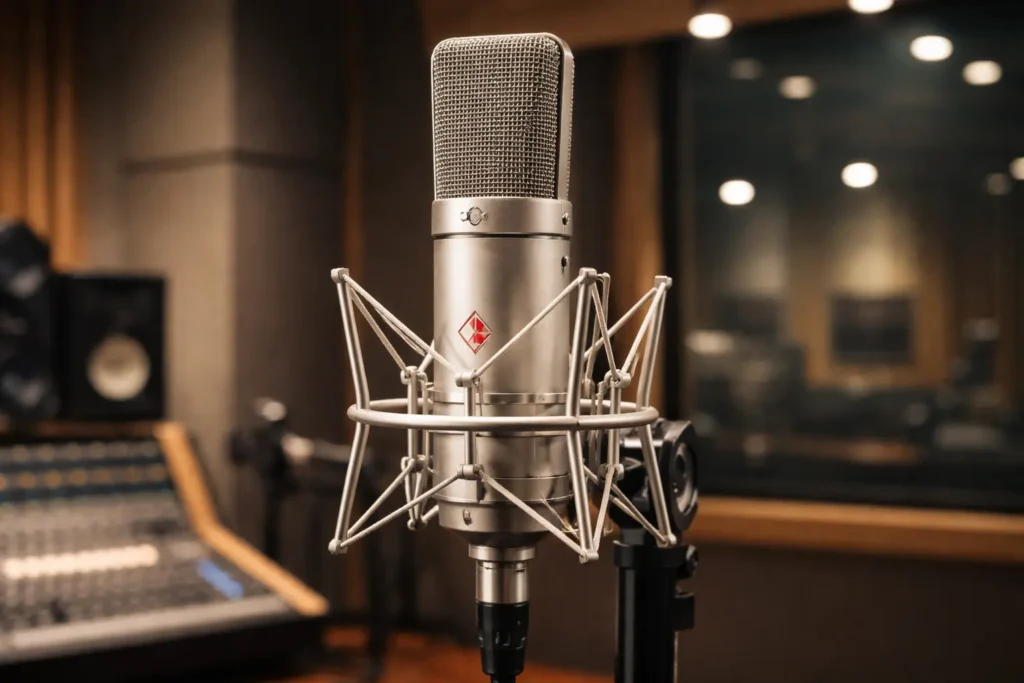
If you’ve spent any serious time around recording studios—whether that’s a commercial facility, a broadcast booth, or a well-built home setup—there’s a very good chance you’ve seen the Neumann U 87 AI mounted front and center. For decades, this microphone has carried a kind of quiet authority. Engineers trust it. Vocalists feel confident in front of it. Producers know exactly what kind of sonic result they’re going to get before the first note is sung.
The reason this topic matters right now is simple: more people than ever are building professional-quality recording environments outside traditional studios. Podcasters, voice actors, YouTubers, music producers, and content creators are all chasing one thing—clean, reliable, industry-standard sound. And when that conversation turns serious, the Neumann U 87 AI inevitably comes up.
This article is for anyone who’s ever wondered whether this legendary microphone is actually worth the investment, what makes it different from cheaper condenser mics, and how it performs in real-world recording situations—not just on spec sheets. By the end, you’ll have a practical, experience-based understanding of where the Neumann U 87 AI shines, where it doesn’t, and whether it truly belongs in your setup.
Understanding the Neumann U 87 AI at a Practical Level
At its core, the Neumann U 87 AI is a large-diaphragm condenser microphone designed for professional studio recording. But that description barely scratches the surface of why it’s so widely respected. Think of it less as a piece of gear and more as a sonic reference point. Engineers often judge other microphones by how close they come to the U 87 sound.
The “AI” in the name refers to a modernized internal design compared to the original vintage U 87 models from the late 1960s and 1970s. While the character remains familiar, the AI version offers higher output, lower self-noise, and improved consistency from unit to unit. That matters more than people realize, especially in professional environments where reliability and repeatability are essential.
One of the defining features of the Neumann U 87 AI is its three selectable polar patterns: cardioid, omnidirectional, and figure-eight. This flexibility allows it to adapt to different recording scenarios without changing microphones. Recording a lead vocal? Cardioid keeps the focus tight. Capturing room ambience or a choir? Omnidirectional opens things up. Recording a duet or interview? Figure-eight handles it elegantly.
What really sets this microphone apart, though, is how forgiving it is. Many high-end microphones sound incredible on the right voice and absolutely brutal on the wrong one. The U 87 AI tends to flatter a wide range of sources. It doesn’t hype harsh frequencies, and it doesn’t exaggerate sibilance the way some modern condensers do. That balance is why it’s trusted in so many professional contexts.
Why Professionals Still Choose the Neumann U 87 AI
There’s a reason the Neumann U 87 AI has stayed relevant while countless other microphones have come and gone. In real-world use, it consistently delivers results that sit well in a mix without heavy processing. That’s a big deal for engineers who value efficiency and musicality.
For vocal recording, the U 87 AI captures detail without sounding clinical. It preserves the natural tone of a voice while adding just enough presence to help vocals cut through. This makes it equally suitable for pop singers, voice-over artists, audiobook narrators, and broadcast professionals.
Instrument recording is another area where it excels. Acoustic guitars sound full without becoming boomy. Piano recordings retain clarity across the frequency spectrum. Brass and strings maintain warmth without losing articulation. Even guitar cabinets—when properly padded—can benefit from its balanced response.
In professional studios, time is money. A microphone that “just works” saves hours of troubleshooting and tweaking. That’s one of the biggest hidden benefits of the Neumann U 87 AI. Engineers know what to expect when they plug it in, and clients recognize it as a symbol of quality. That recognition alone can build trust before a session even starts.
There’s also a resale and longevity factor. High-end microphones from Neumann tend to hold their value exceptionally well. A U 87 AI purchased today is still likely to be relevant—and valuable—decades from now.
Real-World Use Cases Across Industries
The Neumann U 87 AI isn’t limited to music studios. Its real strength is how adaptable it is across different professional environments.
In music production, it’s often the first-choice vocal mic for lead performances. Producers rely on it when they need a vocal to sound “finished” right out of the box. Background vocals, spoken word intros, and even rap vocals benefit from its smooth midrange and controlled highs.
In broadcast and voice-over work, consistency is critical. The U 87 AI delivers a polished, authoritative sound that translates well across radio, television, and digital platforms. It’s especially popular in commercial voice-over booths where clarity and neutrality are essential.
Podcasting and content creation have also embraced this microphone at the high end. While it may be overkill for beginners, established creators often upgrade to the U 87 AI once their audience and revenue justify the investment. The improvement in vocal quality is immediately noticeable, especially when paired with proper room treatment.
Film scoring and orchestral recording environments use the U 87 AI for everything from solo instruments to room capture. Its low self-noise and wide dynamic range make it suitable for both delicate passages and powerful performances.
Before-and-after comparisons often tell the real story. Many engineers report spending less time EQing and de-essing vocals recorded with a U 87 AI compared to budget condensers. That time saved adds up quickly in professional workflows.
How to Get the Best Results From the Neumann U 87 AI
Owning a Neumann U 87 AI doesn’t automatically guarantee great recordings. Like any high-end tool, it performs best when used correctly.
The first step is pairing it with a quality preamp. This microphone reveals everything—good and bad. A clean, professional-grade preamp allows its natural character to shine without introducing noise or harshness. Cheap interfaces can bottleneck its potential.
Room acoustics matter more than many people expect. The U 87 AI is sensitive and honest. In untreated rooms, it will pick up reflections, echoes, and background noise. Even basic acoustic treatment can dramatically improve results.
Mic placement is another key factor. Small adjustments in distance and angle can make a big difference. For vocals, starting about 6–8 inches away with a pop filter is common, but experimenting is essential. For instruments, let the source and room guide your decisions.
Understanding the pad and low-cut filter options is also important. The built-in pad helps prevent distortion when recording loud sources, while the high-pass filter reduces low-frequency rumble. These features aren’t just technical extras—they’re practical tools that simplify sessions.
Finally, trust your ears. The Neumann U 87 AI rewards thoughtful listening. Subtle adjustments often yield better results than heavy processing later.
Comparing the Neumann U 87 AI With Alternatives
It’s fair to ask whether the Neumann U 87 AI is still worth its premium price in a market full of capable microphones. The answer depends on expectations and use cases.
Compared to budget condensers, the difference is immediate. The U 87 AI sounds more balanced, more controlled, and more natural. Harshness and exaggerated highs are noticeably absent.
Against mid-range professional microphones, the gap narrows, but the U 87 AI still stands out in consistency and versatility. Many alternatives excel in specific areas but fall short as all-purpose tools.
Vintage-style clones and recreations often aim to capture the U 87 sound at a lower cost. Some do a respectable job, but few match the reliability, build quality, and long-term value of the real thing.
From an expert perspective, the Neumann U 87 AI isn’t about chasing hype. It’s about choosing a known quantity—a microphone that has proven itself across decades, genres, and technologies.
Common Mistakes and How to Avoid Them
One of the most common mistakes is assuming the Neumann U 87 AI will “fix” a bad recording environment. It won’t. In fact, it will expose problems more clearly. Treating the room should come before upgrading the microphone.
Another mistake is pairing it with inadequate supporting gear. Using a high-end microphone with a noisy preamp or poor cables undermines the investment.
Over-processing is also a frequent issue. Because the U 87 AI captures such a balanced signal, heavy EQ and compression often do more harm than good. Less is usually more.
Finally, some users expect instant perfection without learning proper mic technique. Taking the time to understand placement, gain staging, and polar patterns makes all the difference.
Conclusion: Is the Neumann U 87 AI Worth It?
The Neumann U 87 AI isn’t just a microphone—it’s a benchmark. It represents a level of quality and consistency that professionals rely on when results matter. While it’s not the right choice for everyone, those who truly need it rarely regret the investment.
If your work depends on capturing voices or instruments accurately, efficiently, and professionally, this microphone delivers. It won’t mask flaws, but it will reward good technique, solid acoustics, and thoughtful production choices.
For many, the U 87 AI becomes a long-term companion—a piece of gear that outlasts trends and continues to earn its place in the signal chain.
FAQs
Is the Neumann U 87 AI good for vocals?
Yes, it’s widely regarded as one of the best vocal microphones available due to its balanced tone and versatility.
What does “AI” mean in Neumann U 87 AI?
AI refers to a modernized internal design with higher output and lower self-noise compared to vintage models.
Can beginners use the Neumann U 87 AI?
Technically yes, but beginners may not benefit fully without proper room treatment and supporting gear.
Is the Neumann U 87 AI better than cheaper condenser microphones?
In terms of consistency, build quality, and sonic balance, it outperforms most lower-priced options.
Does the Neumann U 87 AI hold its value?
Yes, it’s known for excellent resale value and long-term relevance in professional studios.

Adrian Cole is a technology researcher and AI content specialist with more than seven years of experience studying automation, machine learning models, and digital innovation. He has worked with multiple tech startups as a consultant, helping them adopt smarter tools and build data-driven systems. Adrian writes simple, clear, and practical explanations of complex tech topics so readers can easily understand the future of AI.