
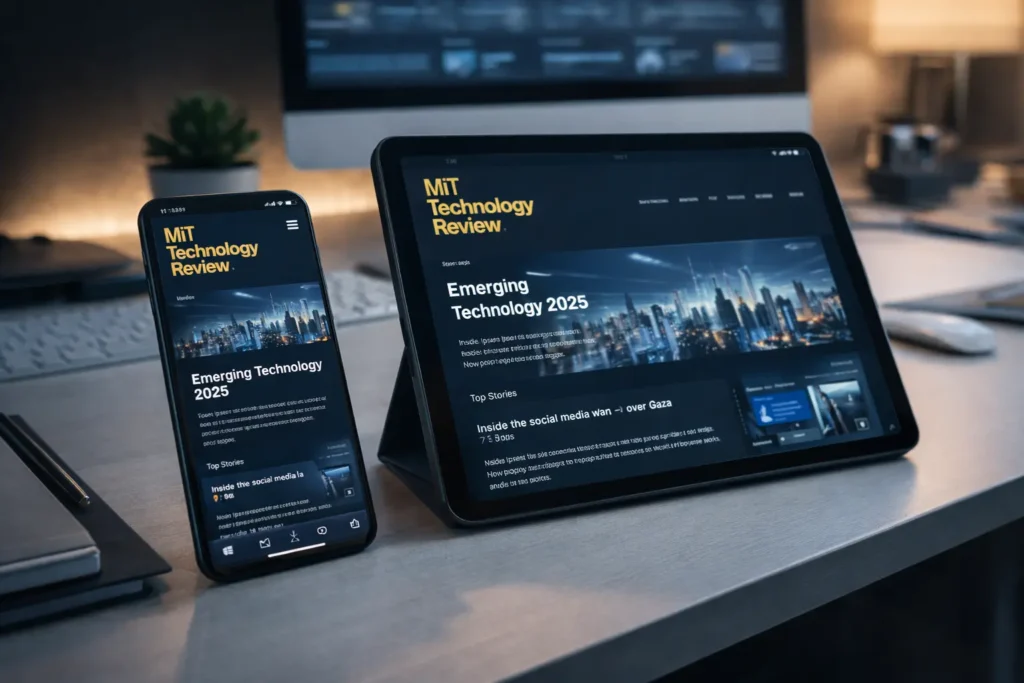
Founded in 1899 and backed by the Massachusetts Institute of Technology, MIT Technology Review stands as the oldest continuously published technology magazine in the world. For over a century, it has built a reputation for authoritative, in-depth journalism covering emerging technologies from artificial intelligence and climate change to biotechnology and computing. But in an era where tech news is ubiquitous and often free, is a subscription to MIT Technology Review actually worth it?
This comprehensive review examines the publication across all its platforms—website, mobile app, and print magazine—analyzing content quality, user experience, pricing structure, and real subscriber feedback. Whether you’re considering a subscription or simply curious about what sets this publication apart, this review covers everything you need to know.
What Is MIT Technology Review?
History and Reputation
MIT Technology Review was established in 1899, making it the oldest technology magazine still in publication. While it maintains close ties to MIT and shares the institution’s commitment to rigorous analysis, the publication operates as an independent media company. This independence allows it to cover technology developments objectively, even when they involve MIT itself.
The publication has earned numerous awards for its journalism and is widely regarded as one of the most authoritative voices in technology reporting. Unlike many tech publications that focus on consumer gadgets or industry gossip, MIT Technology Review emphasizes the deeper implications of emerging technologies—how they work, why they matter, and what challenges they present for society.
Core Content and Themes
The publication’s editorial focus centers on breakthrough and emerging technologies across several key areas:
- Artificial Intelligence and Machine Learning: Coverage spans from technical developments in AI research to societal implications of automation and algorithmic decision-making.
- Climate Change and Energy: In-depth reporting on renewable energy technologies, climate solutions, and the intersection of technology and environmental sustainability.
- Biotechnology and Medicine: Exploration of genomics, CRISPR, drug development, and emerging medical technologies that could transform healthcare.
- Computing and Connectivity: Analysis of quantum computing, semiconductors, cybersecurity, and next-generation internet technologies.
Two of the publication’s most recognized features are the annual “10 Breakthrough Technologies” list, which identifies the innovations poised to have the greatest impact, and the “Innovators Under 35” awards, which spotlight young leaders shaping the future of technology. These signature pieces have become industry benchmarks, widely cited by researchers, investors, and policymakers.
The publication also produces specialized content including “The Download” daily newsletter, in-depth feature articles, explainers on complex technologies, and podcasts such as “In Machines We Trust,” which explores artificial intelligence and its impact on society.
Platform and Access Review
The Website (technologyreview.com)
The MIT Technology Review website serves as the publication’s primary digital hub. The site features a clean, professional design that prioritizes content over flashy graphics. Navigation is straightforward, with articles organized by topic areas and a search function that works reliably.
The website operates on a metered paywall model: visitors can access a limited number of articles per month for free before encountering the subscription wall. Newsletter signups are prominently featured and offer a way to stay connected with daily briefings without committing to a full subscription. The site loads quickly and is mobile-responsive, though the dedicated mobile apps offer additional functionality for subscribers.
One strength of the web platform is its comprehensive archive, giving subscribers access to over a century of technology journalism. The search and filtering capabilities make it relatively easy to find articles on specific topics or from particular time periods.
The Mobile App Experience
MIT Technology Review offers mobile apps for both iOS and Android platforms. In theory, the app should provide a streamlined reading experience with features like offline reading, saved articles, and push notifications for breaking news. However, user feedback reveals significant issues that have persisted across multiple versions.
Common complaints from app store reviews include:
- Login and Authentication Problems: Many users report frequent login timeouts, where the app fails to maintain their session and repeatedly asks them to sign in, even immediately after successful authentication.
- Clunky Navigation: The app’s interface has been criticized as unintuitive, with users struggling to find saved articles or navigate between sections efficiently.
- Search Functionality Issues: The in-app search feature is reported to be unreliable, sometimes failing to return relevant results or timing out entirely.
- Performance Problems: Some users experience slow loading times, app crashes, and general instability, particularly on older devices.
These technical shortcomings are particularly frustrating given that the content itself is high quality. Many subscribers report eventually abandoning the app in favor of reading through a mobile browser, which somewhat defeats the purpose of having a dedicated application. While the publisher has released updates to address some issues, app store ratings remain mediocre, suggesting that significant improvements are still needed.
Print Magazine
For those who prefer physical media, MIT Technology Review publishes a bimonthly print magazine featuring longer-form articles, special reports, and curated selections from the digital edition. The print version is well-designed with high-quality paper and professional layout, though it naturally lacks the timeliness of the digital platforms. Print subscriptions can be purchased separately or bundled with digital access.
Subscription Plans, Pricing, and Value
How Much Does a Subscription Cost?
MIT Technology Review offers several subscription tiers to accommodate different preferences and budgets. While exact pricing may vary based on promotional offers, the standard structure typically includes:
| Plan Type | Annual Price | What’s Included |
| Digital Only | ~$100-150/year | Unlimited website access, mobile apps, newsletters, digital archive |
| Print + Digital | ~$150-200/year | All digital benefits plus bimonthly print magazine delivery |
| Student Plan | Discounted rate | Digital access at reduced rate with valid student ID verification |
Note that promotional rates are frequently offered, particularly for new subscribers or during special campaigns. Monthly payment options may also be available at a higher effective annual cost.
The Auto-Renewal and Cancellation Controversy
Perhaps the most significant source of subscriber frustration is the subscription management experience, particularly around automatic renewal and cancellation. This issue appears frequently in app store reviews and customer complaints.
Common problems reported by users:
- Difficult Cancellation Process: Multiple users report that canceling a subscription is unnecessarily complicated, with some claiming they were unable to find a clear cancellation option in their account settings.
- Unexpected Auto-Renewals: Subscribers have complained about being charged for renewals without adequate advance notice, sometimes at higher rates than their initial promotional pricing.
- Poor Customer Service Response: When users contact customer service about billing issues or cancellation requests, some report experiencing slow response times or unhelpful replies.
- Refund Difficulties: Some subscribers who attempted to cancel shortly after being charged report difficulty obtaining refunds, even when they claim they did not intend to renew.
While automatic renewal is standard practice for subscription services, the volume of complaints suggests that MIT Technology Review could improve transparency around billing and make the cancellation process more user-friendly. Prospective subscribers should carefully note their renewal dates and be prepared to actively manage their subscription if they don’t intend to continue.
Advice for managing your subscription:
- Set a calendar reminder for one week before your renewal date.
- Document your subscription terms and save confirmation emails.
- If you encounter issues, try contacting customer service through multiple channels (email, phone, social media).
- Consider using a credit card that allows you to easily dispute charges if necessary.
Is a Subscription Worth It?
Whether MIT Technology Review justifies its subscription cost depends largely on your specific needs and interests. Here’s an honest assessment:
A subscription makes sense if you:
- Work in a technology-related field and need to stay current on emerging innovations and their implications.
- Value in-depth, well-researched analysis over quick news summaries.
- Are interested in the deeper societal, ethical, and technical questions surrounding new technologies.
- Appreciate authoritative journalism backed by expert sources and rigorous fact-checking.
- Can budget $100-200 annually for premium technology journalism.
You might want to skip it if you:
- Primarily want consumer technology reviews and product recommendations (publications like The Verge or Wirecutter are better suited for this).
- Prefer quick news briefs to long-form articles.
- Are satisfied with free technology news sources and don’t need specialized depth.
- Have concerns about subscription management and would rather avoid the hassle.
The content quality itself is genuinely excellent—MIT Technology Review delivers on its promise of authoritative, thoughtful technology journalism. The value proposition falters primarily around the user experience (particularly the mobile app) and subscription management issues. If you can tolerate those friction points and the content aligns with your interests, the subscription offers substantial value for professionals and serious technology enthusiasts.
Pros, Cons, and User Feedback Summary
The Advantages
- Unparalleled Depth: MIT Technology Review’s long-form articles go far beyond surface-level coverage, offering technical detail and contextual analysis rarely found in mainstream tech media.
- Trustworthy Sourcing: Articles are rigorously researched and cite expert sources, peer-reviewed research, and primary documents rather than relying on speculation or press releases.
- Iconic Annual Lists: The “10 Breakthrough Technologies” and “Innovators Under 35” features have become industry benchmarks, widely cited and influential.
- MIT Affiliation: The connection to MIT lends credibility and ensures access to cutting-edge research and expert perspectives.
- Historical Archive: Subscribers gain access to over a century of technology journalism, providing valuable historical context for current developments.
- Independent Journalism: Despite the MIT connection, the publication maintains editorial independence and covers topics objectively.
The Drawbacks
- Mobile App Problems: The iOS and Android apps suffer from persistent technical issues including login problems, slow performance, and unintuitive navigation.
- Subscription Management Hassles: Users consistently report difficulties with cancellation, unexpected auto-renewals, and unsatisfactory customer service responses to billing issues.
- Premium Price Point: At $100-200 annually, the subscription is more expensive than many competing technology publications.
- Limited Consumer Tech Coverage: If you’re looking for gadget reviews or consumer technology recommendations, MIT Technology Review offers minimal coverage in these areas.
- Dense Content: The in-depth, technical nature of articles may be overwhelming for casual readers or those seeking lighter technology news.
FAQs
Is MIT Technology Review free?
MIT Technology Review operates on a metered paywall model. Visitors can access a limited number of articles per month for free, and some content like newsletters and selected features are available without a subscription. However, unlimited access to the full archive and all premium content requires a paid subscription.
How do I cancel my MIT Technology Review subscription?
To cancel your subscription, log into your account on technologyreview.com and navigate to your account settings or subscription management page. Look for a cancellation option or link to manage your subscription. If you encounter difficulties—as many users report—contact customer service directly via email or phone well before your renewal date. Document your cancellation request and keep confirmation of any communications. Some subscribers have reported needing to follow up multiple times, so persistence may be necessary.
What is the “10 Breakthrough Technologies” list?
The “10 Breakthrough Technologies” is an annual feature published by MIT Technology Review that identifies the innovations most likely to have significant impact in the coming years. The list has been published since 2001 and has successfully predicted the rise of many transformative technologies. Each technology featured receives an in-depth analysis explaining how it works, who’s developing it, when it might become widely available, and what obstacles it still faces. The list has become an influential industry benchmark, widely cited by researchers, investors, and technology leaders.
Is the MIT Technology Review app good?
The content available through the MIT Technology Review app is excellent, maintaining the same high-quality journalism as the website. However, the app itself has significant functionality problems according to user reviews. Common complaints include frequent login timeouts, slow loading times, crashes, and poor search functionality. Many subscribers report preferring to read articles through a mobile browser rather than using the dedicated app. While the publisher has released updates to address some issues, the app experience remains notably inferior to the quality of the content itself.
Are there any good alternatives to MIT Technology Review?
Several publications offer quality technology coverage with different emphases. Ars Technica provides excellent technical deep dives and is known for detailed explanations of complex topics, with much content available for free. Wired offers a good blend of technology coverage, culture, and design with strong long-form journalism. For consumer technology and product reviews, The Verge excels with comprehensive gadget coverage and accessible explanations. Scientific American covers the scientific foundations of emerging technologies. Bloomberg Technology focuses on the business and financial aspects of tech companies. Each publication has its strengths; the best choice depends on whether you prioritize technical depth, business analysis, consumer focus, or breadth of coverage.
Final Verdict
MIT Technology Review delivers some of the best technology journalism available, with authoritative reporting, expert analysis, and remarkable depth of coverage. For professionals working in technology fields or serious enthusiasts who value understanding not just what is happening but why it matters, the content quality alone justifies the subscription cost.
However, the publication’s value is significantly undermined by persistent technical problems with the mobile app and concerning patterns around subscription management and customer service. These operational shortcomings create unnecessary friction and have generated substantial negative feedback from users.
If you’re considering a subscription, approach with clear expectations: you’re paying for exceptional content while accepting mediocre user experience on mobile platforms and potentially frustrating subscription management. Set reminders for renewal dates, be prepared to advocate for yourself if billing issues arise, and consider relying on the website rather than the mobile app for the most reliable experience.
For those who decide MIT Technology Review is worth it despite these caveats, you’ll gain access to some of the most thoughtful and authoritative technology journalism available anywhere—a resource that has maintained its reputation for quality and insight across more than a century of technological revolution.

Adrian Cole is a technology researcher and AI content specialist with more than seven years of experience studying automation, machine learning models, and digital innovation. He has worked with multiple tech startups as a consultant, helping them adopt smarter tools and build data-driven systems. Adrian writes simple, clear, and practical explanations of complex tech topics so readers can easily understand the future of AI.