
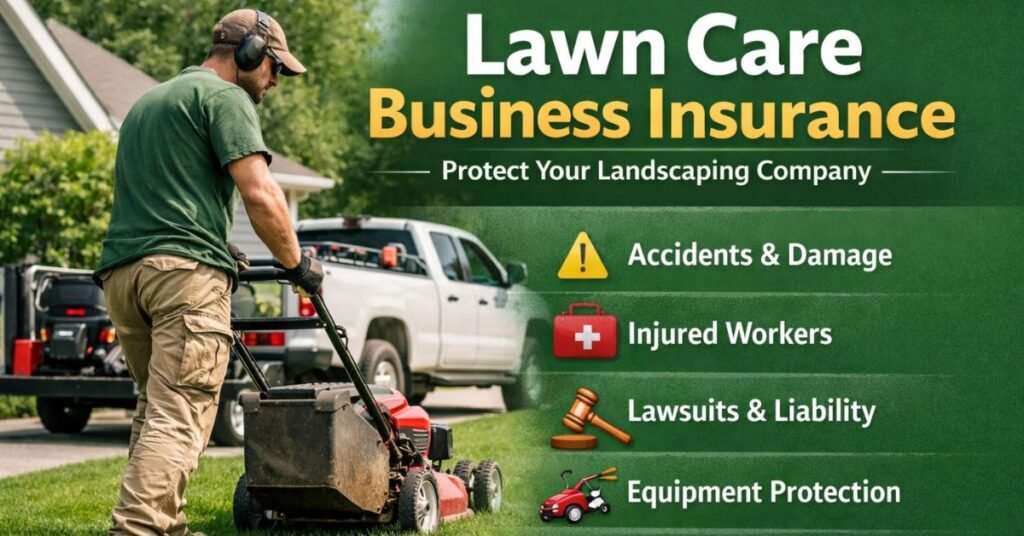
If you run a landscaping or mowing company, you already know the work is hands-on, unpredictable, and sometimes risky. One loose rock can shatter a client’s window. One employee injury can halt operations for weeks. One lawsuit can wipe out years of hard-earned growth. That’s why lawn care business insurance isn’t just another expense on your balance sheet—it’s the safety net that keeps your business alive when the unexpected hits.
Many new lawn care entrepreneurs focus on equipment, marketing, and hiring before thinking about protection. I’ve seen talented landscapers build thriving local reputations only to face financial disaster after a single uninsured accident. The truth is simple: in service businesses that operate on other people’s property, risk is always part of the job.
In this comprehensive guide, you’ll learn exactly what lawn care business insurance is, why it matters, which policies you truly need, how much it costs, and how to choose the right coverage without overspending. Whether you’re a solo mower just starting out or managing a full landscaping crew, this guide will help you protect your income, your team, and your future.
What Lawn Care Business Insurance Really Means
At its core, lawn care business insurance is a collection of policies designed to protect landscaping professionals from financial loss caused by accidents, injuries, property damage, lawsuits, or unexpected disruptions. Think of it as a shield around every part of your operation—from your mower and trailer to your employees and reputation.
Unlike personal insurance, business coverage addresses risks unique to commercial work. When you mow your own yard and a rock hits a window, you simply fix it. When it happens at a client’s home, legal liability enters the picture. Insurance steps in to cover repair costs, legal fees, medical bills, or settlements so you don’t pay out of pocket.
Most lawn care companies rely on a bundle of policies rather than a single plan. These may include general liability insurance, workers’ compensation, commercial auto coverage, equipment insurance, and business interruption protection. Each policy handles a different category of risk, working together like layers of defense.
A helpful analogy is a toolbox. Just as no landscaper relies on only one tool, no serious lawn care business relies on only one insurance policy. The right combination depends on your services, team size, equipment value, and local legal requirements. Understanding these moving parts is the first step toward building real protection.
Why Lawn Care Businesses Face Unique Risks
Landscaping looks peaceful from the outside—green grass, sunshine, and tidy hedges. But behind the scenes, it’s one of the more risk-exposed small service industries. You’re operating heavy machinery, traveling between job sites, working on private property, and often employing seasonal labor. Each of these factors introduces potential liability.
Property damage is one of the most common issues. Flying debris from mowers or trimmers can break windows, dent vehicles, or damage siding. Even something as simple as over-spraying fertilizer can ruin expensive plants. Without insurance, you’re responsible for every dollar of repair.
Injuries are another major concern. Employees handle sharp tools, lift heavy materials, and work in extreme weather. Heat exhaustion, slips, and equipment accidents happen more often than many new owners expect. Medical bills and lost wages can quickly become overwhelming if workers’ compensation isn’t in place.
Transportation risks also matter. Lawn care crews spend hours on the road hauling trailers and equipment. A single vehicle accident can involve repair costs, medical claims, and legal disputes. Personal auto insurance usually won’t cover business use, which leaves uninsured gaps.
Then there’s the legal side. Even minor disputes can escalate into lawsuits. Clients may claim property damage, incomplete work, or injuries caused by your services. Legal defense alone can cost thousands—even if you win. Insurance ensures you’re not fighting those battles alone.
Key Types of Lawn Care Business Insurance Coverage
Understanding the major policy categories helps you avoid both under-insurance and unnecessary spending. Each coverage type solves a specific problem.
General liability insurance is the foundation. It covers third-party injuries, property damage, and legal defense costs. If a mower throws a rock through a patio door or a client trips over your equipment, this policy usually handles the claim. Most lawn care businesses carry at least $1 million in coverage.
Workers’ compensation protects employees who get injured on the job. It pays medical expenses, rehabilitation costs, and partial lost wages. In many regions, this coverage is legally required once you hire staff. Even where optional, it’s essential for protecting both workers and business owners.
Commercial auto insurance covers vehicles used for business operations. This includes trucks, vans, and trailers transporting equipment. Personal auto policies typically exclude commercial activity, making dedicated coverage critical.
Equipment and tools insurance reimburses you if mowers, trimmers, blowers, or trailers are stolen, damaged, or destroyed. Considering how expensive professional equipment can be, this coverage often pays for itself after a single incident.
Business owner’s policies (BOPs) bundle liability and property coverage into one cost-effective package. Many small landscaping companies start here because it simplifies protection while lowering premiums.
Who Needs Lawn Care Business Insurance Most
Every landscaping professional benefits from insurance, but the level of urgency varies by business model.
Solo operators sometimes believe they don’t need coverage because they work alone. In reality, they face the greatest financial risk. Without employees or corporate protection, one lawsuit can target personal savings, vehicles, or even a home.
Small crews handling residential maintenance also need strong protection. Frequent job sites increase exposure to accidents and property damage. Even routine mowing carries risk when repeated hundreds of times per season.
Commercial landscaping companies face higher stakes. Contracts often require proof of insurance before work begins. Larger properties mean more expensive potential damage, and employee teams increase injury exposure.
Specialty services—like tree trimming, pesticide application, or irrigation installation—carry elevated liability. These operations may require additional or specialized policies due to safety and environmental concerns.
In short, if you earn money from lawn or landscape work, insurance isn’t optional—it’s foundational.
Real-World Benefits of Proper Insurance Coverage
The most obvious benefit is financial protection, but the real value of lawn care business insurance goes much deeper.
Insurance provides peace of mind. When accidents happen—and eventually they do—you can focus on solving the problem instead of worrying about bankruptcy. That mental freedom improves decision-making and long-term planning.
It also builds credibility. Clients trust insured businesses more than uninsured competitors. Many commercial clients and homeowners’ associations require proof of coverage before signing contracts. Insurance can literally unlock higher-paying opportunities.
Another benefit is business continuity. Equipment theft, storms, or lawsuits can halt operations. Coverage helps replace tools, cover legal defense, or recover lost income so you stay operational.
Insurance can even protect personal assets. Without proper business coverage, courts may pursue personal savings or property to settle claims. Policies create a legal and financial barrier between business risk and personal life.
Ultimately, insurance isn’t just about emergencies—it’s about stability, professionalism, and sustainable growth.
Step-by-Step Guide to Getting Lawn Care Business Insurance
Choosing insurance feels overwhelming at first, but the process becomes manageable when broken into clear steps.
Start by assessing your risks. Consider services offered, number of employees, equipment value, and vehicle usage. A solo mower needs different coverage than a multi-crew landscaping company.
Next, determine legal requirements in your region. Workers’ compensation and commercial auto insurance are often mandatory. Understanding local laws prevents costly compliance issues later.
Then gather business details for quotes. Insurers typically request revenue estimates, payroll size, equipment lists, and service descriptions. Accurate information ensures realistic pricing and proper coverage.
Request multiple quotes from reputable insurers. Comparing at least three providers helps identify fair pricing and policy differences. Don’t focus only on cost—coverage limits and exclusions matter more.
Review policy limits carefully. Low premiums often mean minimal protection. Choose coverage amounts that realistically match potential lawsuit or damage costs.
Finally, revisit coverage annually. As your business grows, insurance needs change. Updating policies prevents dangerous gaps.
Comparing Insurance Providers and Policy Options
Not all insurers serve lawn care businesses equally. Some specialize in contractors and landscapers, offering tailored policies and competitive pricing. Others provide generic small-business coverage that may miss key risks.
When comparing providers, examine financial stability, customer reviews, and claim response speed. Cheap insurance means little if claims are denied or delayed.
Look for flexible policy bundles. Business owner’s policies, equipment riders, and seasonal coverage options can reduce costs while improving protection.
Digital policy management is another advantage. Online certificates of insurance, quick updates, and mobile claim filing save time during busy seasons.
Independent insurance agents can also help. Because they work with multiple carriers, they often find better coverage combinations than single-company representatives.
Common Mistakes Lawn Care Business Owners Make
One of the biggest mistakes is waiting too long to buy insurance. Many owners delay until landing a major client or hiring staff, leaving months—or years—of uninsured risk.
Another frequent error is underestimating coverage needs. Choosing the cheapest policy often results in limits too low to handle real lawsuits or damages.
Some businesses forget to insure equipment off-site or in transit. Theft from trailers and trucks is extremely common in landscaping, making this oversight costly.
Misclassifying employees as independent contractors is another serious issue. If an injury occurs, lack of workers’ compensation can create legal and financial disasters.
Finally, failing to update policies during growth leaves dangerous gaps. New services, vehicles, or employees should always trigger a coverage review.
How Much Lawn Care Business Insurance Costs
Costs vary widely based on location, revenue, staff size, and services. However, typical annual ranges provide a helpful starting point.
General liability insurance often costs between $400 and $1,500 per year for small operations. Workers’ compensation may range from a few hundred to several thousand dollars depending on payroll and risk level.
Commercial auto insurance commonly falls between $1,000 and $3,500 per vehicle annually. Equipment coverage depends on total tool value but is usually a few hundred dollars per year.
Bundled business owner’s policies can reduce total spending compared to buying each policy separately.
While these numbers may feel significant early on, they’re tiny compared to potential lawsuit or injury costs. Insurance is one of the most cost-effective investments a lawn care business can make.
Conclusion: Protecting the Business You’re Building
Running a landscaping company takes grit, early mornings, physical effort, and real dedication. You invest in equipment, build client relationships, and work hard to grow steady income. Without proper protection, all of that effort can disappear after a single accident.
Lawn care business insurance isn’t just paperwork—it’s the foundation that keeps your business standing when challenges arise. It protects your finances, reputation, employees, and future opportunities. More importantly, it gives you the confidence to grow without constant fear of the unknown.
If you haven’t reviewed your coverage recently, now is the perfect time. Compare quotes, evaluate risks, and make sure your protection matches your ambitions. Your future self—and your business—will thank you.
FAQs
What is the most important insurance for a lawn care business?
General liability insurance is usually the first and most essential policy because it covers property damage, injuries, and legal defense.
Is lawn care insurance legally required?
Requirements vary by location, but workers’ compensation and commercial auto insurance are often mandatory once you hire employees or use vehicles for business.
How much does lawn care insurance cost per month?
Small operators may pay $50–$150 monthly, while larger crews with vehicles and staff may pay several hundred dollars.
Can I get insurance as a solo lawn mower?
Yes, many insurers offer affordable policies specifically designed for single-person landscaping businesses.
Does insurance cover stolen equipment?
Only if you include tools and equipment coverage in your policy. Basic liability insurance alone will not cover theft.

Michael Grant is a business writer with professional experience in small-business consulting and online entrepreneurship. Over the past decade, he has helped brands improve their digital strategy, customer engagement, and revenue planning. Michael simplifies business concepts and gives readers practical insights they can use immediately.