
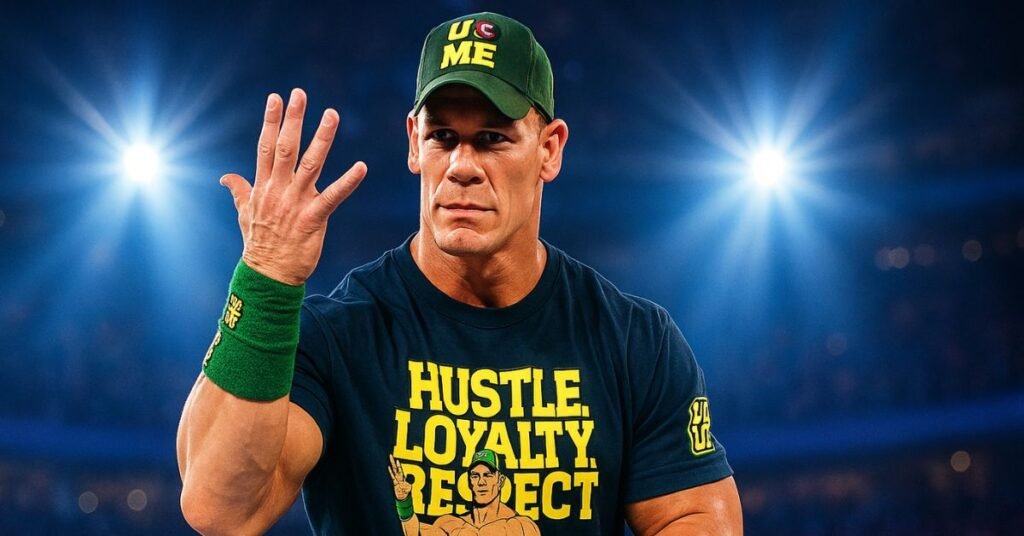
If you’ve followed WWE at any point in the last 20 years, there’s a good chance the name John Cena brings instant memories—booming entrances, five moves of doom, electrifying rivalries, and the undeniable magnetism of the man who became the face of a generation. But behind the bright colors and signature slogans lies a deeper story: one of resilience, reinvention, and legacy-building that extends far beyond the ring.
Why does John Cena matter so much, not just to WWE fans, but to pop culture at large? Because his career is a blueprint for longevity in an industry where very few survive—let alone thrive. Whether it’s his rumored retirement match, his pivot into Hollywood, or his ongoing influence on young wrestlers, Cena’s name consistently resurfaces because he continues to shape the narrative of modern entertainment.
In this article, we’ll take an in-depth look at John Cena, breaking down his career evolution, the unique traits that made him an icon, the benefits of studying his approach to performance and branding, and what fans can learn from his possible final act inside the squared circle. This is both a tribute and a practical exploration—by the end, you’ll understand not only who Cena is, but why his legacy endures.
Topic Explanation: Who Is John Cena, Really?
To someone casually browsing past WWE highlights, John Cena is the guy with the “You Can’t See Me” taunt and the neon-colored merchandise. But that’s just scratching the surface. In reality, Cena is part athlete, part entertainer, part brand strategist—and the combination is what made him one of the most successful WWE superstars of all time.
Think of Cena like the Michael Jordan of his industry: a once-in-a-generation performer who captured mainstream attention while dominating his sport. Cena was never the fastest or most technically intricate wrestler, but he understood storytelling, crowd connection, and character consistency better than almost anyone wrestling has ever seen.
A few defining traits:
- Unmatched work ethic: Cena famously wrestled 300+ days a year during his peak.
- Character durability: From early “Doctor of Thuganomics” rap gimmick to the ultra-heroic “Super Cena,” he evolved without losing the core of who he was.
- Broad appeal: Kids loved him. Adults debated him. Media relied on him. WWE banked on him.
- Crossover success: Like The Rock before him, Cena leveraged wrestling fame into acting, hosting, philanthropy, and global branding.
Perhaps the most telling indicator of Cena’s impact is this: even as WWE shifted into new eras—PG Era, Reality Era, Women’s Evolution—Cena remained the axis around which programming revolved.
And today, even when he returns for short runs or one-off storylines, the energy changes instantly. The crowd reacts differently. The stakes feel higher. Cena isn’t just a wrestler—he’s an event.
Benefits & Use Cases: What Can We Learn From John Cena?
Talking about “use cases” for a wrestler may sound strange, but John Cena’s career offers surprising practical lessons for creators, professionals, athletes, and anyone trying to build an audience or personal brand.
1. The Power of Consistency
Cena’s “Hustle, Loyalty, Respect” wasn’t just a catchphrase—it was a compass.
Whether fans cheered or booed, he stayed consistent, showing how authenticity builds trust over time. The takeaway? Consistency builds longevity. People trust what they understand.
2. Reinvention That Doesn’t Lose Identity
Cena adjusted his promos, aesthetic, wrestling style, and media presence across the years. Yet the core message—never give up—remained intact. This is brand evolution done right.
3. Audience Connection > Technical Perfection
Critics argued Cena wasn’t the most technical in-ring performer. But what he did do better than nearly anyone was tell stories people emotionally invested in. Whether you’re creating content, managing a team, or running a business, connection always trumps complexity.
4. Using Criticism as Fuel
Cena built a career out of divided reactions. He turned “Let’s Go Cena! / Cena Sucks!” into a signature rhythm of WWE crowds. He embraced it instead of fighting it—a rare mastery of public perception.
5. Preparing for the Next Career Act
Long before transitioning into Hollywood, Cena broadened his skill set:
- hosting TV shows
- learning comedy and timing
- participating in charity and PR
- becoming a spokesperson
He didn’t wait for wrestling to end to explore new paths. A powerful lesson in future-proofing your career.
Step-by-Step Guide: How John Cena Built His Legacy
Let’s break down Cena’s rise into an approachable step-by-step framework that mirrors the key stages of his real-life achievements. Even if you’re not looking to enter the ring, these principles are fiercely applicable.
Step 1: Develop a Clear Core Identity
Cena started as a bland “ruthless aggression” rookie with no personality—until he improvised a freestyle rap backstage. WWE saw authenticity and gave him a chance to amplify it. His “Doctor of Thuganomics” persona exploded.
Takeaway: Your raw, unfiltered strengths become your differentiation.
Step 2: Commit to Outworking Everyone
Cena became known as the guy who would say yes to every opportunity: media appearances, late-night interviews, charity events, international flights. WWE relied on him because he showed up—always.
Takeaway: Reliability creates momentum that talent alone cannot.
Step 3: Create Memorable Tools (Slogans, Moves, Moments)
Cena crafted instantly recognizable elements:
- “You Can’t See Me”
- Five Knuckle Shuffle
- Attitude Adjustment
- Hustle, Loyalty, Respect
These weren’t gimmicks—they were anchors that reinforced his brand.
Takeaway: Consistent, repeatable signals make your identity stick.
Step 4: Embrace Your Audience, Even When They’re Split
Booed by hardcore fans? Cena played into it.
Loved by kids? Cena amplified it.
He accepted every reaction because engagement—positive or negative—meant relevance.
Takeaway: Not everyone will like you. The goal isn’t universal approval—it’s staying unforgettable.
Step 5: Transition With Intention, Not Escape
Later in his career, Cena reduced his WWE schedule and pursued acting. But he didn’t vanish—he returned for major storylines, supported younger wrestlers, and lent star power to big events.
Takeaway: When evolving, keep a foot in the community that built you.
Tools, Comparisons & Recommendations
If you’re studying Cena from the perspective of wrestling fandom, personal branding, or performance improvement, here are tools and resources that provide deeper insights.
1. WWE Network / Peacock
Best for: Watching Cena’s entire career
Pros:
- Huge archive
- Behind-the-scenes content
- Documentaries like “John Cena: Greatest Rivalries”
Cons: - Subscription required
2. YouTube (WWE Channel)
Best for: Free highlights, promos, career retrospectives
Pros:
- Free
- Tons of short-form content
Cons: - No full matches
3. Cena’s Autobiographical Content (Interviews + Podcasts)
Appearing on late-night shows, wrestling podcasts, and entertainment interviews gives a candid look at how Cena thinks about success, discipline, and criticism.
4. Comparing Cena to Other Wrestling Icons
| Wrestler | Strengths | Weaknesses | Comparison to Cena |
|---|---|---|---|
| The Rock | Charisma, mic skills, mainstream crossover | Shorter wrestling run | Cena had a longer influence on WWE itself |
| Stone Cold | Cultural phenomenon, anti-hero energy | Injury-shortened career | Cena became the long-term PG-era face |
| Roman Reigns | Modern powerhouse, dominant character | Took years to find footing | Cena walked so Reigns could run |
5. Alternatives for Studying Branding & Performance
- Simon Sinek’s “Start With Why” for mission-driven identity
- Gary Vaynerchuk content for audience connection
- Film/acting classes for promo and presence improvement
Common Mistakes & Fixes (Inspired by Cena’s Journey)
Mistake #1: Changing Your Identity Too Often
New creators often hop between styles, niches, or personas, hoping something sticks.
Fix:
Follow Cena’s example—evolve gradually, but keep a recognizable core message.
Mistake #2: Avoiding Criticism Instead of Using It
Cena once said criticism made him sharper on the mic and in the ring.
Fix:
Use feedback loops. Turn detractors into motivators.
Mistake #3: Waiting Too Long to Reinvent
Many wrestlers reinvent only when popularity declines. Cena reinvented at high points, not low ones.
Fix:
Refresh your style proactively, not reactively.
Mistake #4: Focusing on Skills Instead of Connection
Cena’s technical critics missed the point—his emotional connection was his superpower.
Fix:
Prioritize storytelling, relatability, and impact.
Mistake #5: Not Preparing for Future Chapters
Cena didn’t get stuck in wrestling; he expanded his toolkit years in advance.
Fix:
Build skills long before you need them.
Conclusion
John Cena’s journey isn’t just the story of a wrestling megastar—it’s a roadmap for longevity, reinvention, and cultural impact. Cena shows that success isn’t about being perfect; it’s about showing up, evolving with intention, and creating moments people never forget.
If you’re a longtime fan, a content creator, a performer, or simply someone studying what makes an icon, there’s endless value in watching how Cena built his name and continues transforming his legacy—even as talk of a final retirement match grows louder.
What’s your favorite Cena match or moment? Drop it in the comments, or ask and I’ll help you analyze it from a storytelling or branding perspective.
FAQs About John Cena
1. Is John Cena officially retired from WWE?
As of now, Cena has hinted at retirement, and reports suggest WWE is building toward a final retirement storyline, but nothing is fully confirmed.
2. Why do fans chant “Cena Sucks”?
It became part of his character dynamic. Even fans who disliked him respected his longevity, creating a fun, crowd-driven controversy.
3. What movies is John Cena most known for?
Peacemaker, The Suicide Squad, Blockers, and Fast & Furious 9 are among his biggest Hollywood roles.
4. How many championships has Cena won?
Cena is tied with Ric Flair at 16 recognized world title reigns.
5. Why did kids love John Cena so much?
His superhero-like persona, positive messages, colorful merch, and charity involvement (especially Make-A-Wish) made him a beloved figure for young fans.
6. What is Cena’s workout philosophy?
Old-school bodybuilding principles mixed with functional athletic training, emphasizing discipline and routine.
7. What was Cena’s most iconic rivalry?
Many argue it’s his rivalry with CM Punk, while others point to Randy Orton as his defining long-term opponent.
8. Is John Cena coming back for one more match?
Rumors point toward a high-stakes retirement match, possibly against a rising star or major heel—but WWE has not officially confirmed details.

Hannah Price is a digital journalist who covers breaking news, global events, and trending stories with accuracy and speed. She has previously contributed to several online magazines and has built a reputation for verifying facts before publishing. Hannah believes in responsible reporting and aims to present stories in a way that readers can trust.