Fashion is often seen as a reflection of society, but sometimes, it is a rebellion against it. When we talk about crazy fashion outfits, we aren’t just discussing mismatched socks or loud prints. We are exploring the realm of the avant-garde, where clothing transcends utility to become wearable art. These outfits challenge our perceptions of beauty, silhouette, and even reality itself. From the surrealist designs of the 1930s to the digital fashion of today, “crazy” fashion pushes boundaries, sparks conversation, and ultimately drives the industry forward. This guide will take you on a journey through the most daring, eccentric, and unforgettable moments in style history, showing you that sometimes, a little madness is exactly what the wardrobe needs.
Defining “Crazy” in the Fashion World
What exactly makes an outfit “crazy”? In the fashion industry, this term is rarely used as an insult. Instead, it describes designs that break the rules of convention. These are the pieces that make you stop, stare, and question the physics of fabric.
The Role of Avant-Garde
The term “avant-garde” literally means “advance guard.” It refers to designers and artists who are ahead of their time, experimenting with new concepts that the mainstream hasn’t yet accepted.
- Deconstruction: Taking a garment apart and putting it back together in unexpected ways (e.g., a jacket with three sleeves or trousers worn as a top).
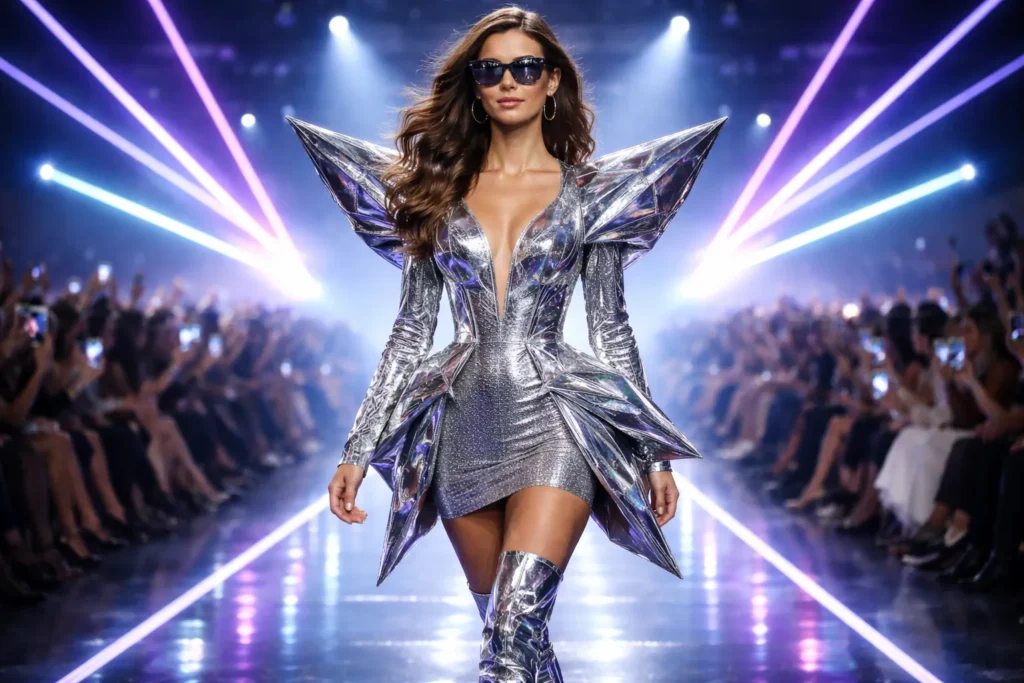
- Exaggerated Volumes: Playing with scale to distort the human body, creating silhouettes that are bulbous, elongated, or angular.
- Unconventional Materials: Using non-fabric materials like metal, plastic, paper, or even food (remember Lady Gaga’s meat dress?) to construct clothing.
Why Designers Embrace the Extreme
You might wonder, “Who actually wears this?” For runway shows, practicality is often secondary to storytelling.
- Artistic Expression: Designers use crazy fashion outfits to express complex emotions, political statements, or abstract concepts.
- Brand Identity: Shock value grabs headlines. A wild, unwearable piece can generate buzz that sells simpler, commercial items like perfume or handbags.
- Pushing Innovation: Experimenting with bizarre shapes often leads to new tailoring techniques that eventually filter down to everyday clothing.
A History of Eccentric Style
The appetite for the extraordinary isn’t new. Fashion history is littered with moments where designers chose chaos over comfort.
Surrealism and Schiaparelli
In the 1930s, Elsa Schiaparelli collaborated with Salvador Dalí to create some of the first truly crazy fashion outfits.
- The Lobster Dress: A simple white silk dress featuring a massive red lobster painted by Dalí.
- The Shoe Hat: A hat shaped perfectly like a high-heeled shoe, worn upside down on the head.
These pieces proved that fashion could be humorous and intellectual simultaneously.
The 1980s and 90s: Rebels of the Runway
This era saw the rise of designers who delighted in subverting expectations.
- Vivienne Westwood: She brought punk into high fashion with safety pins, bondage gear, and tattered fabrics.
- Rei Kawakubo (Comme des Garçons): Her “Body Meets Dress, Dress Meets Body” collection (often called the “Lumps and Bumps” collection) featured garments with padded protrusions that distorted the wearer’s figure, challenging the traditional hourglass ideal.
- Alexander McQueen: Known for his dark, theatrical shows, McQueen once sent models down the runway in torn lace and tartan, looking like survivors of a beautiful disaster.
The 2000s to Now: Pop Culture Icons
Celebrities have played a massive role in normalizing eccentric style.
- Lady Gaga: Perhaps the queen of the crazy fashion outfit, from the bubble dress to the orbit structure. She showed the world that red carpets could be performance art.
- Björk: Her infamous swan dress at the Oscars remains one of the most discussed fashion moments in history.
- Doja Cat: Recently, her look covered in 30,000 red Swarovski crystals proved that the appetite for extreme fashion is alive and well.
Iconic Runway Moments That Shocked the World
The runway is the laboratory for crazy fashion. Here are a few moments that redefined what clothing could be.
Viktor & Rolf’s “No” Collection
In 2008, the duo sent models down the runway with the word “NO” built into their coats in 3D structures. It was a literal statement piece, rejecting the fast pace of the fashion industry. Later, their tulle ballgowns featuring memes like “I’m not shy, I just don’t like you” went viral, proving that avant-garde fashion could speak the language of the internet.
Hussein Chalayan’s Transformer Dresses
In a moment of pure magic, Hussein Chalayan’s Fall 2000 show featured a coffee table that transformed into a wooden skirt. It blurred the lines between furniture and fashion, questioning the functionality of the objects around us.
Iris van Herpen’s 3D Printed Couture
Iris van Herpen combines technology with nature to create outfits that look like they belong to an alien species. Her use of 3D printing creates intricate, skeletal structures and water-like ripples that would be impossible to achieve with needle and thread. These are crazy fashion outfits in the most futuristic sense.
How to Incorporate “Crazy” Elements into Your Wardrobe
You don’t have to wear a lobster on your head to embrace bold fashion. Here is how to channel the spirit of the avant-garde in your daily life.
1. Start with Statement Accessories
If a full outfit feels too intimidating, start small.
- Architectural Shoes: Look for heels with unusual shapes or platforms that defy gravity.
- Sculptural Bags: A bag shaped like a geometric object or an animal can add a touch of whimsy to a plain outfit.
- Bold Eyewear: Oversized, colorful, or strangely shaped sunglasses are an easy way to signal a fearless style.
2. Play with Proportions
Distorting your silhouette is a key element of avant-garde style.
- Oversized Everything: Pair wide-leg trousers with an oversized blazer for a look that swallows the figure in a chic way.
- Asymmetry: Look for skirts with uneven hemlines or tops with only one sleeve. These irregularities make the eye travel across the outfit.
3. Mix Patterns and Textures Fearlessly
Forget the rule that says you can’t mix prints.
- Clashing Prints: Pair stripes with florals or plaid with polka dots. The key is to keep them in the same color family or go for total contrast.
- Texture Overload: Wear leather with lace, or feathers with denim. The tactile difference adds depth and interest.
4. DIY and Deconstruction
Channel your inner designer by customizing your clothes.
- Safety Pins and Patches: Add metal hardware to a jacket or cover denim in random patches.
- Distressing: Artfully rip jeans or cut the collar off a t-shirt for a raw, unfinished look.
The Future of Crazy Fashion: Digital and Sustainable
As we look forward, the concept of the crazy fashion outfit is evolving into new territories.
Digital Fashion (The Metaverse)
Why be limited by gravity or physics? In the digital world, you can wear a dress made of fire or water. Brands are selling “skins” and digital garments that only exist on screens, allowing for levels of creativity that are impossible in the real world. This is the ultimate form of crazy fashion—clothing that isn’t even there.
Sustainable Eccentricity
Designers are using trash to create treasure. Upcycling involves taking old, discarded materials and turning them into high-fashion pieces. We are seeing dresses made from old sneakers, jackets made from parachutes, and accessories made from ocean plastic. This proves that being “crazy” can also be responsible.
Why We Need Crazy Fashion
In a world of beige basics and minimalist capsules, crazy fashion outfits serve a vital purpose. They remind us that life is supposed to be fun. They challenge us to stop taking ourselves so seriously. When we see someone walking down the street in a neon green fur coat or a hat shaped like a telephone, it breaks the monotony of the day.
Fashion is a language, and sometimes, you need to shout. Whether you are an observer appreciating the art form or a participant daring to wear something wild, embracing the unconventional opens up a world of creativity.
Conclusion
From the surrealist experiments of the past to the digital frontiers of the future, crazy fashion outfits are the heartbeat of the industry’s creativity. They push boundaries, provoke thought, and inspire us to look at clothing not just as a necessity, but as a playground. While you might not wear a meat dress to your office job, you can certainly adopt the spirit of boldness it represents. So, buy the shoes that look like sculptures. Wear the coat that’s three sizes too big. Mix the prints that shouldn’t go together. Because in the end, the only thing crazy about fashion is being afraid to express who you truly are.
Frequently Asked Questions (FAQs)
Q1: Are crazy fashion outfits actually wearable?
A1: Many runway pieces are purely conceptual and not meant for daily wear. They are designed to showcase a designer’s skill and vision. However, “ready-to-wear” versions of these ideas are often produced for stores, toning down the craziness to make them functional while keeping the unique aesthetic.
Q2: Who are the most famous avant-garde designers today?
A2: Some key names include Rei Kawakubo (Comme des Garçons), Rick Owens, Iris van Herpen, John Galliano (currently at Maison Margiela), and Thom Browne. Each brings a unique, often surreal, perspective to fashion.
Q3: How can I dress boldly without looking like I’m in a costume?
A3: The key is balance and confidence. If you wear a loud, structural top, pair it with simple black trousers. Ensure the clothes fit you well (even if they are oversized intentionally) and that you feel comfortable in them. If you are constantly adjusting your outfit, it will look like a costume.
Q4: Is avant-garde fashion expensive?
A4: High-end avant-garde couture is very expensive due to the labor and materials involved. However, you can achieve a similar look by shopping at vintage stores, upcycling your own clothes, or supporting independent designers on platforms like Etsy who create unique, handmade pieces.
Q5: What is the difference between “camp” and “avant-garde”?
A5: While both can be “crazy,” they are different. Avant-garde is about innovation, experimentation, and challenging norms. “Camp” is about irony, humor, and exaggeration—think of it as being “so bad it’s good” or intentionally theatrical.

Sofia Bennett is a fashion writer and style observer known for her clean sense of aesthetics and trend analysis. She has covered fashion shows, reviewed designer collections, and interviewed independent creators. Sofia specializes in connecting fashion with real-life lifestyle choices, helping readers understand what looks good — and why.