
Introduction
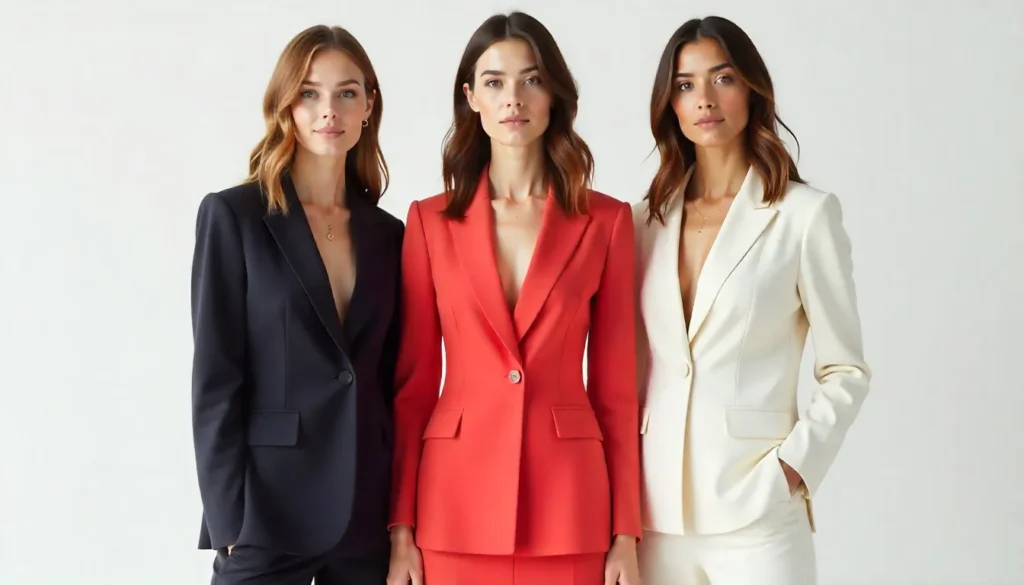
A blazer dress looks powerful only when fit, cut, fabric, and structure are correct. Many buyers choose visually attractive pieces, but overlook construction, shoulder balance, waist shaping, and lapel proportion resulting in a garment that looks flat instead of refined.
Understanding Blazer Dress Construction
Before selecting a blazer dress, assess its structure the same way a tailor or designer would.
Evaluate these core elements:
| Component | Standard of Quality |
| Shoulders | Structured, no collapse, clean angle |
| Lapel shape | Sharp, reinforced, symmetrical |
| Waistline | Natural taper or belt-ready |
| Fabric density | Holds shape, doesn’t sag |
| Sleeve fit | No excessive looseness or pulling |
| Closure stability | Buttons align flat, no gaping |
A blazer dress must look engineered, not soft or shapeless.
Fit & Measurement Rules (Professional Criteria)

Fit determines whether a blazer dress looks premium or inexpensive.
Shoulders
- Should align at exact shoulder edge
- Oversize only when intentional (street-fashion context)
Waist
- Mild inward taper recommended
- Belting is mandatory if shape is lost
Hem Length & Proportion
| Height Range | Recommended Length |
| Petite (below 5’3”) | Above mid-thigh to elongate legs |
| Average height | Mini or knee-length both suitable |
| Tall 5’8″+ | Midi/longline blazer dresses photograph exceptionally |
Sleeve Guidelines
Full-length = formal elegance
3/4 length = modern, fresh
Sleeveless = summer + evening use
Fit rules must be prioritized over trend appeal.
Fabric Selection: Based on Season & Purpose

Fabric determines structure.
Structure determines power.
Best Fabric Choices
| Season | Fabrics to Choose |
| Winter / Evening | Velvet, wool blend, structured leather |
| Summer / Spring | Crepe, linen blend, lightweight suiting |
| Nightlife / Events | Satin, silk lapel blends, sequins |
| All-year | Mid-weight tailoring suiting, stretch crepe |
Fabrics to Avoid (Unless Styled Intentionally)
- Thin polyester without internal structure
- Knit blazer dresses with no shoulder support
- Unlined satin (wrinkles + clings)
Fabric must support the silhouette not collapse under it.
Color Selection Framework
Color influences perception more than cut.
Neutral Investment Tones
Black, white, navy, beige, charcoal
Best for work, long-term wear, capsule wardrobes.
Statement & Event Colors
Red, emerald, royal blue, fuchsia
Best for dinners, birthdays, social photographs.
Luxury Evening Shades
Gold, silver, gunmetal, metallic champagne, velvet burgundy
Best for galas, engagement parties, night aesthetics.
Professional method:
Build a base wardrobe of 2 neutrals, then add 1 event color.
Body Type Matching Correct Cuts for Each Shape
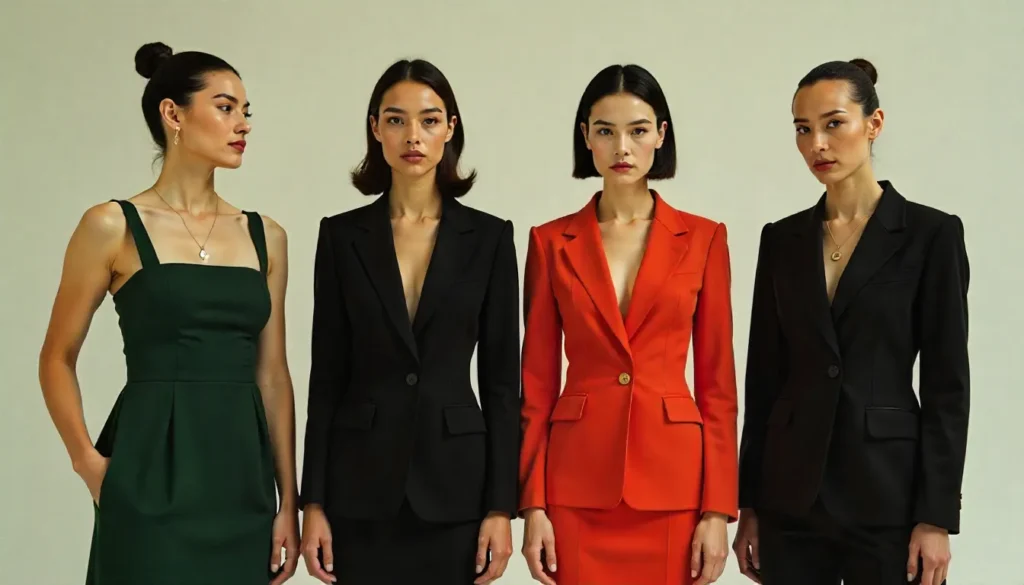
The blazer dress is universally flattering only when matched to the right silhouette.
Hourglass
- Wrap or belted shapes
- Emphasize waist + shoulders equally
Rectangle
- Double-breasted or belted to add structure
- Metallics or textures for dimension
Pear
- Shoulder detail works well
- Mini or knee-length with footwear emphasis
Apple
- Wrap styles or lightly structured straight silhouettes
- Avoid heavy chest detailing
Petite
- Shorter hems elongate
- Avoid oversized lapels that overwhelm frame
Plus-size
- Structured lapels + clean vertical line
- Midi lengths photograph best
Body-flattering results come from proportion not trend.
Tailoring Adjustments That Transform Fit
Even an excellent blazer dress improves drastically with minimal tailoring.
Recommended Alterations:
| Adjustment | Result |
| Waist taper | Creates instant hourglass illusion |
| Hem shortening | Lengthens legs visually |
| Shoulder trim | Reduces bulky top proportion |
| Sleeve narrowing | More refined silhouette |
| Button reposition | Eliminates bust gaping |
Tailoring is the difference between wearability and excellence.
Professional Shopping Checklist
(Use Before Purchasing Any Blazer Dress)
A structured shopping checklist prevents poor purchases and ensures the dress performs across multiple occasions.
Fit Assessment
- Shoulders sit correctly no drop, no strain
- Waist shapes or can be belted cleanly
- Buttons close without gaping at bust or hip level
- Hem remains straight when walking/sitting
- Sleeve cut is proportionate to body length
Fabric Assessment
| Strong Indicators | Red Flags |
| Thick weave, lined interior | Thin polyester without lining |
| Tailoring weight holds shape | Fabric collapses on hanger |
| Slight stretch for comfort | High shine synthetic cheapens look |
| Smooth lapel reinforcement | Wrinkling with minimal touch |
Construction Review
- Check seam finishing inside
- Lapel edges should appear crisp
- Buttons must be sewn firmly
- Underarm area must allow arm movement
- Back vent (if present) must open cleanly
If it fails the checklist do not buy it.
Blazer dresses reward quality, not guesswork.
Where to Buy
To assist readers with tier-based purchasing, below is a professional-quality sourcing map.
(No brand links only objective tier categorization.)
Premium Luxury Tier
For couture structure, red-carpet tailoring, event wear.
- High-end suit designers
- Eveningwear ateliers
- Bespoke tailoring houses
Mid-Luxury / Investment Tier
Best balance of form, fabric density, and longevity.
- Contemporary fashion labels
- Quality department store tailoring brands
- Occasionwear designers
Affordable + Smart Shopping Tier
Good for starter pieces if tailoring exists.
- Structured high-street suiting lines
- Minimalist brands with clean shoulders
- Tailoring-focused fast-fashion selections (only after inspection)
Professional guidance:
If budget is limited buy mid-tier + tailor it.
A tailored mid-range piece looks more expensive than unstructured luxury.
Common Shopping Mistakes & How to Fix Them
| Mistake | Why it fails | Correct approach |
| Choosing only by appearance | Fit > aesthetics | Prioritize shoulders + waist first |
| Ignoring lining & structure | Dress collapses visually | Select lined & reinforced suiting |
| Buying wrong length for height | Proportions skew entire silhouette | Follow height/hem table from Section 2 |
| Fear of tailoring | Untailored pieces rarely look premium | Allocate budget for adjustments |
| Overstocking trendy colors | Reduces outfit versatility | Start with neutrals → add event colors later |
Shopping requires criteria not impulse.
Purchase-to-Outfit Conversion Framework
(50+ realistic, high-utility styling applications)
Below are structured outfit builds based on purchase type, so readers know exactly how to use what they buy.
If You Buy a Black Blazer Dress
Use for: Work • Dinner • Parties • Events
- Pointed pumps → corporate-ready
- Metallic stilettos → evening shift
- Thigh boots + sheer tights → winter nightlife
- Pearl studs → wedding guest neutrality
- Chrome clutch → red-carpet contrast
If You Buy a White Blazer Dress
Best for: Luxe dinners • Engagements • Photography
6. + Pearl choker → bridal-adjacent subtlety
7. + Silver slingbacks → clean minimal elevation
8. + Sleek ponytail → structural emphasis
9. + Ivory coat → winter luxe
10. + Rhinestone bag → rooftop aesthetics
If You Buy a Red Blazer Dress
High visibility — use sparingly and strategically.
11. + Gold hoops → warmth and intensity
12. + Minimal black heel → balance, not noise
13. + Diamond studs → upscale midnight tone
14. + Hair up → color becomes lead feature
15. + Black coat → winter party format
If You Buy a Velvet Blazer Dress
Winter-forward texture with depth.
16. + Suede boots → tonal luxury
17. + Metallic heel → night glamour
18. + Opaque tights → temperature control
19. + Structured clutch → reduce volume
20. + Soft wave hair → velvet highlights softly
If You Buy Satin / Sequin Fabric
Reserved for social visibility, not subtlety.
21. + Clear stilettos → reflective harmonization
22. + Box clutch → architectural consistency
23. + Neutral makeup → prevents conflict
24. + Minimal jewelry → texture already dramatic
25. + Sheer tights for balance
If You Buy an Oversized/Street Style Cut
Modern, confident, fashion-forward direction.
26. + Chunky boots → editorial grounding
27. + Mini shoulder bag → sharp compact balance
28. + Sleek hair → shape stays clean
29. + Tonal socks → leg extension
30. + Gold stud earring only
If You Buy a Linen/Summer Blazer Dress
Seasonal, breathable, relaxed sophistication.
31. + Raffia bag → resort alignment
32. + Slingback flats → airy elegance
33. + Minimal chain necklace → summer clarity
34. + Nude sandal heel → elongation
35. + Soft pastel makeup
If You Buy a Midi/Mid-Length Dress
Formal occasions benefit strongly.
36. + Closed pointed heel → corporate-polished
37. + Low bun → neckline emphasis
38. + Statement earrings → evening shift
39. + Belt cinch → waist definition
40. + Smooth structured coat for winter
If You Buy a Leather/Shearling Variant
Bold, high-attitude styling.
41. + Black boots → tonal dominance
42. + Sleek eyeliner → visual match
43. + Silver accessories → chrome-forward
44. + Mini bag → weight distribution
45. + Gloss hair styling
If You Buy Pastel or Soft Color
Refined, wedding-safe, elegant.
46. + Nude shoes → palette continuity
47. + Pearl studs → gentle high-end finish
48. + Smooth blowout → feminine tone
49. + Gold trim bag → soft accent
50. + Monochrome outerwear
Conclusion
The blazer dress remains a foundational wardrobe investment not because it is trending, but because its structure satisfies the modern demand for clean power dressing, event adaptability, and silhouette efficiency. A well-chosen piece provides an output that most standard dresses cannot deliver: tailored authority, feminine line, and modular styling adaptability.
Successful ownership relies on technical purchase decisions not impulse.
Shoulder integrity, lapel sharpness, internal lining, fabric density, and correct length matter more than pattern or color. A blazer dress is a garment of architecture. You are not just buying clothing you are buying structure.
Once fit is correct, styling becomes scalable. Neutral tones form the base; red and metallic enter when visual dominance is appropriate. Shoes should align with intent: a pointed pump for authority, a strappy heel for evening fluidity, a knee-high boot for winter balance. Accessories must support the leading element of the outfit not compete with it.
Most importantly, professionalism in blazer-dress styling is minimalism in decision, not appearance. A single statement element is always stronger than five competing choices. Precision wins. Discipline styles better than decoration.
With this guide, buyers are equipped to evaluate quality, fit, and tailoring before checkout elevating purchase success rate. Instead of buying widely and hoping one works, readers now buy selectively and know it will. A wardrobe built this way retains long-term value, minimizes regret, and delivers styling reliability across seasonal transitions and event classes.
This article should be saved, referenced during purchase, and reused.
It is a decision manual not a one-time scroll.

Sofia Bennett is a fashion writer and style observer known for her clean sense of aesthetics and trend analysis. She has covered fashion shows, reviewed designer collections, and interviewed independent creators. Sofia specializes in connecting fashion with real-life lifestyle choices, helping readers understand what looks good — and why.