
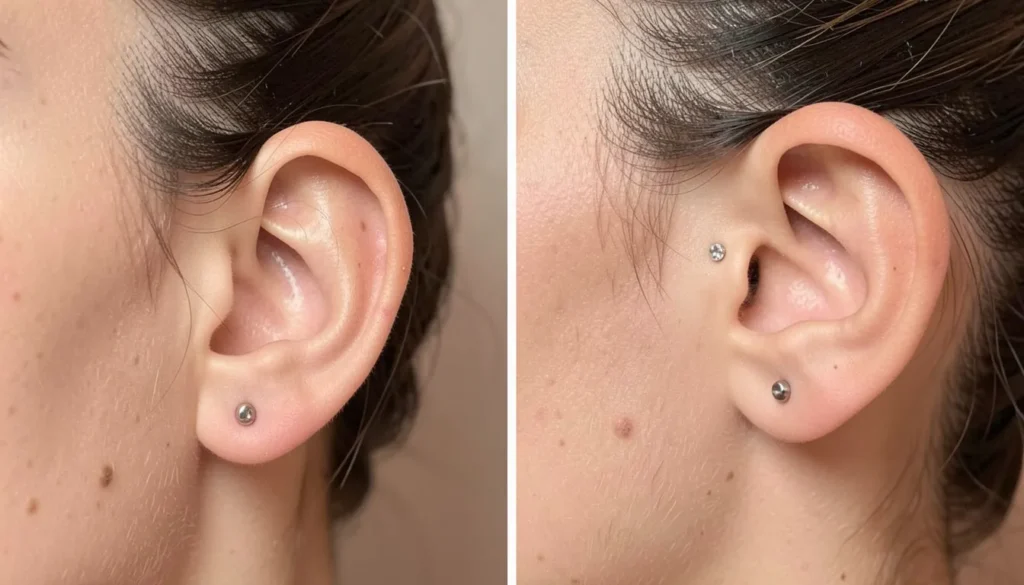
Ear styling has evolved from a simple single stud to an intricate art form. The curated ear, a personalized constellation of delicate jewelry, has become a major form of self-expression. If you’re looking to add to your collection or are just starting your journey, understanding the different types of ear piercings is the first step. With so many placements available, from the classic lobe to the more adventurous cartilage piercings, the possibilities are endless.
This comprehensive guide will serve as your roadmap to the world of ear piercing. We’ll explore every placement on the ear map, discussing pain levels, healing times, and the best jewelry for each spot. Whether you’re aiming for a minimalist look with a single helix stud or a bold, maximalist ear stack, you’ll find all the information you need to design your perfect curated ear with confidence.
Understanding the Ear Map: Lobe vs. Cartilage
Before we dive into specific placements, it’s important to understand the two main areas of the ear that can be pierced. Your choice between these will significantly impact the piercing experience, healing process, and jewelry options.
- Lobe Piercings: The earlobe is the soft, fleshy part at the bottom of your ear. It contains no cartilage, which means piercings in this area are generally less painful and heal much faster. This is the most common piercing placement.
- Cartilage Piercings: Cartilage is the firm, flexible tissue that makes up the majority of the ear’s structure, including the outer rim and the inner folds. Cartilage piercings are typically more painful than lobe piercings and have a much longer healing time because cartilage has less blood flow. They require diligent aftercare to heal properly.
The Definitive List of Ear Piercing Types
Ready to explore your options? Here’s a detailed breakdown of the most popular types of ear piercings, moving from the lobe upward.
Lobe Piercings
This is the classic starting point for most people. The fleshy lobe offers plenty of space for multiple piercings.
1. Standard Lobe Piercing
This is the most common piercing of all, placed in the center of the earlobe. It’s the one most people get as their first piercing.
- Pain Level: Very low (1-2/10).
- Healing Time: 6-8 weeks.
- Best Jewelry: Studs, hoops, and huggies.
2. Upper Lobe Piercing
Placed just above the standard lobe piercing, upper lobe piercings are a great way to start building a stack. You can get second, third, or even fourth lobe piercings depending on the size of your earlobe.
- Pain Level: Low (2-3/10).
- Healing Time: 8-12 weeks.
- Best Jewelry: Small studs or tiny hoops.
3. Transverse Lobe Piercing
This is a more unique industrial-style piercing where a single barbell passes horizontally through the earlobe from side to side, rather than front to back.
- Pain Level: Low to moderate (3-4/10).
- Healing Time: 2-4 months.
- Best Jewelry: A straight or curved barbell.
Outer Ear Cartilage Piercings
These piercings are located on the outer rim and prominent folds of the ear’s cartilage.
4. Helix Piercing
The helix is the upper cartilage rim of the ear. A standard helix piercing is located on the upper-outer part of the ear. This is one of the most popular cartilage piercings and a perfect entry point into cartilage styling.
- Pain Level: Moderate (4-5/10).
- Healing Time: 6-12 months.
- Best Jewelry: Studs, hoops, or captive bead rings.
5. Forward Helix Piercing
Located on the front-facing part of the helix, just above the tragus where the rim of your ear connects to your face. You can often get a double or triple forward helix for a striking look.
- Pain Level: Moderate (5-6/10).
- Healing Time: 6-12 months.
- Best Jewelry: Small studs with flat-back labrets.
6. Industrial Piercing
An industrial piercing is technically two separate piercings (usually two forward helix piercings) connected by a single, long barbell. It makes a bold, edgy statement.
- Pain Level: High (7/10). The two separate piercings and pressure from the bar can be intense.
- Healing Time: 9-12 months, and can be difficult to heal.
- Best Jewelry: A long industrial barbell.
7. Auricle Piercing
This piercing is placed on the outer rim of the ear, midway between the helix and the earlobe. It’s a great spot for a statement hoop.
- Pain Level: Moderate (4-5/10).
- Healing Time: 6-12 months.
- Best Jewelry: Small hoops or studs.
Inner Ear Cartilage Piercings
These piercings are situated within the inner folds of the ear, creating unique and eye-catching placements.
8. Tragus Piercing
The tragus is the small, oval-shaped piece of cartilage that protrudes in front of your ear canal. It’s a subtle yet stylish placement that has gained immense popularity.
- Pain Level: Moderate (5/10).
- Healing Time: 6-12 months.
- Best Jewelry: Small studs with a flat-back labret or tiny, snug hoops.
9. Anti-Tragus Piercing
Located on the small fold of cartilage directly opposite the tragus, just above the earlobe. This is a more unique and less common placement.
- Pain Level: Moderate (6/10).
- Healing Time: 9-12 months.
- Best Jewelry: A small curved barbell or a captive bead ring.
10. Daith Piercing
The daith piercing passes through the innermost fold of cartilage in your ear. This piercing has become trendy not only for its look but also due to anecdotal claims that it can help alleviate migraine symptoms (though this is not scientifically proven).
- Pain Level: Moderate to high (6-7/10).
- Healing Time: 9-12 months.
- Best Jewelry: A captive bead ring or a seamless hoop.
11. Rook Piercing
The rook piercing goes vertically through the ridge of cartilage in your upper-inner ear, located just above the daith. It’s a striking piercing that draws attention to the inner ear.
- Pain Level: High (7-8/10), as it goes through a thick fold of cartilage.
- Healing Time: 9-12 months or longer.
- Best Jewelry: A small curved barbell is typically used for initial healing.
12. Conch Piercing
The conch is the large, cup-shaped area of cartilage in the center of your ear. You can get an inner conch (where a stud sits in the middle) or an outer conch (where a hoop can wrap around the edge of the ear).
- Pain Level: Moderate (5-6/10).
- Healing Time: 6-12 months.
- Best Jewelry: A stud with a flat-back labret for the inner conch, or a large hoop for the outer conch once fully healed.
13. Snug Piercing
The snug piercing is a horizontal piercing located on the small, inner ridge of cartilage just above the anti-tragus. It’s a shallow placement, making it one of the more unique and delicate-looking piercings.
- Pain Level: High (8/10), due to the sensitivity and thickness of the area.
- Healing Time: 9-12 months or longer; known to be difficult to heal.
- Best Jewelry: A small curved barbell.
Pain, Healing, and Aftercare: What to Expect
A new piercing is an open wound and must be cared for properly to prevent infection and ensure a smooth healing process.
Understanding the Pain Scale
Pain is subjective, but generally, the thicker the cartilage, the more painful the piercing will be. The initial piercing is a quick, sharp pinch that subsides quickly, but cartilage piercings will often have a dull, throbbing ache for a few hours afterward.
The Healing Journey
- Lobe Piercings: Heal relatively quickly and with minimal fuss, usually within a couple of months.
- Cartilage Piercings: Have a long and sometimes challenging healing process. It’s crucial not to sleep on the piercing, avoid touching it, and be careful with headphones, hats, and glasses. A cartilage piercing can take up to a full year to be completely healed.
Essential Aftercare Tips
Your professional piercer will provide you with specific aftercare instructions, but the general guidelines are as follows:
- Clean Twice Daily: Use a sterile saline solution to gently clean the front and back of the piercing. Do not use alcohol, hydrogen peroxide, or harsh soaps.
- Don’t Twist or Touch: Avoid touching, twisting, or playing with your new jewelry. This can introduce bacteria and irritate the healing tissue.
- Be Patient with Healing: Do not change your initial jewelry until the piercing is fully healed. Your piercer will use implant-grade, hypoallergenic jewelry that is slightly longer to accommodate initial swelling.
- Avoid Sleeping on It: This is especially critical for cartilage piercings. Sleeping on a new piercing can cause irritation, migration (the piercing shifting), and healing complications. Try using a travel pillow and placing your ear in the hole to avoid pressure.
Choosing a Professional Piercer
The single most important factor for a safe and successful piercing is your choice of piercer.
- Look for a Reputable Studio: Research studios in your area. Look for clean, professional environments with good reviews.
- Check Portfolios: A good piercer will have a portfolio of their work. This allows you to see the quality of their piercings and their experience with different placements.
- Needle, Not Gun: Never get a cartilage piercing with a piercing gun. Piercing guns use blunt force trauma that can shatter cartilage and lead to serious complications. A professional piercer will always use a sterile, single-use, hollow needle for a clean and precise piercing.
- Ask About Sterilization: The studio should use an autoclave to sterilize all equipment. Don’t be afraid to ask about their safety and hygiene practices.
Conclusion
The vast array of ear piercing types offers a beautiful canvas for you to express your unique style. From the simple elegance of a lobe piercing to the intricate beauty of a curated cartilage stack, there is a perfect placement for everyone.
By understanding the different options, committing to proper aftercare, and choosing a reputable professional piercer, you can safely and successfully begin your ear styling journey. Take your time, do your research, and have fun creating a personalized look that is all your own.
Frequently Asked Questions (FAQs)
Q1: What is the least painful ear piercing?
The standard earlobe piercing is universally considered the least painful, as it goes through soft tissue with no cartilage.
Q2: What is the most painful ear piercing?
Pain is subjective, but piercings through thick, tight folds of cartilage like the rook and the snug are often reported as the most painful.
Q3: Can I wear headphones with new ear piercings?
You should avoid over-ear headphones that put pressure on helix, auricle, or industrial piercings. For inner-ear piercings like the tragus, daith, or conch, you should avoid using earbuds in that ear until it is fully healed to prevent irritation and bacteria.
Q4: How do I know if my piercing is infected?
Signs of a normal healing piercing include slight redness, swelling, and clear or whitish discharge (lymph fluid). Signs of an infection include excessive pain, throbbing, yellow or green pus, a foul odor, and a hot feeling around the piercing site. If you suspect an infection, do not remove the jewelry and consult your piercer or a doctor immediately.
Q5: Can you get multiple ear piercings at once?
Yes, you can get several piercings in one session. However, it’s generally recommended not to get more than 3-4 at a time, and to get them all on one ear. This leaves you with a comfortable side to sleep on, which is crucial for healing.

Sofia Bennett is a fashion writer and style observer known for her clean sense of aesthetics and trend analysis. She has covered fashion shows, reviewed designer collections, and interviewed independent creators. Sofia specializes in connecting fashion with real-life lifestyle choices, helping readers understand what looks good — and why.