
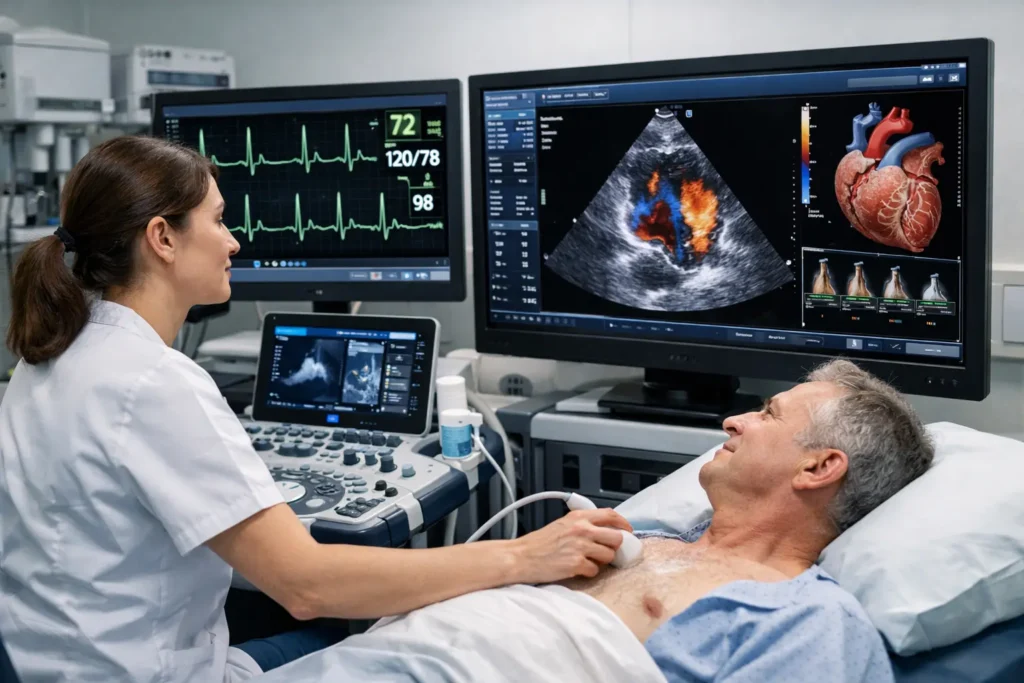
Cardiovascular disease is the leading cause of death worldwide, affecting hundreds of millions of people across every nation. Behind every diagnosis, every life-saving procedure, and every heartbeat monitored lies a critical yet often overlooked healthcare professional: the cardiovascular technologist. This comprehensive guide covers everything you need to know about this rewarding career — from daily responsibilities and educational pathways to salary expectations and the future of the field.
What is Cardiovascular Technology? Understanding the Field
Cardiovascular technology is a specialized allied health discipline focused on the diagnosis and treatment of conditions affecting the heart and blood vessels. Professionals in this field work alongside cardiologists, cardiac surgeons, and other members of the healthcare team to perform diagnostic tests, assist with interventional procedures, and monitor patient outcomes.
The field sits at the intersection of high-stakes clinical work and cutting-edge medical technology. Cardiovascular technologists operate sophisticated imaging equipment, conduct electrocardiographic studies, support surgeons in the operating room, and analyze physiological data to help physicians make accurate, timely diagnoses. Their work directly influences patient care decisions and, in many cases, saves lives.
Cardiovascular Technologist vs. Technician: What’s the Difference?
One of the most common points of confusion for students exploring this field is the distinction between a cardiovascular technologist and a cardiovascular technician. While the terms are sometimes used interchangeably, they generally refer to distinct roles with different scopes of practice and educational requirements.
| Factor | Cardiovascular Technologist | Cardiovascular Technician (EKG Tech) |
| Scope of Practice | Broad — includes invasive procedures, advanced imaging, and vascular studies | Narrower — focused on non-invasive monitoring and basic diagnostic testing |
| Education Level | Associate or bachelor’s degree (2–4 years) | Certificate or diploma program (6–12 months) |
| Typical Procedures | Cardiac catheterization, echocardiography, stress testing, vascular sonography | 12-lead ECG, Holter monitoring, stress test setup |
| Work Settings | Hospitals, cardiac cath labs, advanced imaging centers | Clinics, physician offices, hospitals |
| Certification | CCI, ARDMS, CSCT credentials (specialty-specific) | Basic EKG certification or CET credential |
| Supervision Level | May work semi-independently; assists in complex procedures | Typically works under closer physician/technologist oversight |
Why is This Career in High Demand?
The demand for cardiovascular technologists is growing rapidly, driven by several powerful forces converging simultaneously. According to the U.S. Bureau of Labor Statistics (BLS), employment in this field is projected to grow much faster than the national average for all occupations — a trend that mirrors patterns in many countries around the world.
The primary driver is the rising prevalence of cardiovascular disease. The World Health Organization (WHO) estimates that cardiovascular diseases account for approximately 17.9 million deaths per year globally, representing 32% of all deaths worldwide. As populations age, the incidence of heart disease, arterial blockages, arrhythmias, and related conditions increases proportionally. The global “aging population” effect — particularly pronounced in North America, Europe, Japan, and parts of Southeast Asia — is creating a sustained, long-term surge in demand for cardiac diagnostic services.
Technological advancement is the second major catalyst. The field is evolving rapidly with the integration of artificial intelligence in diagnostic imaging, 3D echocardiography, robotic-assisted catheterization, and advanced wearable cardiac monitors. These technologies are expanding the volume and complexity of procedures performed, which in turn increases the need for skilled technologists who can operate, troubleshoot, and interpret results from these systems.
What Does a Cardiovascular Technologist Do? Key Responsibilities and Specializations
The day-to-day responsibilities of a cardiovascular technologist vary significantly depending on their chosen specialization. The field is broadly divided into three major areas: invasive cardiology, cardiac sonography, and vascular technology. EKG technicians represent a fourth, more focused subset. Each specialty demands a unique combination of technical knowledge, patient care skills, and clinical judgment.
Invasive Cardiology Technologists: The Cath Lab
Invasive cardiology technologists — often called cath lab technologists or cardiology technologists — work in the cardiac catheterization laboratory, one of the most fast-paced and high-stakes environments in a modern hospital. These professionals assist physicians with interventional procedures including coronary angiography, angioplasty, stent placement, and structural heart interventions such as transcatheter aortic valve replacement (TAVR).
Specific responsibilities include preparing the patient and the sterile field, operating fluoroscopic imaging equipment, monitoring hemodynamic parameters (blood pressure, oxygen saturation, cardiac output) throughout the procedure, managing catheters and guidewires, and assisting with pacemaker implantation and defibrillator (ICD) placement. Cath lab technologists must be capable of responding instantly to complications such as cardiac arrhythmias or hemodynamic instability, making critical thinking and composure under pressure essential qualities for this role.
In many facilities, invasive cardiology technologists also manage cardiac devices post-implantation, performing pacemaker and ICD follow-up checks using device programmers — a growing area of practice sometimes referred to as cardiac device technology.
Cardiac Sonographers: Echocardiography
Cardiac sonographers — also called echocardiographers or echo techs — specialize in the use of diagnostic ultrasound to create detailed images of the heart’s structure and function. Echocardiography is one of the most commonly performed cardiac tests in the world, providing real-time visualization of cardiac chambers, valves, myocardial wall motion, and blood flow patterns without the use of radiation.
Cardiac sonographers perform multiple types of echocardiographic studies depending on the clinical question. A transthoracic echocardiogram (TTE) is the most common form, conducted from the surface of the chest. Transesophageal echocardiography (TEE) involves inserting a probe into the esophagus to obtain higher-resolution images, typically used intraoperatively or for cases where the transthoracic window is suboptimal. Stress echocardiography — performed during or immediately after exercise or pharmacological stress — assesses how the heart responds under increased workload, helping to identify coronary artery disease and other conditions.
Advanced techniques increasingly used by experienced cardiac sonographers include 3D echocardiography, strain imaging (speckle tracking), contrast echocardiography, and intracardiac echocardiography (ICE). Mastery of these modalities significantly enhances a sonographer’s clinical value and career prospects.
Vascular Technologists: Circulation Specialists
Vascular technologists specialize in non-invasive diagnostic studies of the body’s arterial and venous circulation outside the heart. Using duplex ultrasound — which combines B-mode imaging with Doppler flow analysis — vascular technologists assess blood flow in the carotid arteries, renal arteries, aorta, peripheral arteries of the limbs, and the venous system.
Common studies performed by vascular technologists include carotid duplex scanning (to detect arterial plaque and assess stroke risk), lower extremity arterial studies (to diagnose peripheral artery disease), venous duplex examination (to detect deep vein thrombosis), and the ankle-brachial index (ABI) test. They may also perform transcranial Doppler studies to evaluate cerebrovascular circulation.
Vascular technology is a distinct specialty that often requires separate certification from cardiac sonography. The Society for Vascular Ultrasound (SVU) and the American Registry for Diagnostic Medical Sonography (ARDMS) both offer credentials specific to vascular interpretation and vascular sonography.
Cardiology Technicians: EKG and Monitoring Specialists
Cardiology technicians — commonly known as EKG technicians or ECG technicians — focus primarily on non-invasive cardiac monitoring tests. Their core task is performing the 12-lead electrocardiogram (ECG/EKG), a foundational diagnostic test that records the heart’s electrical activity and is used to detect arrhythmias, ischemia, conduction abnormalities, and electrolyte disturbances.
Beyond the standard 12-lead ECG, cardiology technicians apply and manage Holter monitors — portable recording devices worn by patients for 24 to 48 hours (or longer) to capture intermittent arrhythmias that may not appear during a brief in-office recording. They also assist with exercise stress testing, applying electrodes, monitoring vital signs, and ensuring patient safety during the test. Ambulatory blood pressure monitoring and event recording are additional responsibilities in many facilities.
While cardiology technicians generally work under closer supervision than fully trained technologists, they are indispensable members of cardiology departments, primary care practices, and emergency departments where rapid ECG acquisition is essential.
A Day in the Life: Inside the Cardiac Cath Lab
It is 6:45 a.m. The cath lab technologist arrives before the rest of the clinical team to review the day’s case schedule, check equipment calibration, and prepare the sterile supply trays for the first procedure — a diagnostic coronary angiogram on a 61-year-old patient presenting with chest pain. By 7:30, the patient is on the procedure table, electrodes applied, IV access established. The technologist positions the fluoroscopy arm, loads contrast medium into the injector, and confirms hemodynamic monitoring is active.
The cardiologist enters. Over the next 45 minutes, the technologist anticipates every step — handing instruments, adjusting imaging angles, calling out pressure readings, and watching the monitor with the same focus as the physician. When a significant stenosis is identified, the procedure transitions from diagnostic to interventional. A stent is deployed. The narrowed artery opens. At 9:15, the patient is transferred to recovery, stable and relieved. The technologist breaks down the sterile field, documents the procedure, resets the room, and is ready for the next case by 9:45. By noon, they will have assisted in four more procedures.
How to Become a Cardiovascular Technologist: Education and Certification
The pathway to becoming a cardiovascular technologist involves a combination of formal academic education, clinical training, and professional certification. The specific requirements vary by country, specialty, and employer — but the general framework is consistent across most regions.
Step 1: Choose Your Educational Path
Cardiovascular technology programs are offered at three main levels of academic credential, each suited to different career goals and timelines.
Certificate or Diploma Programs (6–18 months)
These accelerated programs are typically designed for students who already hold a background in a related healthcare field (such as nursing, respiratory therapy, or radiography) and wish to specialize in cardiovascular technology. Certificate programs focus primarily on clinical skills — ECG acquisition, Holter monitoring, stress testing, and basic echocardiography — and are most commonly associated with entry-level cardiology technician roles.
Associate Degree Programs (2 Years)
A two-year associate degree in cardiovascular technology provides a more thorough academic foundation alongside clinical training. Typical coursework includes anatomy and physiology, cardiovascular pharmacology, cardiac pathophysiology, medical terminology, electrocardiography, echocardiography principles, vascular sonography, and clinical practicum rotations. Graduates of associate programs are eligible for most entry-level technologist positions and the majority of professional certification examinations.
Bachelor’s Degree Programs (4 Years)
A four-year bachelor’s degree offers the most comprehensive preparation, incorporating advanced coursework in cardiac imaging, hemodynamics, research methods, healthcare ethics, and leadership. Bachelor’s-educated technologists often qualify for senior clinical roles, supervisory positions, and specialized fellowships. Some programs, particularly in Canada and Pakistan, are structured as four-year bachelor’s degrees in cardiac science or cardiovascular perfusion technology from the outset.
Regardless of the credential level, accreditation is a critical factor when choosing a program. In the United States, look for programs accredited by the Commission on Accreditation of Allied Health Education Programs (CAAHEP). In Canada, programs accredited by Accreditation Canada and affiliated with provincial health regulatory bodies carry the most professional standing.
Step 2: Get Certified and Licensed
Professional certification is the cornerstone of career credibility in cardiovascular technology. While not universally mandated by law, most hospitals and cardiac imaging centers require or strongly prefer candidates who hold recognized credentials from national registry bodies. In some U.S. states, licensure — a legal requirement to practice — is tied directly to holding specific certifications.
| Credential | Issuing Body | Specialty Area | Common Path |
| RCIS (Registered Cardiovascular Invasive Specialist) | CCI (Cardiovascular Credentialing International) | Invasive Cardiology / Cath Lab | Associate degree + cath lab experience |
| RCS (Registered Cardiac Sonographer) | CCI | Echocardiography | Program completion + clinical hours |
| RDCS (Registered Diagnostic Cardiac Sonographer) | ARDMS (American Registry for Diagnostic Medical Sonography) | Echocardiography | Program + 12 months clinical experience |
| RVT (Registered Vascular Technologist) | ARDMS | Vascular Technology | Vascular-focused program + clinical hours |
| RCT (Registered Cardiology Technologist) | CCI / Canadian provincial bodies | General Cardiology (Canada) | Canadian accredited diploma/degree |
| CSCT (Certified Stress/Holter Monitor Technician) | CCI | Ambulatory Monitoring | Exam after completing training |
Maintaining certification typically requires ongoing continuing education — a reflection of the field’s rapid technological evolution. Most credentialing bodies require 30 to 60 continuing education credits over a two- to three-year renewal cycle.
Educational Pathways Around the World
While the core skills and clinical content remain consistent globally, the specific structure of cardiovascular technology education varies significantly by country. Here is a brief overview of how major regions approach training.
- United States: Programs are typically offered at the associate or bachelor’s level through community colleges and universities. CCI and ARDMS credentials are the national standard. Some states (e.g., California, New Jersey) require specific licensure in addition to certification.
- Canada: The Registered Cardiology Technologist (RCT) credential is the national benchmark, governed by provincial regulatory colleges. Programs such as those offered by Algonquin College in Ontario lead to a three-year advanced diploma. The CSCT credential is widely recognized for monitoring technicians.
- Malaysia: Institutions such as the Institut Jantung Negara (National Heart Institute, IJN) offer structured diploma and degree programs in cardiac technology, with pathways into invasive cardiology, echocardiography, and electrophysiology. The field is growing rapidly in response to high cardiovascular disease rates in the region.
- Pakistan: Universities such as the International Islamic University of Islamabad (IIUI) and Dow University offer undergraduate degrees in cardiac perfusion and cardiovascular technology. The field is expanding as tertiary cardiac centers develop nationally.
- United Kingdom: The NHS employs cardiac physiologists rather than technologists — the title reflects the BSc-level qualification typically required. The British Society for Heart Failure and the British Cardiovascular Society offer guidance on training pathways.
- Australia: Cardiac sonographers and technologists are credentialed through the Australasian Sonographers Association (ASA), with pathways aligned to university-based sonography programs.
Salary and Job Outlook for Cardiovascular Technologists
Financial compensation for cardiovascular technologists is competitive within the allied health professions, reflecting the specialized nature of the work, the critical care environments in which these professionals operate, and the level of training required.
Average Salary in the United States
According to the U.S. Bureau of Labor Statistics (BLS), the median annual wage for cardiovascular technologists and technicians — including vascular technologists — was approximately $61,000 to $63,000 as of the most recent reporting period, with the top 10% of earners exceeding $95,000 per year. Hourly wages for median earners typically fall in the $28 to $32 range. Geographic location has a significant impact, with states like California, Alaska, Hawaii, Oregon, and Massachusetts consistently reporting the highest compensation levels.
| Specialization / Setting | Estimated Annual Salary (US) | Key Variables |
| Cath Lab Technologist (RCIS) | $65,000 – $95,000+ | Hospital size, call pay, experience |
| Cardiac Sonographer (RDCS/RCS) | $68,000 – $100,000+ | 3D echo skills, TEE experience |
| Vascular Technologist (RVT) | $60,000 – $90,000 | Outpatient vs. hospital setting |
| EKG / Holter Technician | $38,000 – $55,000 | Entry-level; varies by facility type |
| Lead / Senior Technologist | $80,000 – $115,000+ | Supervisory responsibility, tenure |
Global Salary Insights
Compensation varies considerably across international markets. In Canada, registered cardiology technologists in major urban centers such as Toronto, Vancouver, and Calgary typically earn between CAD $60,000 and $90,000 annually, with hospital-based cath lab positions at the higher end. In Malaysia, cardiac technologists at national tertiary centers earn salaries commensurate with the country’s healthcare wage structure, which is considerably lower in absolute terms but highly competitive locally. In the United Kingdom, NHS cardiac physiologists are positioned within NHS pay bands, typically Band 5 to Band 7, translating to approximately £28,000 to £45,000 per year (with London weighting additions).
Factors that consistently influence salary across all markets include years of experience, the complexity of the specialization (invasive procedures typically command a premium), advanced certifications, management or supervisory responsibilities, and the academic and clinical reputation of the employing institution.
Job Outlook and Future Growth
The BLS projects employment of cardiovascular technologists and technicians to grow by approximately 10% to 13% over the next decade — a rate classified as ‘much faster than average’ compared to all other occupations. This projection is driven by the aging of the Baby Boomer generation, increased survival rates from cardiac events (which create a larger pool of patients requiring ongoing monitoring), the expansion of outpatient cardiac imaging services, and the proliferation of advanced cardiac procedures previously only available in major academic centers.
Global trends mirror the U.S. outlook. As middle-income countries in Southeast Asia, South Asia, the Middle East, and Latin America develop more sophisticated cardiac care infrastructures, demand for trained cardiovascular technologists is intensifying in these regions as well. International career opportunities for credentialed technologists are correspondingly expanding.
The Future of Cardiovascular Technology
Cardiovascular technology is on the cusp of a transformative decade. Several emerging technologies are reshaping what it means to be a cardiovascular technologist, expanding the scope of practice while also redefining the skills required for excellence in the field.
Artificial Intelligence in Cardiac Diagnostics
AI-assisted analysis is beginning to permeate nearly every modality in cardiovascular imaging and monitoring. Machine learning algorithms can now detect subtle ECG patterns associated with atrial fibrillation, left ventricular dysfunction, hyperkalemia, and even sleep apnea with a level of sensitivity that often matches or exceeds human interpretation. In echocardiography, AI tools can automate chamber measurements, calculate ejection fraction, and flag abnormal wall motion — reducing variability and improving throughput.
Cardiovascular technologists of the future will need to understand how to work alongside AI tools: recognizing their capabilities, identifying their limitations, validating automated outputs, and communicating findings appropriately to physicians. AI will not replace the skilled technologist — it will elevate the standard of what a skilled technologist is expected to deliver.
3D Echocardiography and Advanced Imaging
Three-dimensional echocardiography has transitioned from research curiosity to clinical standard over the past decade. Real-time 3D visualization allows cardiologists and surgeons to view cardiac structures in their true spatial relationships — information that is particularly valuable for planning and guiding structural heart procedures such as transcatheter mitral valve repair (MitraClip) and TAVR. Cardiac sonographers with proficiency in 3D acquisition, post-processing, and strain imaging are among the most sought-after professionals in the field.
Wearable Technology and Remote Monitoring
Consumer wearables with medical-grade ECG capabilities — including smartwatches and biosensor patches — are generating enormous volumes of cardiac data that require expert interpretation and clinical triage. Cardiovascular technologists are increasingly being called upon to review remote monitoring data, adjudicate device-detected arrhythmias, and support telehealth cardiology services. This trend is creating new practice settings and career pathways outside the traditional hospital environment.
Hybrid Operating Rooms and Structural Heart Programs
Hybrid operating rooms — facilities equipped for both open surgical and catheter-based interventions — are expanding in major cardiac centers globally. These environments require technologists with cross-specialty skills: invasive cath lab competence, echo guidance capability, and familiarity with surgical workflows. Structural heart programs (TAVR, MitraClip, WATCHMAN) are among the fastest-growing areas of cardiovascular medicine, and technologists who specialize in this domain enjoy exceptional career advancement potential.
faqs
What is the difference between a cardiovascular technologist and a technician?
A cardiovascular technologist typically holds a more advanced degree (associate or bachelor’s), performs a broader range of procedures including invasive interventions and advanced imaging, and holds specialty certification from bodies like CCI or ARDMS. A cardiovascular technician (often an EKG or Holter tech) usually holds a certificate-level credential and focuses on non-invasive monitoring tasks under closer supervision.
How long does it take to become a cardiovascular technologist?
The timeline depends on your chosen educational path. Certificate programs for technicians can be completed in 6 to 12 months. Associate degree programs typically take 2 years. Bachelor’s degree programs take 3 to 4 years. After graduation, you will need to complete a certification examination, which requires additional preparation time. Most students enter the workforce 2 to 4 years after beginning their education.
What certification do I need to be a cardiovascular technologist?
The most recognized certifications in the United States are the RCIS (Registered Cardiovascular Invasive Specialist) and RCS (Registered Cardiac Sonographer) from Cardiovascular Credentialing International (CCI), and the RDCS (Registered Diagnostic Cardiac Sonographer) and RVT (Registered Vascular Technologist) from the American Registry for Diagnostic Medical Sonography (ARDMS). Requirements vary by specialty and employer; always confirm with the hiring institution and your regional licensing authority.
Is cardiovascular technology a stressful job?
The level of occupational stress varies significantly by specialty. Cath lab technologists working in high-volume interventional centers or on-call during emergencies — such as STEMI activations at 3 a.m. — experience high-intensity stress that requires strong emotional regulation and clinical composure. Echocardiographers and vascular technologists typically work in calmer, more predictable environments. Across all specializations, the satisfaction of contributing meaningfully to patient outcomes is frequently cited by practitioners as a powerful counterbalance to workplace pressure.
Do cardiovascular technologists work with pacemakers?
Yes — particularly invasive cardiology technologists working in cath labs and electrophysiology (EP) labs. Responsibilities may include assisting with pacemaker implantation, performing post-implant device checks using specialized programmers, and supporting pacemaker follow-up clinics. Cardiac device technology is a growing sub-specialty, with dedicated training programs and certification pathways emerging to meet demand.
What is a cardiac cath lab technologist?
A cardiac cath lab technologist (formally known as a cardiovascular invasive specialist) assists cardiologists in the cardiac catheterization laboratory during diagnostic and interventional procedures. Their duties include operating fluoroscopic imaging equipment, managing sterile instrumentation, monitoring hemodynamics, and assisting with angioplasty, stent placement, pacemaker implantation, and structural heart interventions.
Can you specialize within cardiovascular technology?
Absolutely. The field offers rich specialization options including invasive cardiology (cath lab), echocardiography (cardiac sonography), vascular technology, electrophysiology, cardiac device management, nuclear cardiology, and structural heart procedures. Most technologists develop a primary specialization, then broaden their skills over time. Each specialty has its own certification pathway and career trajectory.
Where do cardiovascular technologists typically work?
The majority of cardiovascular technologists are employed in hospital settings — specifically in cardiac catheterization labs, cardiac imaging departments, echocardiography labs, and vascular diagnostic centers. Other common work settings include outpatient cardiology clinics, physician group practices, diagnostic imaging centers, cardiovascular surgery programs, and — increasingly — remote cardiac monitoring companies and telehealth cardiology services.
What is the job outlook for cardiovascular technologists?
The U.S. Bureau of Labor Statistics projects employment growth of approximately 10–13% over the next decade, classified as ‘much faster than average.’ The primary drivers include population aging, rising cardiovascular disease prevalence, and the expansion of advanced cardiac procedures. Global demand is similarly strong, particularly in rapidly developing healthcare markets in Southeast Asia, the Middle East, and South Asia.
Is cardiovascular technology a good career?
By most professional and personal measures, yes. The field offers excellent job security driven by persistent demand, competitive compensation relative to the educational investment required, significant intellectual challenge, ongoing technological evolution that prevents stagnation, and the profound sense of purpose that comes from working directly in life-saving clinical environments. For individuals who combine a passion for medicine with aptitude for technical precision, cardiovascular technology represents one of the most rewarding career paths available in allied health.
Start Your Journey in Cardiovascular Technology
Few careers in healthcare offer the combination of clinical impact, technological engagement, and long-term career security that cardiovascular technology provides. Whether you are drawn to the high-intensity precision of the cardiac cath lab, the artistry of advanced echocardiographic imaging, or the satisfaction of catching a life-threatening arrhythmia on a Holter recording, there is a specialization in this field that can align with your strengths and aspirations.
The path forward begins with education — selecting an accredited program matched to your career goals — and continues with professional certification, lifelong learning, and a commitment to the patients whose cardiac health you will help protect. The heart, in all its complexity, is a worthy challenge. And the professionals who dedicate their careers to understanding it are among the most essential in modern medicine.
Explore accredited cardiovascular technology programs in your region, connect with professional organizations such as the Alliance of Cardiovascular Professionals (ACVP), CCI, and ARDMS, and take the first step toward a career that matters.

Adrian Cole is a technology researcher and AI content specialist with more than seven years of experience studying automation, machine learning models, and digital innovation. He has worked with multiple tech startups as a consultant, helping them adopt smarter tools and build data-driven systems. Adrian writes simple, clear, and practical explanations of complex tech topics so readers can easily understand the future of AI.