
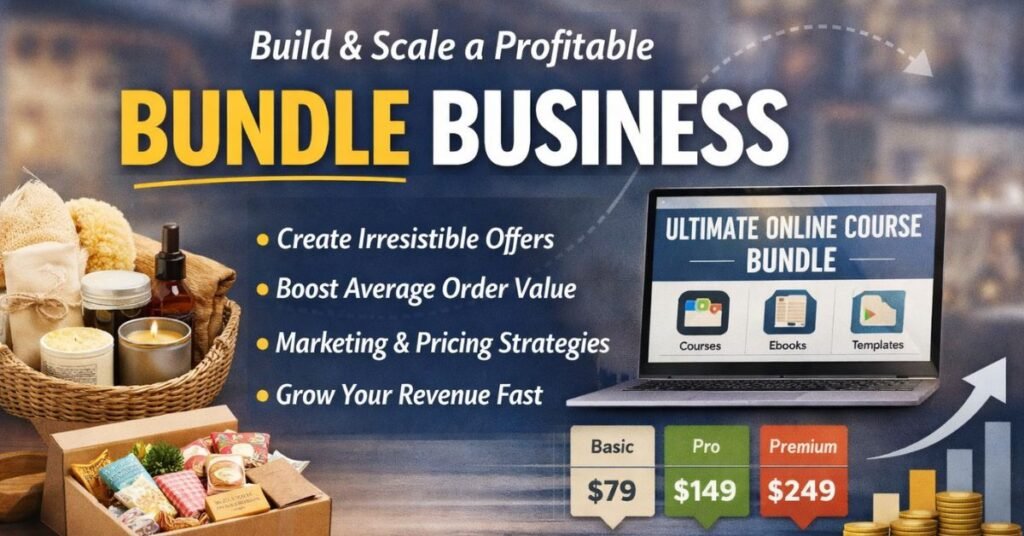
If you’ve ever bought a “buy one, get one” deal, a software package with multiple tools, or a curated gift box online, you’ve already experienced the power of a bundle business. But here’s the real question most entrepreneurs miss: why do bundled offers consistently outsell single products—even when the total price is higher?
The answer sits at the intersection of psychology, convenience, and smart positioning. Customers don’t just buy products; they buy solutions. And bundles feel like complete, ready-to-use solutions.
In this in-depth guide, you’ll learn exactly how a bundle business works, why it’s exploding across ecommerce, digital products, and services, and how you can build one from scratch—even with limited budget or experience. We’ll walk through real-world strategies, step-by-step execution, tools, pricing logic, common mistakes, and expert insights so you can launch with confidence and scale sustainably.
By the end, you won’t just understand bundled selling. You’ll know how to turn it into a predictable revenue engine.
What a Bundle Business Really Means (And Why It Works)
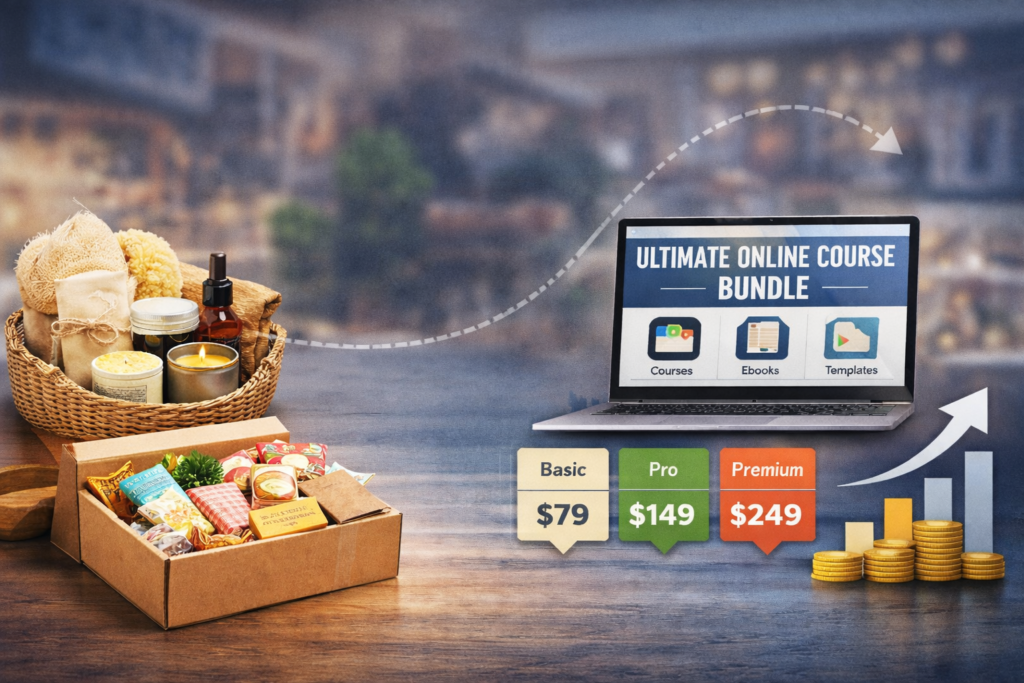
At its core, a bundle business is a model where multiple products or services are packaged together and sold as a single offer—usually at a perceived discount or added value. Think of it like a meal combo instead of ordering each item separately.
But the real magic isn’t the discount. It’s perceived completeness.
When customers see a bundle, three psychological triggers activate:
- Decision fatigue disappears because everything is pre-selected.
- Value perception increases because the total seems larger than the price.
- Risk decreases because the offer feels more comprehensive.
That’s why bundles dominate industries like:
- SaaS software suites
- Beauty subscription boxes
- Online course packages
- Holiday gift sets
- Marketing service retainers
In each case, the seller isn’t just offering products. They’re offering an outcome.
A fitness bundle sells transformation.
A marketing bundle sells growth.
A skincare bundle sells confidence.
Understanding this shift—from product to outcome—is what separates profitable bundle businesses from random product groupings that never convert.
The Rise of Bundled Selling in Modern Commerce
Bundling isn’t new. Fast-food combos and cable TV packages existed decades ago. But digital commerce has supercharged the model.
Three major trends explain the surge:
First, customer overwhelm. With thousands of choices online, curated bundles feel like relief.
Second, rising acquisition costs. Businesses now spend more on ads, so increasing average order value through bundles boosts profitability.
Third, subscription culture. People are comfortable paying regularly for curated value—think streaming, beauty boxes, or software stacks.
Because of this shift, bundle-first brands often outperform single-product competitors in:
- Customer lifetime value
- Conversion rate
- Repeat purchase frequency
- Brand loyalty
In simple terms, bundles create stickiness. And stickiness creates sustainable revenue.
Key Benefits of Running a Bundle Business
A well-structured bundle business isn’t just convenient for customers—it’s strategically powerful for owners.
Higher Average Order Value Without Hard Selling
Instead of convincing someone to buy more items individually, bundles naturally increase cart size. Customers feel they’re saving money, even while spending more overall.
Faster Inventory Movement
Physical product sellers use bundles to:
- Clear slow-moving stock
- Pair high-margin with low-margin items
- Reduce storage costs
This turns dead inventory into revenue.
Stronger Brand Positioning
Bundles communicate expertise. A curated photography kit or startup toolkit signals authority more than random individual listings.
Customers trust curated solutions more than scattered products.
Easier Upselling and Tiered Pricing
Bundles allow simple pricing ladders:
- Basic bundle
- Pro bundle
- Premium bundle
This structure gently guides customers toward higher-value purchases without aggressive sales tactics.
Improved Customer Satisfaction
When customers receive everything they need at once, frustration drops and satisfaction rises. That translates into:
- Better reviews
- More referrals
- Lower refund rates
And those three factors alone can transform a small business into a scalable brand.
Real-World Use Cases Across Industries
The beauty of the bundle business model is flexibility. It works across nearly every sector.
Ecommerce Product Bundles
Common examples include:
- Skincare routines
- Coffee sampler packs
- Baby starter kits
- Home workout bundles
These succeed because they solve a complete need, not a single step.
Digital Product Bundles
Creators bundle:
- Courses
- Templates
- Ebooks
- Communities
A $29 ebook becomes a $199 value stack when packaged with complementary assets.
Service Bundles
Freelancers and agencies combine services like:
- Website design + SEO + copywriting
- Social media management + content creation
- Branding + logo + strategy
Clients prefer one cohesive solution instead of hiring multiple vendors.
Subscription Bundles
Monthly bundles drive predictable revenue:
- Snack boxes
- Beauty kits
- Learning resources
- Software toolkits
Recurring bundles often become the most stable income stream in a business.
How to Start a Bundle Business Step by Step
Launching doesn’t require a warehouse or huge audience. What matters is structure and validation.
Step 1: Choose a Clear Outcome, Not Just Products
Start with the transformation you want to deliver.
Examples:
- “Launch your first online store”
- “Clear acne in 30 days”
- “Master freelance writing”
Then select items that support that result.
Outcome-first thinking prevents weak, random bundles.
Step 2: Validate Demand Before Building
Use simple validation methods:
- Search volume for bundle-related keywords
- Competitor bundle pricing
- Polls in niche communities
- Pre-order landing pages
If people won’t pre-order, they probably won’t buy later.
Step 3: Source or Create Bundle Components
Options include:
- Your own products
- Wholesale physical goods
- Digital collaborations
- Affiliate partnerships
Many successful bundle businesses start without manufacturing anything.
Step 4: Price for Perceived Value, Not Cost
Classic bundle pricing rule:
Total value = high
Bundle price = attractive
Profit margin = protected
Customers compare value, not production cost.
Step 5: Design Simple, Clear Offer Pages
High-converting bundle pages include:
- Outcome-focused headline
- Visual breakdown of items
- Total value vs. bundle price
- Testimonials or proof
- Risk-free guarantee
Clarity sells more than clever design.
Step 6: Launch Small, Then Optimize
Start with:
- One niche
- One bundle
- One traffic source
Scale only after consistent sales appear.
Tools and Platforms That Make Bundling Easy
Technology removes most technical barriers today.
Ecommerce Platforms
Popular choices:
- Shopify for physical bundles
- WooCommerce for flexible customization
- Gumroad for digital bundles
- Etsy for curated physical sets
Free vs. paid differences usually involve automation, analytics, and integrations.
Bundle-Specific Apps
Helpful features include:
- Mix-and-match bundles
- Dynamic pricing
- Subscription management
- Upsell funnels
Paid tools often increase revenue enough to justify cost quickly.
Marketing Tools
Essential stack:
- Email platform for retention
- Landing page builder for launches
- Analytics for conversion tracking
- Social proof tools for credibility
Bundles thrive on storytelling and trust, so marketing tools matter as much as product quality.
Pricing Strategies That Maximize Profit
Pricing is where many bundle businesses win—or quietly fail.
The Anchor Pricing Method
Show:
- Individual prices first
- Total combined value
- Then discounted bundle price
This makes savings feel dramatic.
Tiered Bundles
Offer:
- Starter
- Advanced
- Complete
Most buyers choose the middle option, increasing revenue naturally.
Limited-Time Bundles
Scarcity boosts action:
- Holiday bundles
- Launch-week pricing
- Seasonal kits
Urgency converts hesitation into sales.
Common Mistakes That Kill Bundle Businesses
Even great ideas fail with poor execution.
Random Product Grouping
Bundles must feel intentional. Otherwise customers suspect clearance dumping.
Fix: build around a clear outcome.
Overcomplicated Choices
Too many bundle variations create confusion.
Fix: limit to 2–4 clear options.
Weak Value Presentation
If customers can’t instantly see savings, they won’t buy.
Fix: highlight total value visually and numerically.
Ignoring Customer Feedback
Bundles improve through iteration.
Fix: survey buyers and refine components regularly.
Advanced Strategies for Scaling a Bundle Business
Once consistent sales arrive, growth becomes the focus.
Partnerships and Collaborations
Co-created bundles expand reach without extra ad spend.
Subscription Conversion
Turn one-time bundles into recurring deliveries for stable revenue.
Audience-Driven Bundles
Let customers vote on future bundle contents. This increases engagement and guarantees demand.
Data-Based Optimization
Track:
- Conversion rate
- Average order value
- Refund percentage
- Lifetime value
Then refine pricing, contents, and messaging accordingly.
Conclusion
A successful bundle business isn’t about packaging random items together. It’s about delivering complete solutions that feel valuable, convenient, and trustworthy.
When done right, bundling can:
- Increase revenue without more traffic
- Build stronger customer loyalty
- Simplify marketing and positioning
- Create scalable, repeatable income
Whether you’re an ecommerce seller, creator, freelancer, or startup founder, the bundle model offers one of the fastest paths to higher profitability with lower complexity.
Start small. Focus on outcomes. Validate demand. Then refine relentlessly.
Your first profitable bundle could be far closer than you think.
FAQs
What is a bundle business?
A bundle business sells multiple related products or services together as one packaged offer, usually at a perceived discount or added value.
Are bundles more profitable than single products?
Often yes, because bundles increase average order value and improve customer satisfaction, leading to higher lifetime revenue.
Can beginners start a bundle business?
Absolutely. Many start with digital products, partnerships, or curated physical items without manufacturing anything.
How do I price a bundle correctly?
Show the total individual value first, then offer a lower bundle price while maintaining healthy profit margins.
What industries work best for bundles?
Ecommerce, digital education, SaaS, beauty, fitness, and marketing services all perform strongly with bundled offers.

Michael Grant is a business writer with professional experience in small-business consulting and online entrepreneurship. Over the past decade, he has helped brands improve their digital strategy, customer engagement, and revenue planning. Michael simplifies business concepts and gives readers practical insights they can use immediately.