
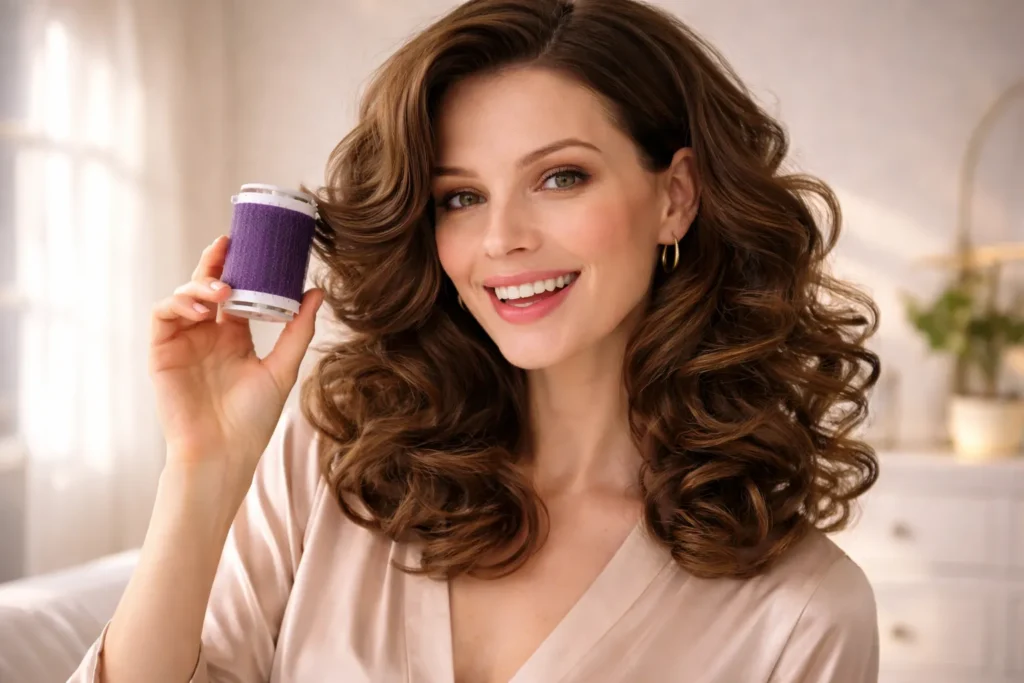
In an era dominated by high-tech curling wands and flat irons, hot rollers for hair might seem like a relic from your grandmother’s vanity. But make no mistake: this classic beauty tool is experiencing a massive resurgence, and for good reason. Nothing quite replicates the bouncy, long-lasting volume and smooth finish that a good set of hot rollers can provide. They are the unsung heroes of the hair world, offering a heat styling method that is often gentler on your strands while delivering red-carpet results.
If you’ve ever envied the blowout look of supermodels or the soft, romantic waves of Hollywood starlets, chances are hot rollers were involved. This comprehensive guide will walk you through everything you need to know about using hot rollers. From selecting the right type for your hair texture to mastering the application technique, we are bringing the heat back to your styling routine.
Why Hot Rollers Deserve a Spot in Your Routine
While curling irons are great for specific, defined curls, hot rollers offer a different set of benefits that make them indispensable for hair enthusiasts.
unparalleled Volume and Lift
The primary advantage of using hot rollers for hair is the incredible volume they generate right at the root. Because the roller sits at the base of your hair while it cools, it sets the hair in a lifted position. This creates that coveted “salon blowout” look that is notoriously difficult to achieve with a round brush and dryer alone.
Gentler Heat Styling
Unlike curling irons or straighteners that apply intense, direct heat (often exceeding 400°F) to your hair, hot rollers typically operate at lower temperatures. They heat up the hair and then let it cool down slowly to set the style. This process is generally less damaging, making hot rollers a safer option for fine, bleached, or fragile hair.
The “Set It and Forget It” Convenience
One of the biggest perks is multitasking. Once the rollers are in, your hands are free. You can do your makeup, choose your outfit, or enjoy your morning coffee while your hair styles itself. By the time you’re ready to leave, you simply unroll, shake out, and go.
Smooth, Frizz-Free Finish
Hot rollers, particularly those with ceramic or tourmaline technology, help to smooth the hair cuticle. This results in a shiny, polished finish that looks professionally done. The tension created by wrapping the hair around the roller also helps to straighten out kinks and frizz.
Types of Hot Rollers: Finding Your Perfect Match
Not all hot rollers are created equal. The material and technology used can significantly affect the outcome of your style.
Ceramic Hot Rollers
Ceramic rollers use infrared heat to penetrate the hair shaft from the inside out. This technology is excellent for fighting frizz and preserving moisture.
- Best For: Most hair types, especially those prone to frizz.
- Benefit: Even heat distribution prevents hot spots that can damage hair.
Wax-Core Rollers
These are the heavyweights of the roller world. The rollers have a wax core that melts when heated and retains heat for a long time.
- Best For: Thick, coarse, or hard-to-curl hair.
- Benefit: The long-lasting heat ensures that even the most stubborn hair sets into a curl.
Sponge or Steam Rollers
Steam rollers use moisture to set the curl. They are incredibly gentle and add hydration to the hair.
- Best For: Dry, damaged, or very fine hair.
- Benefit: The steam creates a very strong, long-lasting set without scorching the hair.
Velvet or Flocked Rollers
These rollers are covered in a soft, velvet-like material. This provides grip, making it easier to wind the hair without it slipping off.
- Best For: Beginners and fine hair.
- Benefit: The flocking protects the hair from direct contact with the hot surface and adds shine.
Choosing the Right Size for Your Desired Look
The size of the roller dictates the type of curl you will achieve. Most sets come with a variety of sizes, but understanding how to use them is key.
Jumbo Rollers (1.5 inches and up)
- The Look: Massive volume, body, and a slight bend at the ends. They won’t give you a tight curl.
- Use: Place these at the crown of your head to create lift and bounce.
Large Rollers (1 to 1.25 inches)
- The Look: Soft, loose waves and beachy texture.
- Use: Great for the main sections of your hair if you want a relaxed, modern style.
Medium Rollers (0.75 to 1 inch)
- The Look: Defined, classic curls.
- Use: Perfect for shorter hair or for creating tighter curls that can be brushed out into waves later.
Small Rollers (0.5 to 0.75 inch)
- The Look: Tight ringlets and vintage styles.
- Use: Typically used for very short hair or specific retro hairstyles.
Step-by-Step Guide: How to Use Hot Rollers Like a Pro
Using hot rollers for hair might seem intimidating if you’ve never done it, but with a little practice, it’s easier than using a curling iron. Follow these steps for flawless results.
Preparation is Key
- Start with Dry Hair: Hot rollers work best on dry hair. If your hair is wet, the style won’t set properly, and the steam can damage your strands.
- Apply Heat Protectant: Even though the heat is gentler, you still need protection. Spray a lightweight heat protectant all over.
- Add a Styling Product: For extra hold, apply a light mousse or a setting spray before you start rolling. This provides “grip” and helps the curl last all day.
Sectioning Strategy
Divide your hair into three main sections: a “mohawk” section down the center of your head (from forehead to nape) and two side sections. Use clips to keep the sections separate.
The Rolling Technique
- Start at the Top: Begin with the mohawk section. Grab a section of hair no wider than the roller itself.
- Comb It Out: Smooth the section with a comb to ensure there are no tangles.
- Place and Roll: Place the roller at the ends of your hair. Ensure the ends are smoothly tucked under—bent ends will result in “fishhooks.” Roll the hair down toward your scalp, keeping the tension consistent.
- Secure: Secure the roller with the included clip or pin. Try to place the clip on the underside of the roller to avoid creating a dent in the hair.
- Direction Matters: For volume, roll the top section horizontally back away from your face. For the sides, you can roll vertically for spiral waves or horizontally for a classic bounce.
The Cool Down
This is the most crucial step. You must let the rollers cool down completely. This usually takes about 15 to 20 minutes. The cooling process is what “sets” the hydrogen bonds in your hair into the new shape. If you remove them while they are still warm, the curl will fall flat almost immediately.
The Reveal
- Unroll Gently: Remove the clips and gently unroll each roller. Do not pull or yank.
- Don’t Brush Immediately: Let the curls sit for another minute or two to settle.
- Style: Use your fingers to break up the curls for a tousled look, or use a boar bristle brush to smooth them into soft, Hollywood waves.
- Finish: Mist with a flexible-hold hairspray to lock in the style.
Advanced Tips for Specific Hair Types
For Fine Hair
- Volume Hack: Use a volumizing spray at the roots before rolling.
- Roller Choice: Velvet-flocked rollers are best as they prevent fine hair from slipping.
- Clip Tip: Use lightweight clips to avoid weighing down the roots or leaving creases.
For Thick, Heavy Hair
- Sectioning: Take smaller sections of hair for each roller to ensure the heat penetrates all the way through.
- Heat: Ensure your rollers are fully heated (some sets have a “ready” dot that changes color). You might need a set with higher heat settings or wax cores.
- Setting: Leave the rollers in for as long as possible—even 30 minutes—to ensure a strong set.
For Short Hair
- Size Matters: Stick to small and medium rollers. Jumbo rollers will likely just fall out or offer no curl.
- Direction: Roll hair under to create a classic bob shape, or flip ends out for a retro vibe.
For Long Hair
- Placement: Start rolling from the mid-shaft instead of the very ends if you struggle to fit all your hair on the roller. Wrap the ends around last.
- Quantity: You may need a “jumbo set” or even two sets of rollers to cover your entire head.
Common Mistakes to Avoid
Even seasoned pros can make mistakes with hot rollers. Here is how to troubleshoot common issues.
- “Fishhooks” on Ends: This happens when the ends of the hair aren’t smoothed properly onto the roller before winding. Take your time to tuck the ends in cleanly.
- Creases from Clips: If the plastic butterfly clips are leaving marks, switch to metal U-shaped pins. They hold the roller securely without clamping down on the hair.
- Loose Curls Falling Out: You likely took the rollers out too soon. Patience is your best friend. Wait until they are cool to the touch.
- Uneven Curls: Make sure your sections are uniform. If one section has twice as much hair as another, they will curl differently.
Cleaning and Maintenance
To keep your hot rollers for hair working effectively, you need to clean them occasionally. Product buildup from hairspray and mousse can accumulate on the rollers, making them sticky and less effective at conducting heat.
- Unplug: Always ensure the unit is unplugged and completely cool.
- Wipe Down: Use a damp cloth with a little rubbing alcohol to wipe down each roller.
- Clean the Base: Wipe the heating element/base with a dry cloth to remove dust. NEVER submerge the base or the rollers in water.
Hot Rollers vs. Other Tools: The Verdict
When should you reach for hot rollers instead of a curling iron?
- Choose Hot Rollers When: You want body, volume, and a bouncy blowout look. They are best for “big hair” energy and saving time while getting ready.
- Choose a Curling Iron When: You want precise, textured beach waves or tight ringlets. Irons are better for manipulation and creating specific shapes.
- Choose a Flat Iron When: You want sleek, straight hair or very subtle bends.
Conclusion: Embrace the Bounce
Hot rollers for hair are a timeless tool that belongs in every beauty arsenal. They bridge the gap between a high-maintenance professional blowout and an achievable home routine. By providing lift at the root and a smooth, polished finish, they offer a level of glamour that is hard to replicate with other tools.
Whether you have fine hair that needs a boost or thick locks that need taming, there is a set of hot rollers out there for you. So, dust off that set from the back of the closet or invest in a modern, high-tech version. Your hair—and your confidence—will thank you for the volume.
Frequently Asked Questions (FAQs)
Q1: Can hot rollers damage my hair?
A: Generally, hot rollers are less damaging than curling irons or flat irons because they use lower, indirect heat. However, like any heat styling tool, overuse can lead to dryness. Always use a heat protectant spray and avoid using them every single day.
Q2: How long should I leave hot rollers in?
A: You should leave them in until they are completely cool. This typically takes between 15 to 30 minutes depending on the roller type and the thickness of your hair. Removing them while they are still warm will cause the curl to drop.
Q3: Do hot rollers work on naturally curly hair?
A: Yes! Hot rollers are excellent for smoothing out natural curl patterns and creating uniform, polished waves. They act similarly to a round-brush blowout, reducing frizz and rearranging the curl pattern into a smoother shape.
Q4: Can I use hot rollers on wet hair?
A: No. Hot rollers are designed for use on dry hair. Using them on wet hair can cause steam damage and the style will not hold. If you want to set wet hair, use traditional wet-set magnetic rollers or foam rollers without heat.
Q5: What is the difference between ceramic and tourmaline rollers?
A: Both are excellent for hair health. Ceramic provides even heat distribution, while tourmaline emits negative ions that help seal the hair cuticle, reducing frizz and boosting shine. Many high-end sets combine both technologies.

Sofia Bennett is a fashion writer and style observer known for her clean sense of aesthetics and trend analysis. She has covered fashion shows, reviewed designer collections, and interviewed independent creators. Sofia specializes in connecting fashion with real-life lifestyle choices, helping readers understand what looks good — and why.