
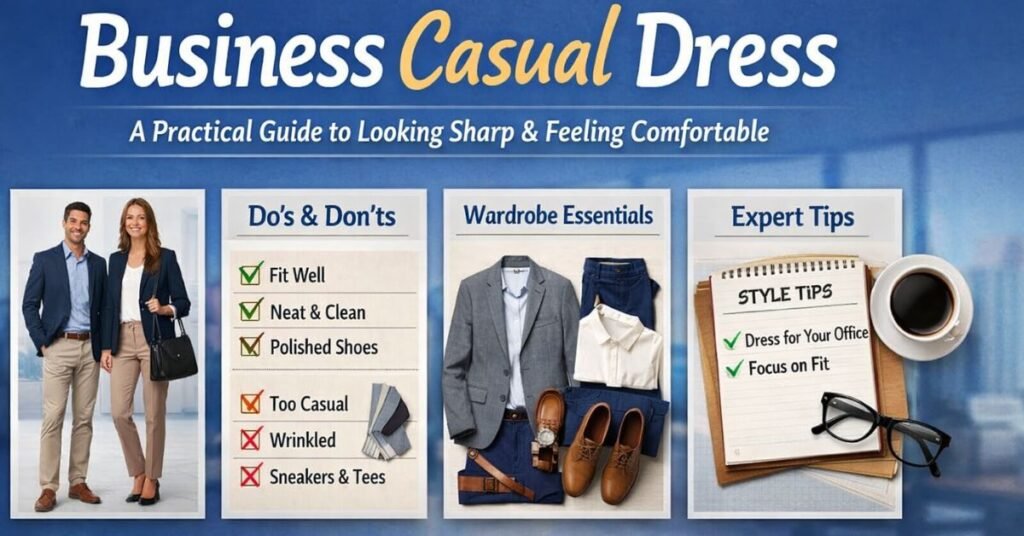
Walking into an office for the first time—or even logging into a video call—often brings up the same quiet question: What exactly counts as business casual dress?
If you’ve ever stood in front of your closet holding a blazer in one hand and jeans in the other, wondering which version of yourself your workplace expects, you’re not alone. Business casual sits in that fuzzy middle ground between stiff corporate formality and relaxed everyday comfort. Done right, it signals professionalism, confidence, and awareness. Done wrong, it can feel awkwardly mismatched or unintentionally sloppy.
This guide is built from real workplace experience, not abstract fashion theory. You’ll learn what business casual truly means today, how it varies across industries, how to build outfits step by step, and how to avoid the subtle mistakes that quietly shape first impressions. By the end, you won’t just know the rules—you’ll understand the reasoning behind them, which is what actually creates lasting style confidence.
Let’s decode business casual in a way that finally makes sense.
What Business Casual Dress Really Means in Today’s Workplaces
At its core, business casual dress is about balance. It blends the structure and polish of traditional business wear with the comfort and approachability of casual clothing. Think of it as professional clothing that allows you to breathe—literally and socially.
Years ago, business casual meant khakis and a tucked-in button-down shirt. Today, the definition has expanded. Many modern offices allow dark jeans, minimal sneakers, knit blazers, or even elevated knitwear. Yet the guiding principle remains unchanged: you should look intentional, neat, and workplace-appropriate.
A helpful analogy is the difference between:
- Dressing for a wedding (formal business)
- Dressing for brunch with friends (casual)
- Dressing for a meeting with a client at a café (business casual)
That third scenario captures the essence perfectly.
Several factors influence how business casual is interpreted:
- Industry culture – Tech startups lean relaxed; finance and law stay structured.
- Geographic location – Big cities often skew more polished than small towns.
- Company maturity – Established firms keep clearer dress norms than new startups.
- Role visibility – Client-facing roles usually require sharper presentation.
Because of this variability, mastering business casual isn’t about memorizing a strict list. It’s about learning the visual language of professionalism and adapting it intelligently.
Why Business Casual Matters More Than You Think
Clothing communicates before you speak. In professional settings, business casual dress quietly signals competence, reliability, and cultural awareness. While skill and performance ultimately matter most, appearance often shapes the first opportunity to demonstrate those skills.
Research in workplace psychology consistently shows that people form impressions within seconds. When your clothing aligns with workplace expectations, colleagues focus on your ideas instead of your outfit. That subtle shift can influence:
- Hiring decisions
- Promotion readiness
- Client trust
- Leadership perception
- Self-confidence in meetings
Beyond perception, business casual also supports comfort and productivity. Structured-but-flexible clothing allows movement, long sitting hours, and temperature changes across offices, commutes, and meeting rooms.
There’s also an emotional component. Wearing clothing that feels both polished and authentic creates a quiet sense of control. Many professionals notice they speak more confidently and participate more actively when they feel appropriately dressed. This isn’t vanity—it’s psychology.
In short, business casual isn’t just about fashion. It’s a practical professional tool.
Who Should Follow a Business Casual Dress Code
Business casual isn’t limited to office workers in traditional companies. Today, it spans a wide range of professional environments.
You’ll commonly encounter business casual expectations in:
- Corporate offices and administrative roles
- Marketing, HR, and consulting positions
- Universities and education settings
- Client-facing tech or design roles
- Networking events and conferences
- Job interviews labeled “casual professional”
Even remote workers benefit from understanding business casual. Video meetings, coworking spaces, and occasional in-person gatherings still require a polished look—at least from the waist up.
Entrepreneurs and freelancers also use business casual strategically. When meeting clients or presenting proposals, dressing slightly more polished than everyday wear communicates seriousness without creating distance.
Ultimately, business casual serves anyone who wants to look approachable yet credible.
Core Principles That Define Business Casual Style
Instead of memorizing outfit rules, it’s more useful to understand the underlying principles that make business casual work.
Fit Comes Before Fashion
Clothing that fits well instantly elevates even simple pieces. A properly fitted pair of trousers or a clean-cut blouse communicates care and professionalism far more than trendy but ill-fitting garments.
Key signs of good fit include:
- Shoulders aligning naturally with seams
- Sleeves ending near the wrist bone
- Pants breaking lightly at the shoe
- No pulling, sagging, or bunching
Tailoring is one of the smartest style investments professionals can make.
Neutral Foundations Create Versatility
Most business casual wardrobes rely on a neutral color base:
- Navy
- Black
- Gray
- Beige
- White
- Soft earth tones
These shades mix easily, reduce decision fatigue, and always look appropriate. Accent colors—like burgundy, forest green, or muted blue—can add personality without overwhelming professionalism.
Fabric Quality Signals Professionalism
Even simple clothing looks refined when made from quality materials:
- Cotton blends
- Wool or wool-blend suiting
- Structured knits
- Linen blends (seasonally)
Wrinkled, shiny, or overly thin fabrics tend to appear too casual, even if the garment style seems appropriate.
Simplicity Beats Excess
Business casual favors clean lines over loud statements. Minimal patterns, subtle accessories, and balanced silhouettes create a polished impression without distraction.
When in doubt, remove one accessory. Clarity reads as confidence.
Business Casual Dress for Men: Practical Outfit Foundations
Men’s business casual is often easier to define because the traditional framework remains strong—just relaxed slightly.
Essential Clothing Pieces
A reliable business casual wardrobe for men typically includes:
- Button-down shirts (Oxford, poplin, or chambray)
- Polo shirts in structured fabrics
- Chinos or tailored trousers
- Dark, clean denim (if allowed)
- Lightweight sweaters or cardigans
- Unstructured blazers or sport coats
These pieces mix into dozens of combinations without requiring a large closet.
Footwear That Works
Shoes strongly influence whether an outfit feels professional or casual. Safe business casual options include:
- Loafers
- Derby shoes
- Minimal leather sneakers (in relaxed offices)
- Chelsea boots
Athletic running shoes, worn-out soles, or flashy colors usually undermine the look.
Example Everyday Outfit Formula
A simple, reliable combination:
- Light blue button-down shirt
- Navy chinos
- Brown leather loafers
- Optional knit blazer
This formula works in most modern offices and can be adjusted with color or layering.
Business Casual Dress for Women: Flexibility with Structure
Women’s business casual offers more variety, which can feel empowering—or confusing. The key is maintaining polish while enjoying stylistic freedom.
Wardrobe Staples That Simplify Decisions
Common essentials include:
- Blouses or structured tops
- Tailored trousers or ankle pants
- Knee-length or midi skirts
- Sheath or wrap dresses
- Lightweight blazers or cardigans
- Closed-toe flats, loafers, or low heels
These pieces create a flexible system where almost everything pairs with everything else.
Balancing Comfort and Professionalism
Because women’s fashion spans a wide spectrum, small details matter:
- Necklines should remain modest in professional settings.
- Hemlines typically sit near the knee or below.
- Stretch fabrics should maintain structure, not resemble lounge wear.
The goal isn’t restriction—it’s intentional presentation.
Reliable Go-To Outfit
One dependable option:
- Neutral blouse
- Tailored ankle trousers
- Comfortable flats or block heels
- Simple blazer
This combination transitions easily from meetings to after-work events.
Seasonal Business Casual: Dressing Smart All Year
Weather changes shouldn’t disrupt professionalism. Smart layering keeps business casual functional year-round.
Summer Strategies
Hot weather challenges polish, but breathable fabrics help:
- Linen-blend trousers
- Lightweight cotton shirts
- Short-sleeve structured tops
- Loafers or breathable flats
Avoid flip-flops, athletic shorts, or sheer fabrics, even in relaxed offices.
Winter Approaches
Cold months allow richer textures:
- Wool trousers
- Knit sweaters over collared shirts
- Structured coats
- Leather boots
Layering adds both warmth and visual depth, enhancing the professional look.
Step-by-Step Guide to Building a Business Casual Wardrobe
Creating a reliable wardrobe doesn’t require a massive budget—just strategy.
Step 1: Audit What You Already Own
Start by separating clothes into three piles:
- Clearly professional
- Clearly casual
- Potentially adaptable
You’ll often discover useful pieces hiding in plain sight.
Step 2: Build a Neutral Core
Focus first on versatile basics:
- Two pairs of trousers
- Three to five tops
- One blazer
- One pair of professional shoes
With just these, you can create multiple outfits.
Step 3: Add Personality Slowly
Once the foundation is strong, introduce:
- Subtle patterns
- Accent colors
- Texture variations
- Minimal accessories
This keeps style personal without risking professionalism.
Step 4: Prioritize Quality Over Quantity
Buying fewer, better pieces saves money long-term and improves daily confidence.
Tools, Brands, and Smart Shopping Strategies
Navigating clothing choices becomes easier with the right approach.
Budget-Friendly Options
Many retailers now specialize in affordable business casual basics. Look for:
- Durable stitching
- Mid-weight fabrics
- Consistent sizing
Sales cycles and outlet stores can significantly reduce costs.
Mid-Range Professional Staples
Spending slightly more often improves:
- Fabric longevity
- Tailoring quality
- Color retention after washing
These pieces typically form the backbone of a long-term wardrobe.
When Premium Pieces Make Sense
Higher investment items are worthwhile for:
- Blazers
- Shoes
- Coats
- Everyday trousers
Because they’re worn frequently, quality matters more here.
Common Business Casual Mistakes and How to Fix Them
Even experienced professionals occasionally misjudge business casual. Fortunately, most mistakes are easy to correct.
Mistake 1: Dressing Too Casual
Symptoms include:
- Athletic sneakers
- Hoodies
- Distressed jeans
- Graphic T-shirts
Fix: Upgrade one level—swap sneakers for loafers or add a blazer.
Mistake 2: Overdressing for the Office Culture
A full suit in a relaxed startup may feel out of place.
Fix: Remove the tie or choose softer fabrics to match the environment.
Mistake 3: Ignoring Grooming and Maintenance
Wrinkles, lint, or worn shoes can undermine even perfect outfits.
Fix: Maintain a simple routine:
- Steam or iron clothing
- Polish shoes
- Use a lint roller
- Replace worn basics promptly
Mistake 4: Inconsistent Fit
Baggy or overly tight clothing disrupts professionalism.
Fix: Use basic tailoring—it’s often inexpensive but transformative.
The Psychological Impact of Dressing Business Casual
Clothing subtly shapes behavior. Many professionals notice they think more clearly and communicate more assertively when dressed appropriately for their environment.
This phenomenon—sometimes called enclothed cognition—explains why intentional clothing can influence performance. Business casual hits a powerful middle ground:
- Comfortable enough for long workdays
- Polished enough to inspire confidence
- Neutral enough to avoid distraction
It supports both productivity and presence.
Conclusion: Mastering Business Casual with Confidence
Business casual dress isn’t about rigid fashion rules. It’s about understanding context, balance, and intention. When you focus on fit, simplicity, quality, and workplace culture, the confusion disappears.
Instead of asking, “Is this allowed?” you begin asking, “Does this communicate professionalism and comfort at the same time?”
That mindset shift is what truly defines style maturity.
As you refine your wardrobe, experiment gradually, observe your environment, and choose pieces that make you feel capable the moment you put them on. Confidence grows quietly—but consistently—through small daily decisions like these.
If this guide helped clarify business casual for you, consider sharing it with a colleague or revisiting it when your workplace or role evolves. Style, like careers, is always moving forward.
FAQs
What is considered business casual dress?
Business casual dress blends professional polish with relaxed comfort. Common examples include button-down shirts, blouses, tailored trousers, skirts, dresses, loafers, and minimal sneakers in relaxed workplaces.
Are jeans allowed in business casual?
Yes, in many modern offices—if they are dark, clean, and free from rips or distressing. Pairing them with structured tops or blazers keeps the look professional.
Can sneakers be business casual?
Minimal, clean leather sneakers may work in relaxed environments, especially in tech or creative industries. Athletic running shoes usually remain too casual.
Is a blazer required for business casual?
Not always. However, a blazer instantly elevates an outfit and is useful for meetings, presentations, or client interactions.
How many outfits do I need for a business casual wardrobe?
A small capsule of 10–15 versatile pieces can create dozens of combinations, making business casual both practical and cost-effective.

Michael Grant is a business writer with professional experience in small-business consulting and online entrepreneurship. Over the past decade, he has helped brands improve their digital strategy, customer engagement, and revenue planning. Michael simplifies business concepts and gives readers practical insights they can use immediately.