
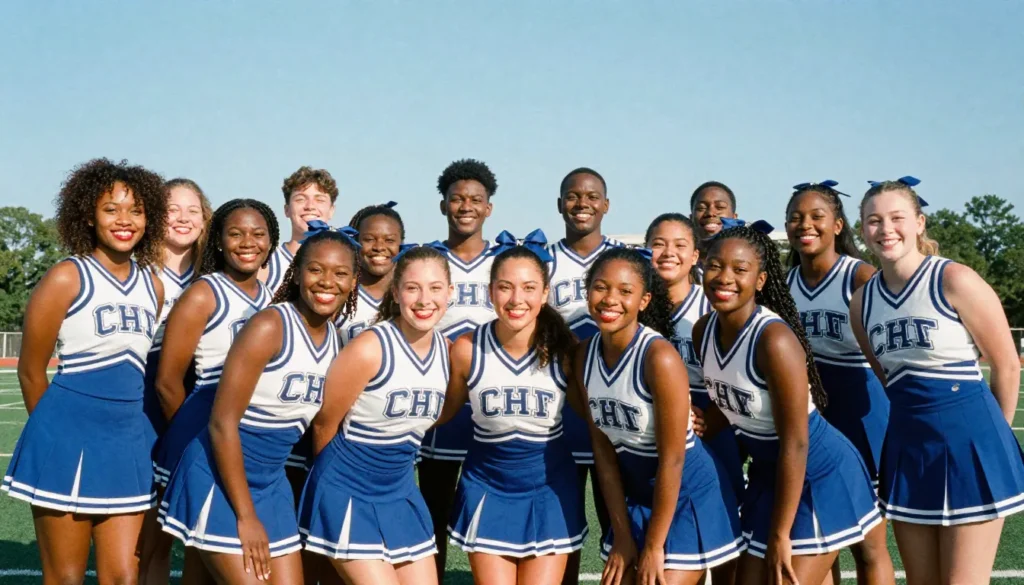
From the sidelines of a high school football game to the dazzling stages of a world championship, the cheerleading outfit is a symbol of spirit, athleticism, and unity. More than just a uniform, it’s a piece of high-performance athletic wear designed to move, stretch, and shine. Whether you’re a coach selecting a look for your team, an athlete getting sized for the first time, or a parent navigating the world of cheer, understanding the components of a modern cheer outfit is essential.
This guide will break down everything you need to know about selecting the perfect cheerleading outfit. We will cover different styles, advanced fabric technologies, customization options, and the crucial accessories that complete the look, ensuring every athlete feels confident and ready to perform.
More Than Just a Uniform: The Evolution of Cheer Wear
The cheerleading uniform has undergone a dramatic transformation over the last century. What started as simple sweaters and long wool skirts has evolved into a sophisticated athletic ensemble. Early uniforms prioritized a classic, collegiate look. Today, the focus is on a seamless blend of aesthetics and peak athletic performance.
Modern uniforms are engineered to support the complex tumbling, stunting, and dance moves that define contemporary cheerleading. The design choices, materials, and fit are all meticulously planned to allow for a full range of motion while maintaining a sharp, cohesive team image. This shift reflects cheerleading’s growth from a spirit activity into a demanding competitive sport.
Deconstructing the Cheerleading Outfit: Key Components
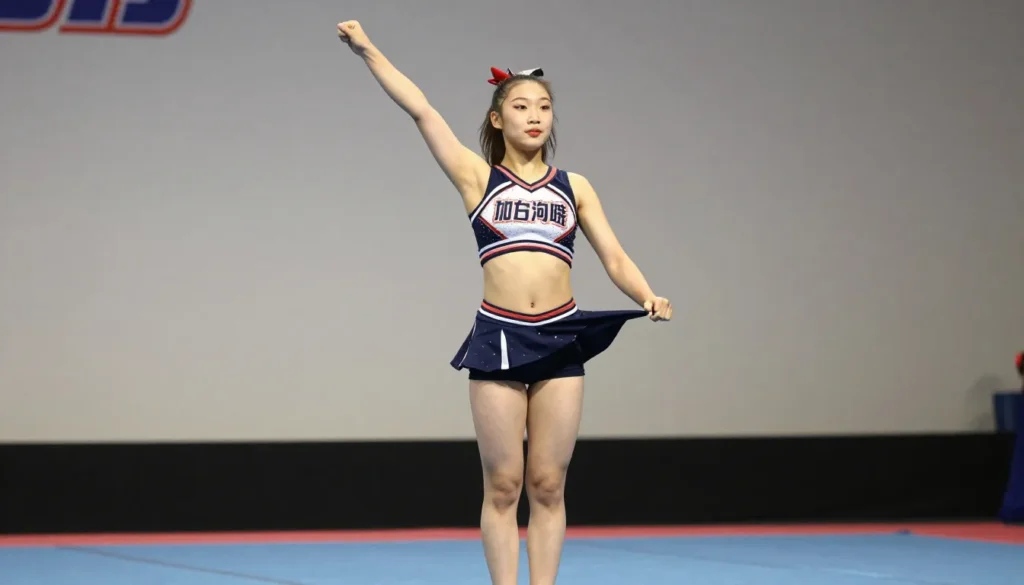
A complete cheer uniform consists of several key pieces that work together. Understanding the function of each part helps in making informed decisions for your team.
The Shell Top or Vest
This is the sleeveless, foundational top of the uniform. It typically features the team’s logo, lettering, or mascot emblazoned across the chest.
- Neckline: Common styles include V-neck, crew neck, or a custom cutout shape. The V-neck is a classic choice that elongates the neckline.
- Design: Shells are the primary canvas for team branding. Designs can range from traditional color blocking to intricate sublimation prints and sparkling rhinestone details.
- Fit: It should be snug but not restrictive, allowing for full arm and torso movement.
The Bodysuit or Liner
Worn underneath the shell, the liner is a long-sleeved, form-fitting garment that provides a polished look and extra coverage.
- Material: Liners are almost always made from a high-stretch compression fabric, like spandex or a polyester blend, to wick away sweat.
- Sleeves: Some designs incorporate mesh panels on the sleeves for breathability and a modern aesthetic. Cuffs are often customized to match the uniform’s design.
- Neck Style: Liners can be a full turtleneck, a mock neck, or a simple crew neck, depending on the shell it’s paired with.
The Skirt or Skort
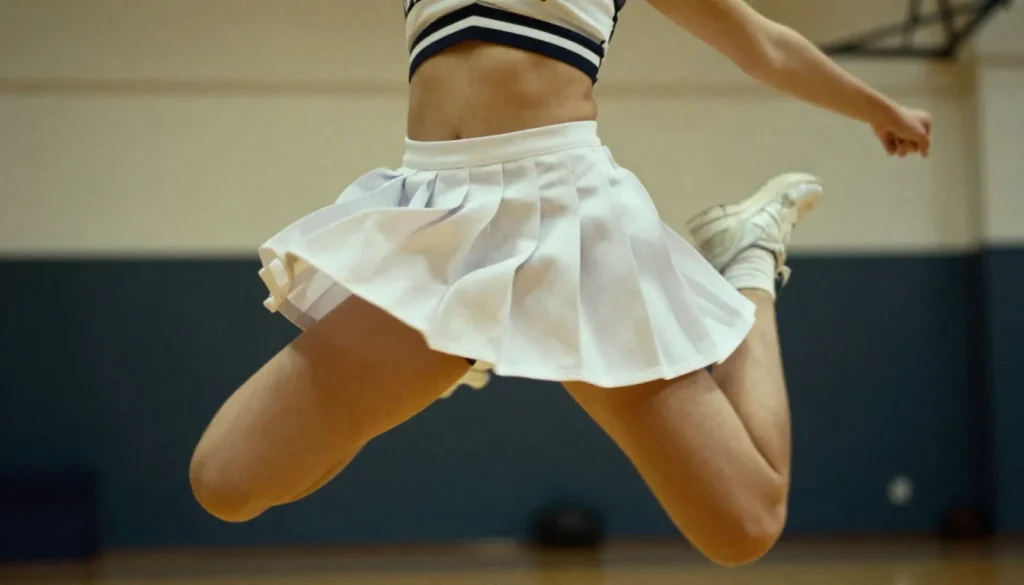
The bottom half of the uniform is designed for movement and modesty.
- Style: A-line and pleated skirts are the most common. A-line skirts offer a streamlined silhouette, while pleated styles create dynamic movement during jumps and dances.
- Built-in Briefs: Virtually all modern cheer skirts are actually skorts, featuring attached compression shorts (briefs or “spankies”) in a matching or coordinating color. This is a critical feature for athlete comfort and coverage during high-energy routines.
- Waistband: Look for a comfortable, wide waistband that stays in place without digging in.
The Cheerleading Shoes
Cheer shoes are highly specialized athletic footwear designed specifically for the sport.
- Lightweight: They are incredibly light to aid in tumbling and to make it easier for bases to grip a flyer’s foot during stunts.
- Grip and Support: The sole provides a balance of grip for tumbling passes and slip for turns. They offer ankle support while remaining flexible.
- Indoor vs. Sideline: All-star cheer shoes are typically for indoor mats only, while sideline cheer shoes are more durable for use on tracks, turf, and courts.
The Accessories: Finishing the Look
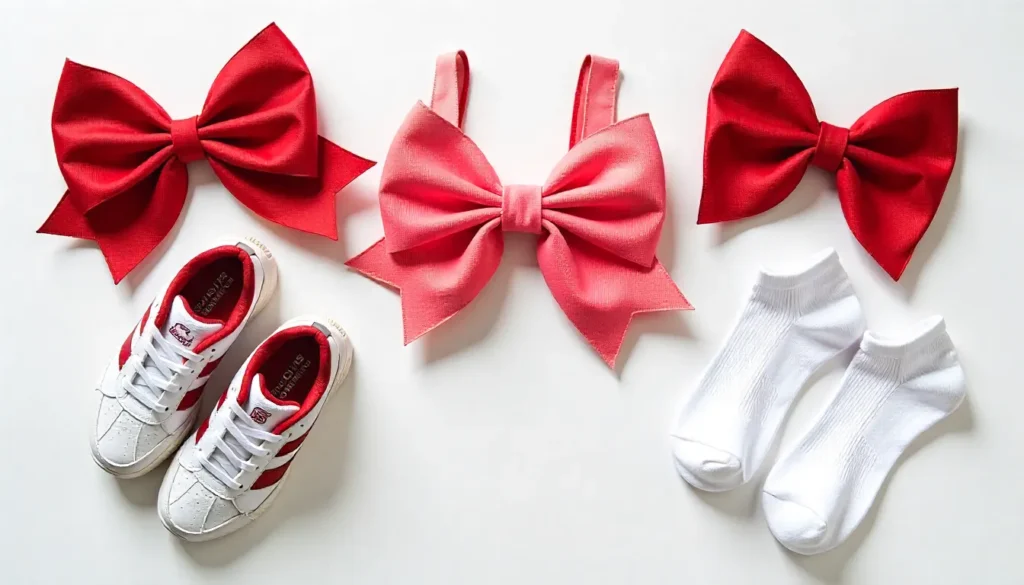
Accessories are what tie the entire cheerleading outfit together.
- Bows: The iconic cheer bow is a must. Large, stiff bows with long tails are the standard, often covered in glitter or rhinestones and featuring the team logo.
- Socks: No-show or ankle socks are typical to maintain a clean leg line.
- Poms: Poms (or pom-poms) are used primarily for sideline cheer to engage the crowd. They come in various materials, including metallic, plastic, and holographic finishes.
Uniform Styles: Scholastic vs. All-Star Cheer
The type of cheerleading your team participates in will heavily influence the style of your uniform.
Scholastic Cheer (School and Rec Teams)
This category includes middle school, high school, and college teams. The look is traditionally more classic and conservative.
- Aesthetic: Focuses on school colors and traditions. Lettering often includes the school’s initials or mascot.
- Cut: Skirts are typically longer, and midriff-baring designs are often prohibited by school regulations. The overall look is clean, collegiate, and athletic.
- Use: These uniforms need to be durable enough for sideline cheering at multiple sporting events as well as for pep rallies and potential competitions.
All-Star Cheer (Competitive Club Teams)
All-star cheer is a purely competitive sport, and the uniforms reflect this with a heavy emphasis on performance and visual impact.
- Aesthetic: These uniforms are trend-forward and theatrical. They often feature bold designs, metallic fabrics, intricate rhinestone patterns, and dramatic cutouts on the back and sleeves.
- Cut: Skirts are often shorter, and cropped tops are common (though regulations on midriff coverage are becoming stricter). The goal is to create a dazzling, memorable look on the competition stage.
- Fabric: Sublimation is a popular technique, allowing for complex, gradient, and graphic designs to be dyed directly into the fabric.
Choosing the Right Fabric
The material of a cheerleading outfit is crucial for comfort, durability, and performance.
- Polyester/Spandex Blends: This is the industry standard. Polyester provides durability and colorfastness, while spandex (also known as Lycra) offers the four-way stretch necessary for athletic movement.
- Compression Fabrics: Used for liners and built-in briefs, these materials offer a supportive, second-skin fit and have moisture-wicking properties to keep athletes dry.
- Metallic and Specialty Fabrics: Often used as accents in all-star uniforms, these materials add shine and texture but may require more delicate care.
- Sublimated Fabrics: Sublimation allows for unlimited design possibilities without adding weight or texture to the uniform, as the ink becomes part of the fabric itself.
Getting the Perfect Fit: Sizing and Alterations
A poorly fitting uniform is not only uncomfortable but can also be a safety hazard.
- Use Sizing Kits: The best way to ensure an accurate fit is to use a sizing kit provided by the uniform manufacturer. Have each athlete try on the sample shells, liners, and skirts.
- Measure Correctly: Take measurements for the chest, waist, hips, and inseam. For liners, torso length (girth) is a critical measurement to prevent the garment from riding up.
- Plan for Growth: For younger, recreational teams, you might consider sizing up slightly to accommodate growth throughout the season. However, for competitive teams, a precise fit is paramount.
- Alterations: Minor alterations, like hemming a skirt or taking in the sides of a shell, can be done by a local seamstress. However, major alterations are difficult on performance fabrics.
Conclusion
The modern cheerleading outfit is a testament to the evolution of the sport itself—a perfect fusion of tradition, style, and athletic innovation. Choosing the right uniform is a significant decision that impacts team identity, confidence, and performance.
By understanding the different components, styles, and fabrics available, coaches and athletes can select an outfit that not only looks incredible but also provides the comfort and flexibility needed to execute skills safely. From the classic pleated skirt to the glittering all-star crop top, the right uniform empowers a team to put their best foot forward, both on the sidelines and on the competition mat.
Frequently Asked Questions (FAQs)
Q: How do you wash a cheerleading outfit?
A: Always wash uniforms in cold water on a gentle cycle. Turn them inside out to protect lettering and rhinestones. Use a mild detergent and never use fabric softener, as it can break down the stretch fibers. Hang to dry immediately; never put a cheer uniform in the dryer.
Q: What is the difference between a cheer skirt and a skort?
A: A cheer skirt is just the skirt layer. A skort has built-in shorts (briefs) for modesty and comfort. Today, nearly all cheerleading bottoms are skorts.
Q: How do I make a cheer bow stiff?
A: Most modern cheer bows are made with extra-stiff ribbon and are sometimes treated with a fabric stiffener spray. To reshape a bow that has gone soft, lightly spray it with stiffener and shape it by hand, allowing it to dry completely.
Q: Can we design our own custom uniform?
A: Yes! Most major cheerleading apparel companies offer online uniform designers that allow you to choose your style, colors, fabrics, and lettering to create a completely custom look for your team.
Q: What are “spankies” or “lollies”?
A: These are slang terms for the compression briefs worn under a cheer skirt. They are a standard part of the uniform and are essential for coverage during jumps, stunts, and tumbling.

Sofia Bennett is a fashion writer and style observer known for her clean sense of aesthetics and trend analysis. She has covered fashion shows, reviewed designer collections, and interviewed independent creators. Sofia specializes in connecting fashion with real-life lifestyle choices, helping readers understand what looks good — and why.