
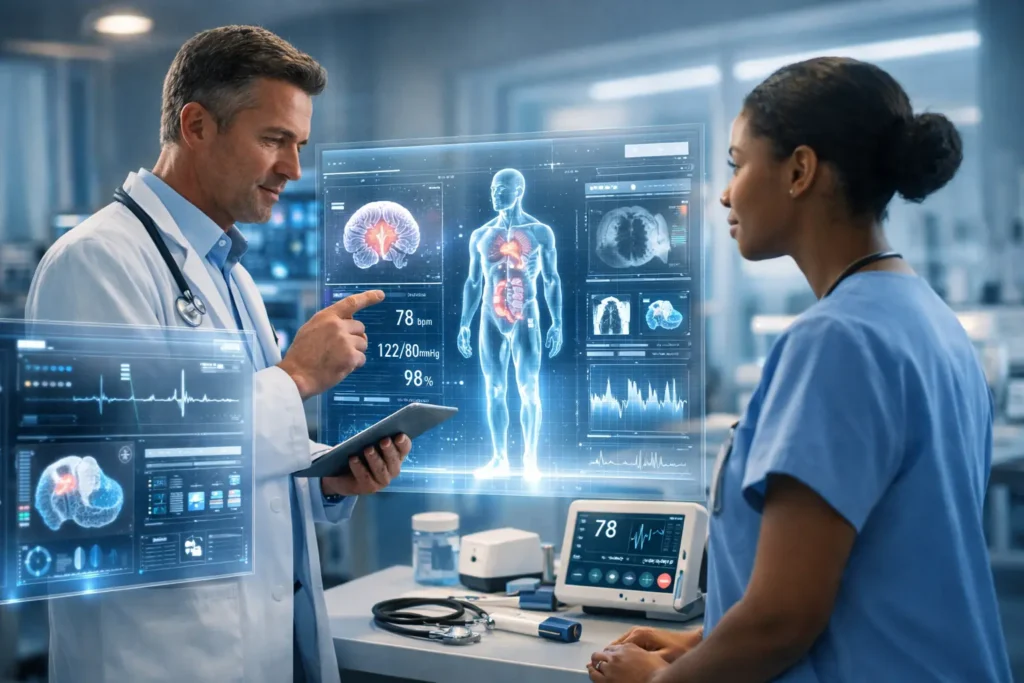
If you’ve stepped inside a modern hospital recently, you’ve probably felt it—even if you couldn’t name it. The quiet hum of machines that don’t just monitor patients but predict outcomes. Doctors glancing at tablets instead of clipboards. Test results arriving in minutes instead of days. That invisible force reshaping everything you see, touch, and experience in healthcare is medic technology.
Medic technology isn’t a buzzword cooked up by marketers. It’s the living, breathing backbone of modern healthcare—and it’s evolving faster than most people realize. For clinicians, it means better decisions. For administrators, it means survival in a cost-pressured system. For patients, it can mean the difference between early detection and missed warning signs.
This guide is written for people who want to understand medic technology beyond surface-level definitions. Whether you’re a healthcare professional, a health-tech entrepreneur, an investor, a student, or simply someone trying to make sense of how medicine is changing, you’re in the right place.
We’ll break down what medic technology really is, how it works in the real world, where it delivers tangible results, what tools matter, what mistakes derail progress, and how to make smart, future-proof decisions. No fluff. No vague theory. Just practical, experience-backed insight.
Understanding Medic Technology: From Simple Tools to Intelligent Systems
At its core, medic technology refers to the application of digital, mechanical, and intelligent systems to improve medical care, diagnosis, treatment, and healthcare operations. But that definition barely scratches the surface.
A more useful way to think about medic technology is this: it’s the bridge between medical expertise and scalable, repeatable, data-driven care.
Decades ago, medic technology meant X-ray machines and basic lab equipment. Then came electronic records. Today, it includes AI-driven diagnostics, robotic surgery, remote patient monitoring, genomics, and predictive analytics. The scope has expanded from “tools doctors use” to “systems that actively participate in care decisions.”
A helpful analogy is aviation. Early pilots flew by sight and instinct. Modern pilots still rely on skill—but they’re supported by instruments, automation, and predictive systems that reduce error and increase safety. Medic technology plays the same role in healthcare. It doesn’t replace clinicians; it augments them.
What makes medic technology powerful is integration. A single device rarely changes outcomes on its own. Impact happens when data flows between systems—when imaging talks to records, when wearables feed analytics platforms, when AI flags risks before symptoms escalate.
This shift also explains why medic technology is no longer optional. Aging populations, clinician shortages, rising costs, and patient expectations have made traditional care models unsustainable. Technology isn’t a “nice-to-have” anymore—it’s the only way forward.
Why Medic Technology Matters Right Now More Than Ever
Timing matters in technology adoption, and medic technology has reached a tipping point. Several forces are converging at once.
First, healthcare data has exploded. From imaging files and lab results to wearable metrics and genomic data, the volume is too large for humans alone to process. Without advanced systems, valuable insights remain buried.
Second, patients are no longer passive recipients of care. They expect transparency, speed, personalization, and digital access. Booking appointments online, receiving results on mobile apps, and consulting doctors remotely are becoming baseline expectations.
Third, healthcare systems are under financial pressure. Hospitals operate on razor-thin margins. Inefficiencies—duplicate tests, delayed diagnoses, manual workflows—are no longer survivable. Medic technology directly targets these pain points.
Finally, recent global health crises exposed structural weaknesses in healthcare delivery. Remote monitoring, telemedicine, and predictive modeling went from “experimental” to “essential” almost overnight.
Together, these factors make medic technology not just relevant, but urgent.
Benefits and Real-World Use Cases of Medic Technology
The true value of medic technology shows up not in brochures, but in daily operations. Let’s look at who benefits and how.
For Clinicians and Medical Staff
Medic technology reduces cognitive overload. Clinical decisions are complex, time-sensitive, and high-stakes. Decision-support systems analyze patient data and surface insights clinicians might miss under pressure.
For example, AI-assisted imaging can flag subtle abnormalities in radiology scans, acting as a second set of eyes. This doesn’t replace radiologists—it reduces fatigue-related errors and speeds up diagnosis.
Electronic systems also reduce administrative burden. When documentation, ordering, and communication are streamlined, clinicians spend more time with patients and less time on paperwork.
For Hospitals and Healthcare Organizations
From an operational perspective, medic technology improves efficiency and financial sustainability. Predictive analytics can forecast patient admissions, optimize staffing, and reduce wait times.
Remote patient monitoring helps hospitals manage chronic conditions outside physical facilities, freeing up beds while maintaining quality of care. This is especially valuable for post-discharge follow-ups and long-term disease management.
Interoperable systems also reduce duplication. When patient histories are accessible across departments, unnecessary tests decline and care becomes more coordinated.
For Patients
Patients experience the benefits most directly. Faster diagnoses, personalized treatment plans, fewer hospital visits, and better communication all stem from effective medic technology.
Wearable devices and mobile health apps empower patients to participate in their own care. Instead of reacting to emergencies, patients and providers can act proactively—adjusting treatment based on real-time data.
The “before vs after” difference is stark. Before medic technology, care was reactive and fragmented. After adoption, it becomes proactive, connected, and personalized.
A Step-by-Step Practical Guide to Implementing Medic Technology
Understanding medic technology is one thing. Implementing it successfully is another. Many organizations fail not because the technology is flawed, but because the approach is.
Step 1: Identify the Real Problem, Not the Trend
The biggest mistake is adopting technology because it’s fashionable. AI, blockchain, and robotics sound impressive—but they must solve a specific problem.
Start by asking: Where are delays happening? Where are errors occurring? Where are costs spiraling? Medic technology should be a solution, not a showcase.
Step 2: Assess Infrastructure and Readiness
Technology stacks must support integration. Legacy systems, poor data quality, and lack of interoperability can cripple even the best tools.
This is where standards and regulatory frameworks matter. Systems must align with guidelines from organizations like Food and Drug Administration and data protection rules such as HIPAA.
Step 3: Choose Scalable, Interoperable Tools
Avoid siloed solutions. Platforms like Epic Systems succeed because they integrate across departments.
Scalability matters too. A pilot project should grow without requiring a complete rebuild.
Step 4: Train People, Not Just Systems
Technology adoption fails when users aren’t comfortable. Training isn’t a one-time event; it’s an ongoing process.
Clinicians should understand not just how to use tools, but why they matter. When staff trust technology, adoption accelerates naturally.
Step 5: Measure Outcomes and Iterate
Track meaningful metrics: reduced readmissions, faster diagnosis times, improved patient satisfaction. Medic technology is not static—it evolves through feedback and refinement.
Tools, Comparisons, and Expert Recommendations
Medic technology tools fall into several categories, each serving different needs.
Electronic Health Records (EHRs)
EHRs are foundational. They centralize patient data and enable coordination. While enterprise systems are powerful, they can be expensive and complex.
Smaller practices may prefer lightweight solutions, while large hospitals benefit from comprehensive platforms.
Diagnostic and Imaging Technologies
Advanced imaging tools—often powered by AI—improve accuracy and speed. Companies like Philips have invested heavily in smart diagnostics that integrate directly into clinical workflows.
Telemedicine and Remote Monitoring
Telemedicine platforms exploded in adoption, offering convenience and continuity of care. Remote monitoring devices extend care beyond clinical walls, especially for chronic disease management.
Analytics and AI Platforms
Predictive analytics identify risk patterns before crises occur. The best systems integrate seamlessly with existing data sources instead of operating in isolation.
The expert rule of thumb: prioritize tools that fit your workflow, not ones that force you to change everything overnight.
Common Medic Technology Mistakes—and How to Fix Them
Even well-funded initiatives fail when mistakes compound.
One common error is underestimating change management. Resistance often comes from fear of complexity or job displacement. Transparent communication and involvement reduce pushback.
Another issue is poor data hygiene. Inaccurate or incomplete data leads to misleading insights. Invest early in data governance.
Over-customization is also risky. Highly tailored systems become brittle and expensive to maintain. Balance flexibility with standardization.
Finally, ignoring cybersecurity is a costly oversight. Healthcare data is a prime target. Security must be built in, not bolted on later.
The Future Trajectory of Medic Technology
Medic technology is moving toward predictive, personalized, and preventive care. AI models are becoming more explainable. Wearables are becoming medical-grade. Genomics is integrating with clinical decision-making.
The long-term shift is from episodic care to continuous health management. Hospitals will increasingly act as hubs within broader digital ecosystems.
Those who invest thoughtfully now won’t just keep up—they’ll lead.
Conclusion: Medic Technology as a Strategic Advantage
Medic technology is not about replacing human care—it’s about strengthening it. When implemented with clarity and purpose, it improves outcomes, reduces burnout, and builds resilient healthcare systems.
The organizations and professionals who succeed are those who see technology as a partner, not a shortcut. They focus on real problems, adopt thoughtfully, and continuously learn.
If there’s one takeaway, it’s this: medic technology rewards intention. Used well, it transforms healthcare from reactive treatment into proactive wellness.
FAQs
What is medic technology in simple terms?
Medic technology refers to digital and intelligent tools that support medical care, diagnosis, treatment, and healthcare operations.
Is medic technology the same as health tech?
Health tech is broader. Medic technology focuses specifically on clinical and medical applications within healthcare.
Does medic technology replace doctors?
No. It supports clinicians by improving accuracy, efficiency, and decision-making.
How secure is medic technology?
Security depends on implementation. Systems must follow strict regulatory and cybersecurity standards.
What skills are needed to work in medic technology?
A mix of healthcare knowledge, data literacy, and technology understanding is valuable.

Adrian Cole is a technology researcher and AI content specialist with more than seven years of experience studying automation, machine learning models, and digital innovation. He has worked with multiple tech startups as a consultant, helping them adopt smarter tools and build data-driven systems. Adrian writes simple, clear, and practical explanations of complex tech topics so readers can easily understand the future of AI.