If you’ve ever wondered why so many world-changing ideas seem to trace their roots back to one place in Cambridge, Massachusetts, you’re not alone. For decades, founders, engineers, policymakers, and curious students have asked the same question: what makes the institute technology massachusetts phenomenon so uniquely powerful? Why does this single institution consistently shape industries ranging from artificial intelligence to clean energy, biotech, aerospace, and global entrepreneurship?
This article is written for people who want more than surface-level facts. It’s for students weighing life-changing education decisions, professionals considering executive learning or research collaboration, founders hunting for inspiration, and parents trying to understand what really sets this institution apart. It’s also for readers who sense that “MIT” is more than a university name—it’s a mindset, a system, and a global influence machine.
What you’ll get here is not a brochure-style overview or recycled Wikipedia content. Instead, this is a practical, experience-informed deep dive into how the institute technology massachusetts ecosystem actually works, why it matters right now, and how real people leverage it to build careers, companies, and solutions that last. By the end, you’ll understand not just what it is—but how to think like it.
Understanding Institute Technology Massachusetts (From First Principles to Expert Insight)
At its core, institute technology massachusetts refers to the Massachusetts Institute of Technology—better known globally as MIT. But stopping there misses the point. MIT isn’t just an academic institution; it’s an applied problem-solving system designed to turn curiosity into impact.
Think of it like an advanced engine rather than a library. Traditional universities often prioritize knowledge accumulation—MIT prioritizes knowledge execution. From day one, students are taught not only to understand theory but to pressure-test it against real-world constraints. If an equation doesn’t survive contact with reality, it gets redesigned.
MIT’s founding philosophy in 1861 was radical for its time: education should serve industry, society, and technological progress simultaneously. That philosophy still shapes everything—from hands-on labs to startup accelerators to open-courseware initiatives used by millions worldwide.
As you move from beginner to expert understanding, a few structural truths stand out. First, MIT operates on an interdisciplinary backbone. Mechanical engineers collaborate with biologists. Computer scientists work with urban planners. Second, failure is treated as data, not disgrace. And third, learning never happens in isolation—nearly every project connects to an external problem, partner, or application.
This layered approach explains why institute technology massachusetts isn’t just “elite,” but unusually productive at turning ideas into systems that scale.
Why Institute Technology Massachusetts Matters More Than Ever Today
We’re living in an era defined by complex, interlocking challenges: climate instability, AI ethics, supply-chain fragility, cybersecurity threats, and global health risks. These are not problems that fit neatly inside one discipline. The institute technology massachusetts model was built for exactly this kind of world.
MIT’s relevance today comes from its ability to move quickly without sacrificing rigor. When COVID-19 hit, MIT researchers pivoted labs toward diagnostics, modeling, and public-health tools within weeks. When generative AI exploded, MIT wasn’t scrambling to catch up—it was already shaping ethical frameworks, technical architectures, and workforce implications.
Another reason MIT matters now is credibility. In a time when misinformation spreads faster than peer review, MIT-backed research carries trust. Policymakers, investors, and global institutions rely on it precisely because it blends academic depth with applied validation.
Perhaps most importantly, MIT influences how people think, not just what they build. Graduates carry a mental model that asks: “What’s the real problem? What constraints matter? What experiment can prove this quickly?” That mindset travels far beyond Cambridge.
Benefits and Real-World Use Cases of Institute Technology Massachusetts
The benefits of the institute technology massachusetts ecosystem vary depending on who you are, but they’re always tangible.
For students, the most obvious benefit is exposure. You’re not learning hypotheticals—you’re working on problems tied to NASA missions, Fortune 500 supply chains, or early-stage biotech startups. The “before” state is passive learning; the “after” state is active contribution.
For founders, MIT offers an unmatched launchpad. Alumni have founded tens of thousands of companies globally, generating trillions in revenue. The real value isn’t just funding access—it’s the culture of disciplined experimentation. Ideas are stress-tested early, saving years of wasted effort.
For industry professionals, MIT programs offer recalibration. Many executives describe MIT learning as mentally uncomfortable—in a good way. It forces you to confront outdated assumptions and replace them with systems thinking.
For governments and NGOs, MIT acts as a neutral innovation partner. Urban mobility studies, energy transition models, and public-health frameworks developed here influence policy worldwide.
Across all these use cases, the consistent outcome is leverage: more impact per unit of effort.
Inside the MIT Learning Model: How Knowledge Becomes Capability
One of the least discussed but most powerful aspects of institute technology massachusetts is how learning is structured. Classes often begin with ambiguity. Instead of being told exactly what to do, students are given a problem statement with incomplete information—just like real life.
Labs are not demonstrations; they’re experiments where outcomes are uncertain. Collaboration is not optional; it’s engineered into grading structures. Feedback is fast, blunt, and constructive. This trains people to think under pressure, communicate clearly, and adapt quickly.
MIT also blurs the line between student and researcher. Undergraduates routinely co-author papers, contribute to open-source software, or work on funded projects. This early immersion builds confidence and competence simultaneously.
Another key feature is openness. MIT’s OpenCourseWare has made thousands of courses freely available, reinforcing the institution’s belief that knowledge multiplies when shared. This global reach extends MIT’s influence far beyond enrolled students.
A Step-by-Step Practical Guide to Leveraging Institute Technology Massachusetts
If you’re wondering how to actually engage with institute technology massachusetts—whether as a student, professional, or collaborator—there’s a clear progression that works in practice.
First, clarify your objective. Are you seeking formal education, research collaboration, entrepreneurial support, or skill refreshment? MIT offers different entry points for each, and clarity prevents wasted time.
Second, immerse yourself in MIT’s public ecosystem. OpenCourseWare, public lectures, and research publications provide a realistic preview of the intellectual rigor involved. This step alone filters out people who like the idea of MIT more than the work itself.
Third, build a focused narrative. Successful applicants and collaborators don’t present generic excellence—they articulate a specific problem they want to solve and why MIT’s environment is essential to that solution.
Fourth, engage with communities, not just programs. Labs, conferences, and alumni networks are where real opportunities emerge. Relationships matter, but only when backed by substance.
Finally, commit to iteration. MIT rewards persistence and adaptability. Many breakthroughs come from second or third attempts, refined by feedback and data.
Tools, Programs, and Expert Recommendations from the MIT Ecosystem
The institute technology massachusetts ecosystem includes tools and programs suited to different experience levels.
For beginners, OpenCourseWare and introductory online certificates offer low-risk entry. The upside is accessibility; the downside is limited feedback.
Intermediate learners benefit from professional education programs, bootcamps, and applied workshops. These balance theory with practice and often include peer collaboration.
Advanced professionals and researchers gain the most from degree programs, fellowships, and lab affiliations. These are resource-intensive but deliver exponential returns in capability and network access.
An expert recommendation: don’t over-optimize for prestige. Choose the MIT pathway that aligns with your real-world constraints and goals. The brand is powerful, but the learning is what compounds.
Common Mistakes People Make—and How to Avoid Them
A frequent mistake is treating institute technology massachusetts as a credential rather than a crucible. People chase acceptance without preparing for the intensity of the environment. The fix is honest self-assessment and gradual immersion.
Another mistake is over-specialization too early. MIT thrives on cross-pollination; staying siloed limits growth. Actively seek interdisciplinary exposure.
Many also underestimate the workload. MIT culture assumes self-direction and resilience. Time management and mental stamina are non-negotiable.
Finally, some miss the ethical dimension. MIT increasingly emphasizes responsible innovation. Ignoring societal impact isn’t just frowned upon—it’s strategically short-sighted.
The Broader Global Impact of Institute Technology Massachusetts
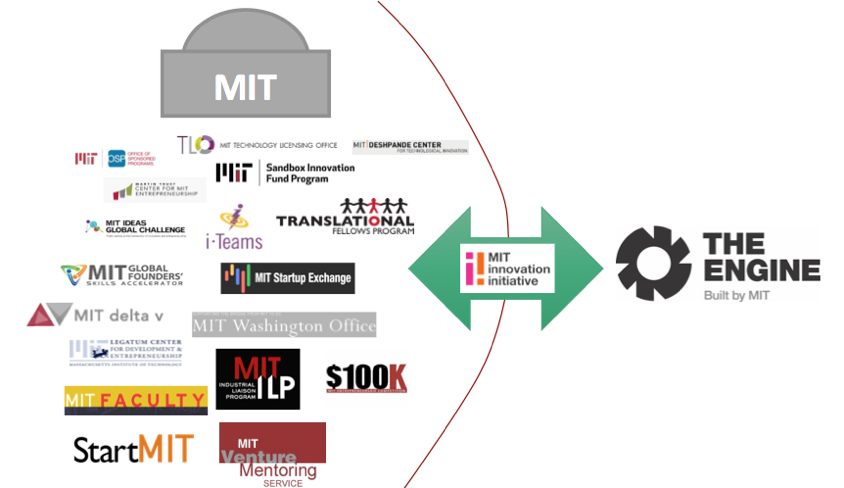


Beyond campus borders, institute technology massachusetts functions as a global innovation node. Its alumni lead research labs, tech companies, and policy initiatives on every continent. MIT-inspired frameworks influence how cities plan transportation, how hospitals use data, and how startups scale responsibly.
What’s remarkable is consistency. Decades apart, MIT-born ideas continue to shape emerging fields. This isn’t accidental—it’s the result of a system designed to regenerate relevance.
Conclusion: Thinking the MIT Way
Understanding institute technology massachusetts means understanding a philosophy: rigorous thinking, applied experimentation, and responsibility to society. Whether or not you ever set foot on campus, adopting this mindset can transform how you approach problems.
The real takeaway isn’t “go to MIT.” It’s learn how MIT thinks—question assumptions, test ideas quickly, collaborate broadly, and measure impact honestly. In a world that rewards adaptability and depth, that approach remains one of the most reliable advantages you can build.
FAQs
What does institute technology massachusetts actually refer to?
It refers to the Massachusetts Institute of Technology and the broader innovation ecosystem built around it.
Is MIT only for engineers and scientists?
No. While STEM is central, MIT integrates economics, design, policy, and humanities deeply into its programs.
Can non-students benefit from MIT resources?
Absolutely. OpenCourseWare, public research, and professional programs are widely accessible.
How competitive is admission to MIT?
Extremely competitive, but selection focuses on problem-solving ability, curiosity, and impact—not just grades.
What makes MIT different from other top universities?
Its execution-first mindset, interdisciplinary structure, and culture of real-world experimentation.

Adrian Cole is a technology researcher and AI content specialist with more than seven years of experience studying automation, machine learning models, and digital innovation. He has worked with multiple tech startups as a consultant, helping them adopt smarter tools and build data-driven systems. Adrian writes simple, clear, and practical explanations of complex tech topics so readers can easily understand the future of AI.